Paella, the iconic dish of Valencian cuisine, is far more than a simple Mediterranean recipe. According to Traditional Chinese Medicine (TCM), this harmonious composition of rice, saffron, vegetables and proteins constitutes a complete food-medicine that balances Qi (气 qì), nourishes Blood (血 xuè) and harmonises the five elements.
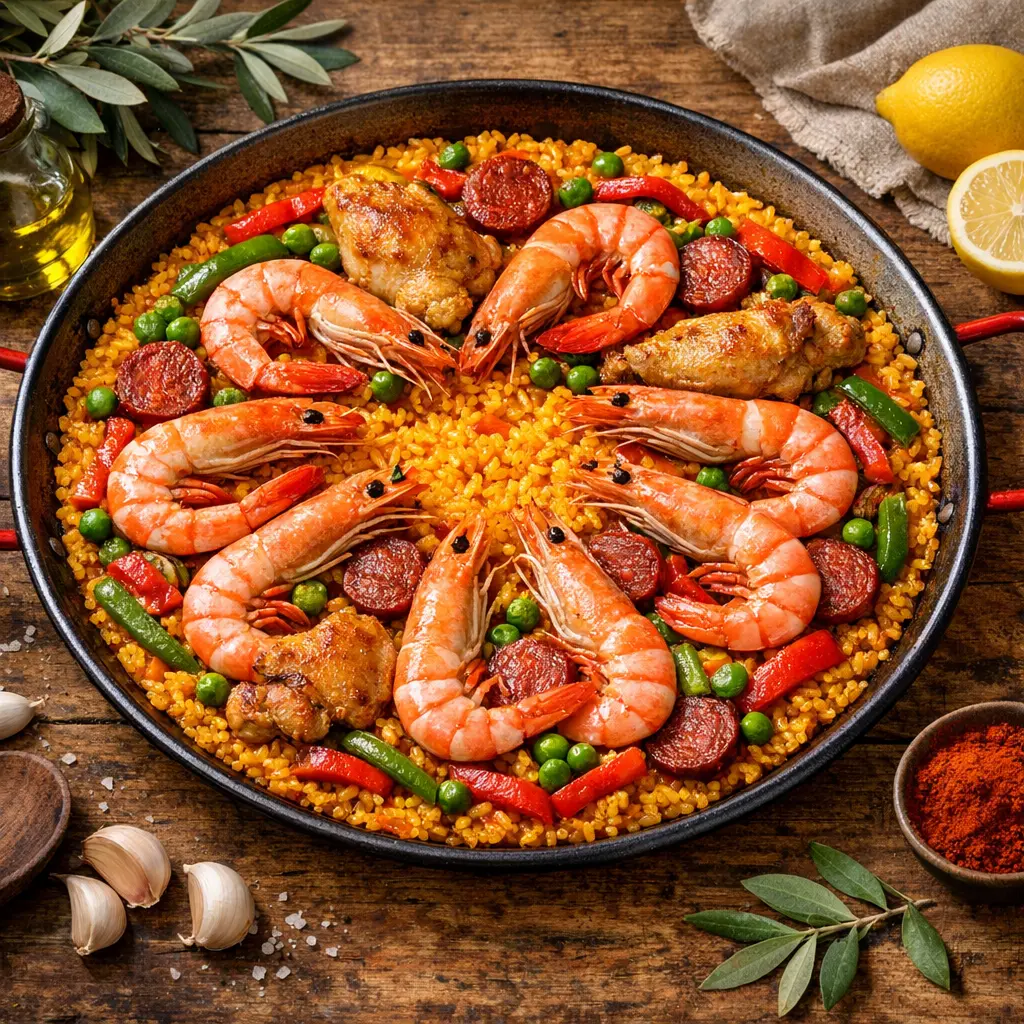
Paella in Traditional Chinese Medicine
Rice: The Neutral Energetic Foundation
Cooked white rice
米饭
- Tonifies Spleen and Stomach Qi
- Harmonises the Centre
- Stops diarrhoea (short-grain rice)
- Generates organic fluids (Jin Ye 津液)
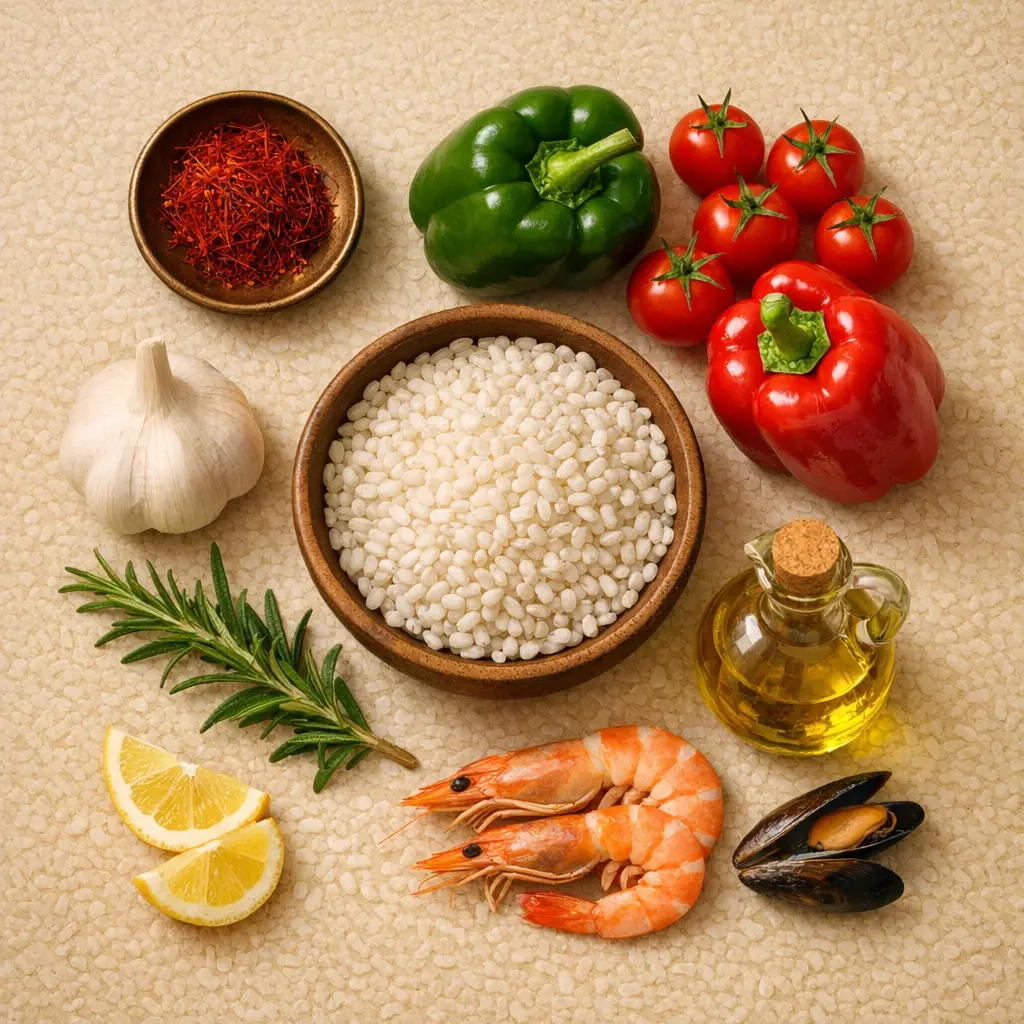
Rice, the fundamental ingredient of paella, has a Neutral nature (平 píng) that neither warms nor cools the body. Its Sweet flavour (甘 gān) gently tonifies the Qi of the Spleen (脾 pí), the central organ of nutrient transformation and transport according to TCM.
Rice cooked in the Valencian manner (Mǐ Fàn 米饭) acquires a slightly sticky texture which, according to TCM, facilitates the production of Jin Ye (津液) — the organic fluids essential for tissue hydration. This preparation promotes absorption and minimises the digestive load, particularly beneficial for those with Spleen Qi Deficiency (脾虚 pí xū).
Saffron: Red Gold with Medicinal Virtues
Saffron
藏红花
- Moves Blood and dissolves Stasis
- Regulates Qi and calms the Spirit (Shen 神)
- Cools Blood and clears Heat
- Unblocks the meridians
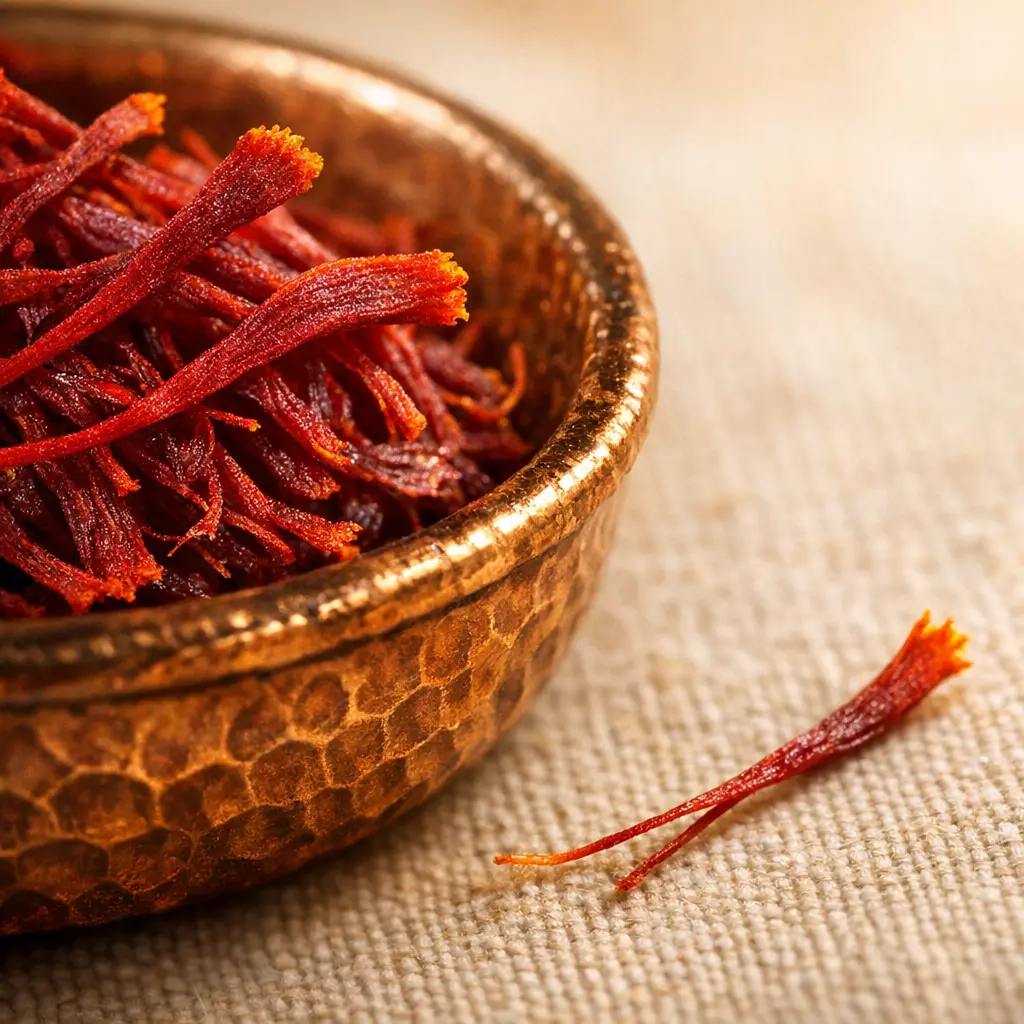
Saffron (藏红花 Zàng Hóng Huā), the “red flower of Tibet”, is considered a first-order food-medicine in TCM. Its Cool nature (凉 liáng) and Pungent-Bitter flavours (辛苦 xīn kǔ) make it a powerful Blood mover.
Complete Energetic Analysis of Ingredients
| Aliment | Nature | Saveur | Méridiens | Actions | Précautions |
|---|---|---|---|---|---|
| Arborio/Bomba Rice | Neutral | Sweet | Spleen, Stomach | Tonifies Qi, harmonises the Centre | Avoid excess if food stagnation |
| Saffron (Zàng Hóng Huā) | Cool | Pungent, Bitter | Heart, Liver | Moves Blood, calms the Spirit | Contraindicated during pregnancy |
| Tomato | Cool | Sour, Sweet | Stomach, Spleen, Liver | Generates fluids, clears Heat | Avoid if Spleen Yang deficiency |
| Green pepper | Warm | Pungent | Lung, Spleen | Dispels Cold, moves Qi | Avoid if internal Heat |
| Chicken | Warm | Sweet | Spleen, Stomach | Tonifies Qi, strengthens Jing | Prefer breast in case of Heat |
| Prawns/Shrimp | Warm | Sweet, Salty | Kidney, Liver | Tonifies Kidney Yang, promotes libido | Contraindicated if Liver Heat |
| Green peas | Cool | Sweet | Spleen, Stomach | Harmonises the Centre, clears Heat | Avoid if Yang deficiency with diarrhoea |
| Green beans | Neutral | Sweet | Spleen, Stomach | Harmonises the Centre, tonifies Qi | Cook well to facilitate digestion |
Source: TCM correspondences of Mediterranean foods
Modern Nutritional Composition
| Nutriment | Quantité | Énergie | Nature Thermique | Propriétés MTC |
|---|---|---|---|---|
| Energy | 156 kcal | 156 kcal | Neutral-Warm | Tonifies Qi and Yang |
| Carbohydrates | 22 g | — | Neutral | Qi source (Glycogen) |
| Protein | 8 g | — | Warm | Tonifies Blood and Jing |
| Fat | 4 g | — | Neutral | Nourishes Yin |
| Fibre | 2.5 g | — | Neutral | Harmonises transit |
| Crocin (saffron) | ~5 mg | — | Cool | Moves Blood, antioxidant |
| Vitamin B6 | 0.3 mg | — | Neutral | Nourishes Blood |
| Zinc | 1.2 mg | — | Warm | Tonifies Kidney Yang |
| Iron | 1.8 mg | — | Warm | Nourishes Blood |
| Selenium (prawns) | 15 μg | — | Warm | Antioxidant, tonifies Jing |
INRAE/Ciqual 2024 data + TCM correspondences
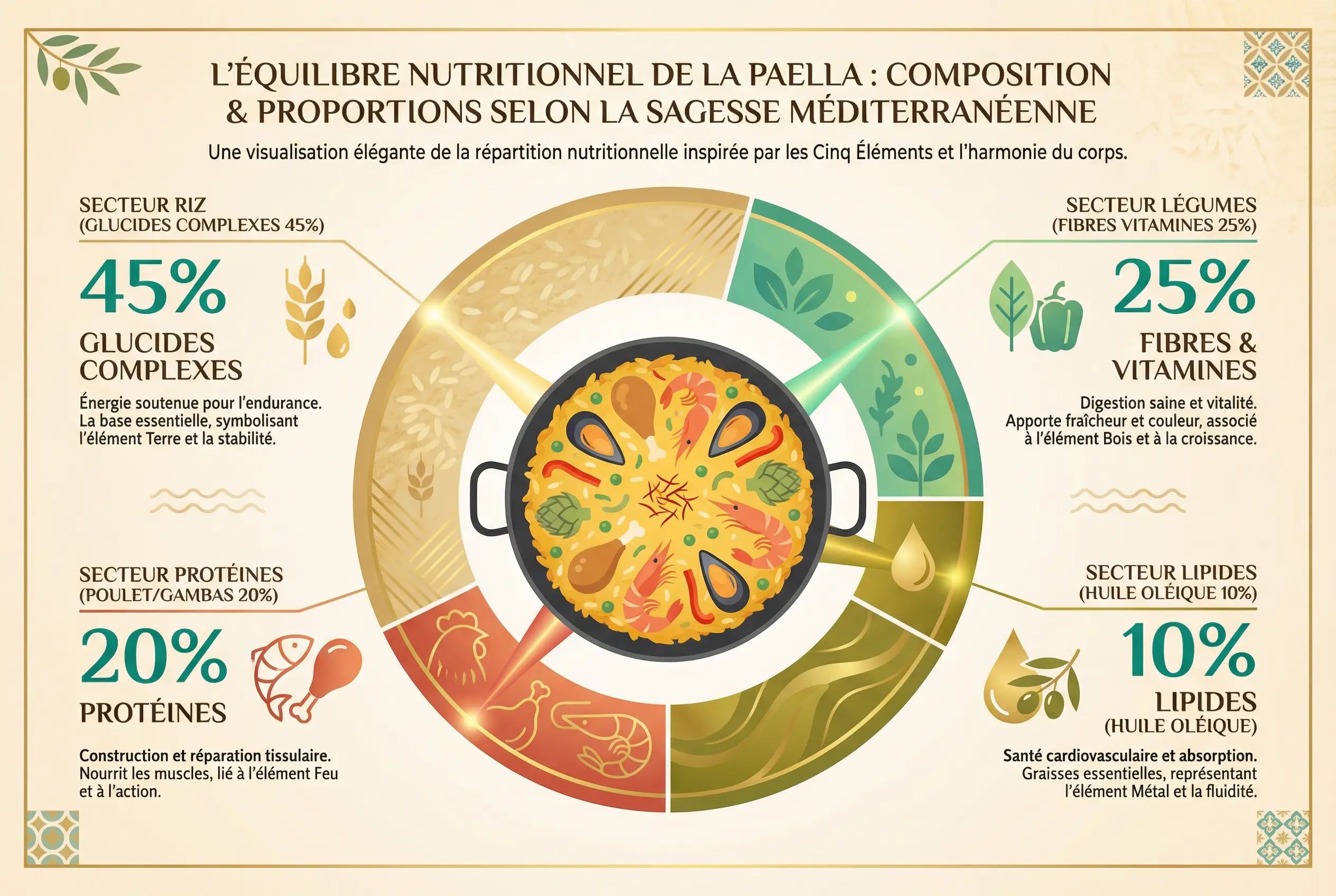
Cardiovascular Benefits
Saffron’s crocin and picrocrocin demonstrate hypolipidaemic and antihypertensive effects in randomised controlled trials (Milajerdi et al., 2020). Arborio wholegrain rice has a moderate glycaemic index (GI ~60) favourable for glycaemic regulation.
Carotenoids from tomato (lycopene) and pepper (beta-carotene) contribute to vascular protection through their antioxidant properties.
Therapeutic Applications According to TCM
Main Indications
Optimal Seasons and Temperaments
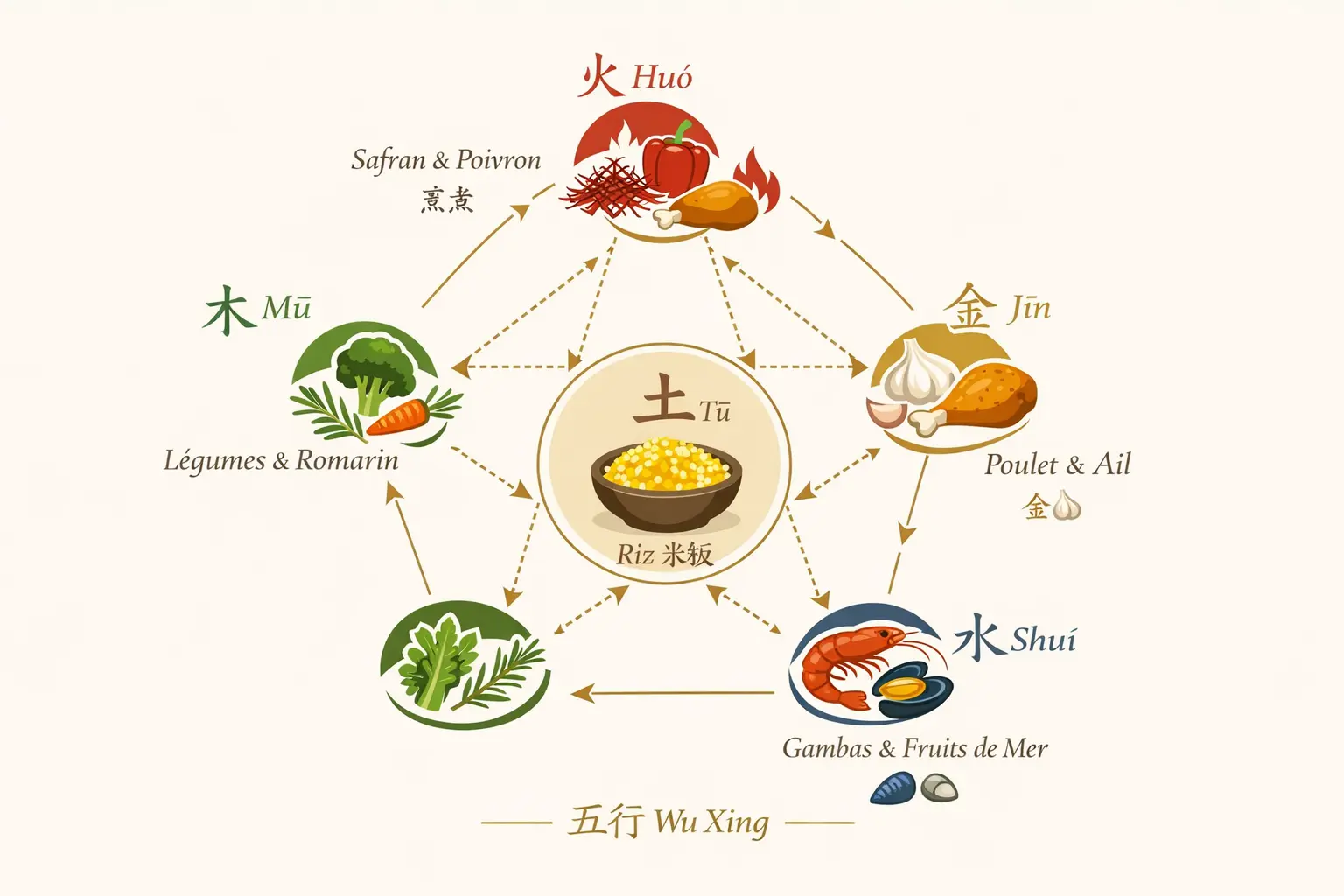
According to five elements theory and TCM seasons:
- Autumn (Metal): Ideal — saffron and pepper’s pungency tonifies the Lung, rice stabilises the Spleen after summer
- Winter (Water): Enhanced chicken/prawn version — proteins tonify Kidney Yang
- Spring (Wood): Light vegetarian version — saffron and vegetable coolness harmonises the Liver
- Summer (Fire): Minimal saffron version, more green vegetables — avoid internal Heat
Contraindications and Precautions
FAQ - Frequently Asked Questions
Does paella cause weight gain?
Rice cooked paella-style has a moderate glycaemic index (GI 60-65) lower than plain white rice thanks to the presence of fatty acids and proteins that slow carbohydrate absorption. A reasonable portion (200-250g) fits into a balanced diet without causing weight gain, provided regular physical activity.
Can you eat paella with diabetes?
Traditional paella with Bomba or Arborio rice has a moderate glycaemic load. For diabetic individuals, recommendations:
- Prefer wholegrain rice (more fibre, lower GI ~50)
- Increase vegetable proportion (50% vegetables, 25% rice, 25% protein)
- Consume at the start of a meal, never alone
- Add a fat source (first cold-pressed olive oil) to slow absorption
Is saffron safe daily?
Culinary doses of saffron (5-20 stigmas per serving) are safe for regular consumption. Studies show mood and cognition benefits from 30mg/day of standardised saffron (extract), equivalent to about 15 stigmas. Caution: concentrated supplements exceeding 1.5g/day can be toxic.
Conclusion
Paella constitutes an excellent example of “medicine through food” (食疗 shí liáo) harmoniously integrating TCM principles and modern nutrition. Its balanced composition — neutral tonifying rice, mobilising saffron, cool harmonising vegetables, quality proteins — makes it a dish suited to many constitutional profiles, subject to personalised adjustments.
To optimise paella’s energetic benefits, favour seasonal, quality ingredients, respect traditional cooking times that allow the socarrat to form (caramelised crust at the bottom — Fire element 火 favourable for digestion), and consume in a convivial setting that promotes digestive relaxation.
Try the Yin Shi app to discover how to adapt this recipe to your personal energetic profile and get personalised dietary recommendations based on TCM and nutritional science.
References: Huangdi Neijing (黄帝内经), Shiliao Bencao (食疗本草), INRAE/Ciqual 2024, Journal of Ethnopharmacology 2022 on saffron.