Cereals in Chinese Dietetics
The complete grain pharmacopoeia: 12 varieties, glycaemic index, complex syndromes and therapeutic protocols for TCM practitioners
“The five grains nourish, the five fruits support, the five livestock benefit, the five vegetables complete.” - Huang Di Nei Jing Su Wen, Chapter 22
Cereals in Chinese Dietetics: Clinical Reference Guide for the Professional
History · Pharmacopoeia · Complex Syndromes · Integrative Protocols
The five grains nourish, the five fruits support, the five livestock benefit, the five vegetables complete.
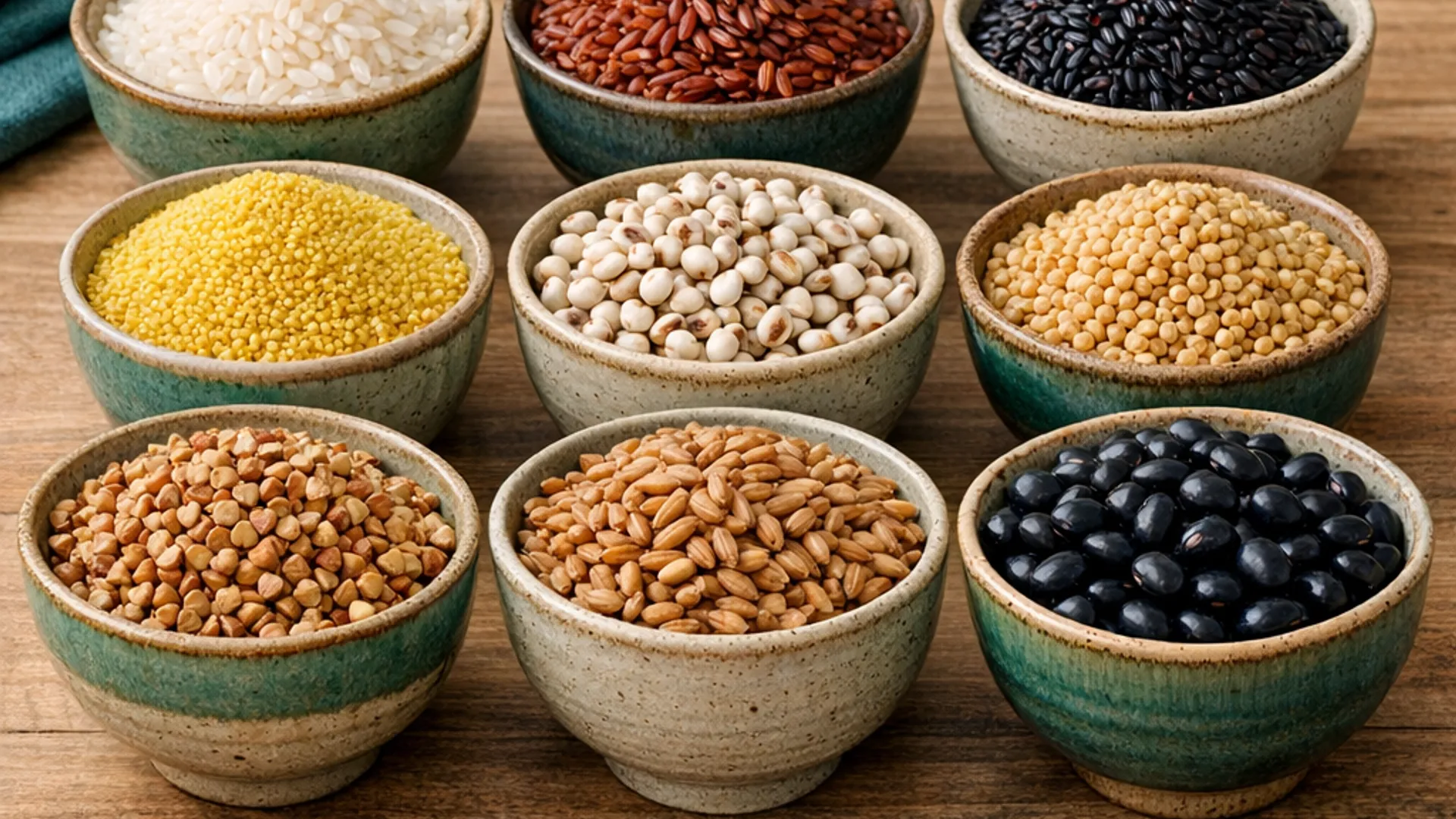
Preamble: Why a Guide to Cereals in 2026?
In contemporary clinical practice of Chinese dietetics, a paradox has emerged. On one hand, modern nutrition research offers precise tools: glycaemic index, glycaemic load, insulin resistance, intestinal microbiome, metabolomic profiles. On the other, the classical texts of Traditional Chinese Medicine (TCM) propose a food pharmacopoeia of such subtlety that it would be wrong to reduce it to a few porridge recipes.
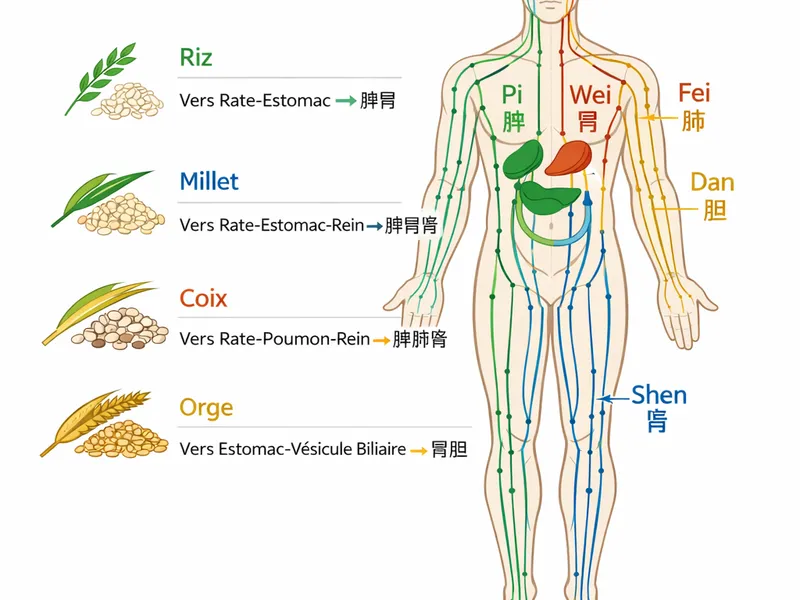
Cereals sit at the exact intersection of these two paradigms. In TCM, they form the basis of Gu Qi (谷气, Grain Qi) - the raw material that the Spleen (Pi) and Stomach (Wei) receive, transform and elevate to produce Nutritive Qi (Ying Qi) and Defensive Qi (Wei Qi). Without this transformative work, none of the downstream therapeutics - herbs, acupuncture, Qi Gong - can take lasting root.
Yet common practice oversimplifies excessively: “give white rice for weak digestion.” This prescription, correct in principle, becomes therapeutically poor the moment it ignores:
- The variety of rice (Jing Mi, Nuo Mi, Hong Mi, Zi Mi, or wild rice?),
- The degree of polishing and its metabolic impact,
- The alternative cereal (Millet, Barley, Coix, Sorghum) better suited to the patient’s terrain,
- The complex syndrome of the contemporary patient - rarely a simple “Spleen Qi Deficiency” in isolation, but rather an entanglement of Deficiency and Excess, Cold and Dampness, multiple organ deficiencies.
This guide is intended for practitioners of Chinese dietetics, naturopaths, integrative nutritionists and TCM therapists who wish to integrate the richness of the cereal pharmacopoeia into their clinical arsenal, with the rigour that the complexity of modern patients demands. To deepen your study of therapeutic foods in TCM, consult our specialised articles.
The Clinical Art of Cereals - TCM Therapeutic Dietetics
Part I - Cosmological and Historical Foundations
1.1 The Five Grains in TCM Cosmology
The concept of Wu Gu (五谷, Five Grains) runs throughout classical Chinese medical literature, but its exact composition varied according to era and geographical region. This variation itself is a clinical lesson: the right grain is the one that corresponds to the place, the season, and the patient’s terrain.
The version from the Huang Di Nei Jing (-400 to -200 BCE):
- Glutinous millet (Shu / Nuo Shu)
- Common millet (Ji / Xiao Mi)
- Beans (Da Dou)
- Wheat (Xiao Mai)
- Hemp (Ma) - used for its seeds
The version from the Bencao Gangmu by Li Shizhen (1578 CE) evolved the list:
- Rice (Dao / Jing Mi)
- Millet (Xiao Mi)
- Wheat (Xiao Mai)
- Soybean (Da Dou)
- Maize or Sorghum (depending on region)
This evolution reflects the geographical expansion of rice cultivation towards the North and Centre of China between the Han and Ming Dynasties. It illustrates that the Five Grains system is not a closed dogma, but an adaptive framework.
Elemental Correspondences of the Five Grains:
| Aliment | Nature | Saveur | Méridiens | Actions | Précautions |
|---|---|---|---|---|---|
| Wood | Warm | Sour | Liver / Gall Bladder | Wheat (Xiao Mai) | Tonifies Liver, softens tendons |
| Fire | Warm | Bitter | Heart / Small Intestine | Glutinous millet (Shu) | Nourishes Heart, calms Shen |
| Earth | Neutral | Sweet | Spleen / Stomach | Rice (Jing Mi) | Tonifies Spleen Qi, harmonises the Centre |
| Metal | Cool | Pungent | Lung / Large Intestine | Rice variant / Hemp | Descends Qi, disperses stagnation |
| Water | Cold | Salty | Kidney / Bladder | Black bean / Millet (Xiao Mi) | Nourishes Essence, strengthens Kidney |
Source: Huang Di Nei Jing Su Wen, Chapter 22
Clinical implication: The sweet flavour of rice makes it the pre-eminent food of the Spleen (Earth Element). But the slightly salty flavour of millet gives it an additional affinity with the Kidney - something white polished rice does not possess. Choosing between rice and millet already orientates therapy towards the Spleen or the Kidney.
1.2 Geography of Grain: The Great Chinese Food Divide
To prescribe with relevance, the practitioner must understand that ancient China was not a homogeneous culinary territory. An invisible boundary, which geographers call the “Qinling-Huaihe line”, separated two food civilisations.
The North: The Empire of Dry and Cold
The Yellow River (Huang He) basin, cradle of Han civilisation, has a continental semi-arid climate. Before the generalisation of rice (which occurred progressively from the Tang Dynasty onwards), the basic dietary regime was:
- Xiao Mi (Millet): the dominant cereal from the Neolithic period until the Han Dynasty. Robust, drought-resistant, it nourished emperors and peasants alike.
- Xiao Mai (Wheat): introduced via Central Asian trade routes around 2000 BCE, it became the second great cereal of the North.
- Da Mai (Barley): even earlier than wheat, cultivated in high-altitude regions (Tibet, Mongolia).
Clinical implications for the practitioner:
When classical texts from the Han period recommend cereal preparations to “tonify the Stomach”, they refer to millet and wheat, not rice. The practitioner who systematically substitutes these cereals with white rice departs from the spirit of the classical prescription - especially for patients with a “Yin Xu” (Yin Deficiency) terrain of the Stomach, for which millet is superior.
The South: The Empire of Damp and Heat
The Yangtze (Chang Jiang) basin and the Zhujiang delta (Guangdong) offer a subtropical hot and humid climate, ideal for rice cultivation. The domestication of rice (Oryza sativa) in these regions dates back to 7000-8000 BCE (Hemudu site, Zhejiang province), making it one of the oldest plant domestications in human history.
The evolution of polishing - a decisive chronology:
| Period | Type of rice consumed | Context |
|---|---|---|
| Neolithic (-7000) | Husked rice, roughly hulled | Direct consumption after hand-hulling |
| Xia/Shang Dynasties (-2100 to -1046) | Semi-whole rice | Stone mortars, partial polishing |
| Han Dynasties (-206 to +220) | Appearance of Bai Mi (white rice) | Luxury product, ritual, medicinal |
| Tang/Song Dynasties (+618 to +1279) | White rice accessible to the elite | Water mills generalised |
| Modern era | Ultra-polished white rice | Industrial polishing, near-total loss of bran |
Fundamental clinical note: The Bai Mi (white rice) prescribed in classical medical texts from the Han to Song Dynasties corresponds to a semi-whole to lightly polished rice, very different from today’s industrially polished white rice. Its content of vitamins B1 (thiamine), B3 (niacin), magnesium and zinc was significantly higher. Prescribing “white rice” with reference to ancient texts without this historical nuance constitutes a clinical transposition error.
Part II - Detailed Cereal Pharmacopoeia
2.1 Rice Varieties: A Differentiated Universe
The practitioner of Chinese dietetics must master at least six distinct entries in the rice pharmacopoeia. Each variety constitutes, in its own right, a separate monograph.
Jing Mi (粳米) - Ordinary White Rice (Japonica Rice)
Pharmacopoeia designation: Oryzae Semen
Jing Mi - Ordinary White Rice
粳米
- Tonifies Spleen-Stomach Qi
- Harmonises the Zhong Jiao
- Generates Body Fluids (Jin Ye)
- Quenches thirst
The Jing Mi acts principally on the Middle Burner (Zhong Jiao). Its neutral nature and sweet flavour make it an ideal substrate for the Spleen, which “likes sweetness”. The ease of digestion of polished white rice rapidly releases Gu Qi (Grain Qi) for the Spleen’s transformation-transportation process.
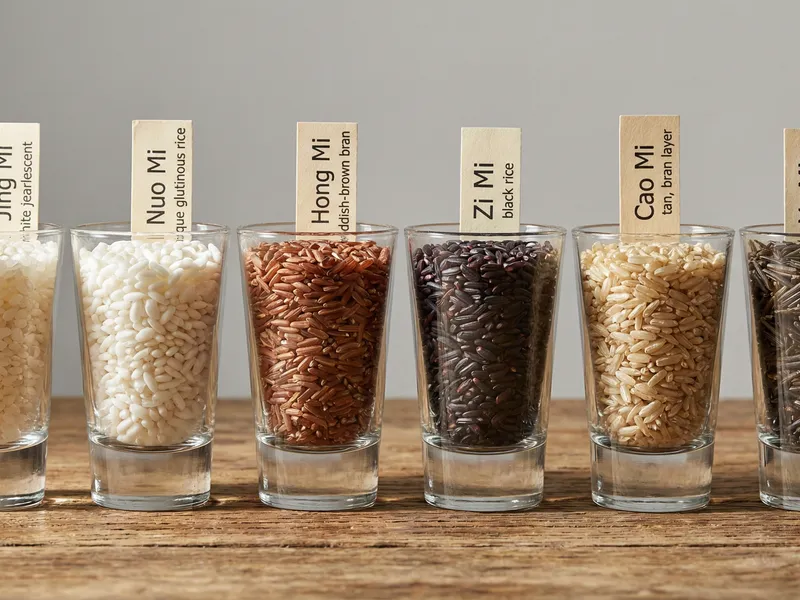
Nuo Mi (糯米) - Glutinous Rice
Pharmacopoeia designation: Oryzae Glutinosae Semen
Nuo Mi - Glutinous Rice
糯米
- Strongly tonifies Qi
- Warms the Middle and Lower Burner
- Astringes (sweating, diarrhoea)
- Calms Shen (secondary)
The Nuo Mi designates glutinous rice varieties characterised by a quasi-null amylose content and an amylopectin proportion reaching 95 to 100%. This starch profile is the origin of all its properties - and all its contraindications.
Hong Mi (红米) - Red Rice
Red rice is a whole rice whose bran layers are pigmented red by procyanidins and condensed tannins. Not to be confused with “red fermented rice” (Hong Qu Mi), which is rice fermented by Monascus purpureus and belongs to the medicinal plant pharmacopoeia (hypolipidaemic action, presence of monacolins).
| Parameter | Data |
|---|---|
| Thermal nature | Neutral to slightly Warm |
| Flavour | Sweet |
| Meridians | Spleen (Pi), Heart (Xin), Liver (Gan) |
| TCM actions | Tonifies Qi and Blood, Activates Blood circulation (via bran tannins), Nourishes Liver, Harmonises Spleen |
| Glycaemic index | 55-65 |
| Fibre content | 2.5-3g/100g (vs 0.4g for white rice) |
The double action “tonification + movement”:
This is the essential clinical characteristic of red rice. Unlike white rice, which tonifies Spleen Qi in a “static” way (without activating circulation), the bran of red rice brings a light action of “moving Blood” (Huo Xue). In practice, this makes it indicated in mixed syndromes of Blood Deficiency with light Stagnation - such as iron-deficiency anaemia with dull complexion, irregular cycles from Deficiency-Stagnation, or long convalescence with fatigue and altered microcirculation.
Modern metabolic asset: The moderate GI (55-65) combined with a significant fibre content makes it an excellent white rice substitute for diabetic patients who need “Spleen tonification” without glycaemic overload.
Zi Mi (紫米) - Black Rice (Forbidden Rice)
Black rice (Oryza sativa var. indica, black grains) was historically reserved for the imperial aristocracy, hence its nickname “forbidden rice” (Jin Mi). It is today recognised as one of the foods richest in anthocyanins in the plant kingdom (content exceeding blueberries in certain varieties).
| Parameter | Data |
|---|---|
| Thermal nature | Neutral to slightly Warm |
| Flavour | Sweet, slightly Salty |
| Meridians | Spleen (Pi), Kidney (Shen), Liver (Gan), Heart (Xin) |
| TCM actions | Tonifies Kidney Jing, Nourishes Blood and Yin, Improves vision (Liver-Kidney), Tonifies Spleen Qi |
| Glycaemic index | 42-55 |
| Anthocyanins | 200-400mg/100g |
The Kidney-Liver affinity: understanding the logic of colours
In TCM, the colour black is associated with the Water Element and the Kidney. This is not merely symbolic: the anthocyanins of black rice (cyanidin-3-glucoside and peonidin-3-glucoside) exhibit antioxidant and anti-inflammatory activity which, translated into TCM language, corresponds to “nourishing Jing and Yin”. Recent studies show protective effects on diabetic nephropathy and macular degeneration - two pathologies associated with “Kidney Deficiency” in TCM.
Precise clinical indications:
- Kidney Jing Deficiency (hair loss, chronic lumbar pain, tinnitus, poor memory)
- Anaemia with Liver involvement (Liver Blood Deficiency)
- Presbyopia or chronic eye fatigue (Liver-Kidney insufficiency)
- Menopause with Yin Deficiency and Jing Deficiency symptoms
- Post-chemotherapy convalescence (weakened marrow)
2.2 Ancestral Cereals: Major Therapeutic Alternatives
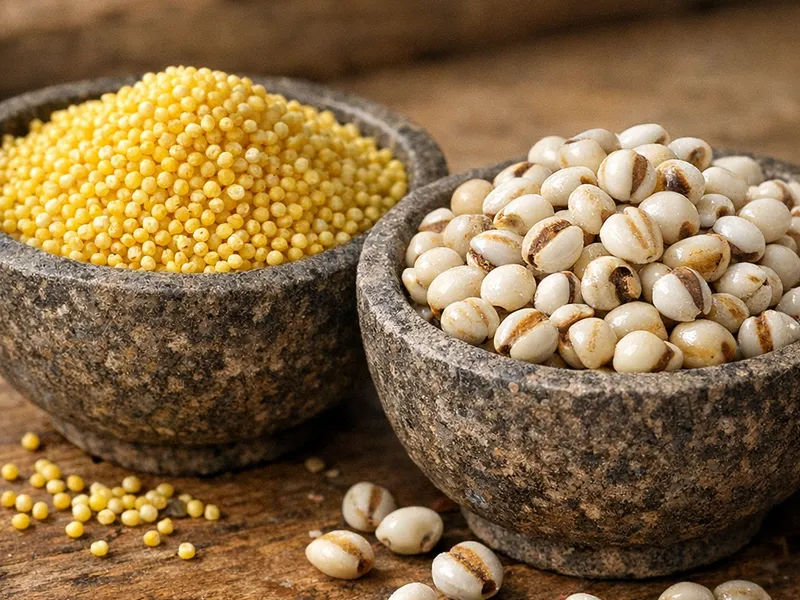
Xiao Mi (小米) - Millet (Setaria italica)
Millet is the cereal to rehabilitate in contemporary practice. An ancient royal cereal of the North, it was progressively supplanted by rice in clinical prescriptions, to the detriment of therapeutic precision.
| Parameter | Data |
|---|---|
| Thermal nature | Cool to Neutral |
| Flavour | Sweet and slightly Salty |
| Meridians | Spleen (Pi), Stomach (Wei), Kidney (Shen) |
| TCM actions | Tonifies Spleen and Stomach, Nourishes Stomach and Kidney Yin, Calms Shen (insomnia), Generates Fluids, Lightly dries Dampness |
| Glycaemic index | 71 (simply cooked) - 55-60 (thick porridge with legumes) |
| Magnesium content | 69mg/100g (vs 25mg for white rice) |
| Tryptophan content | High (serotonin precursor) |
The unique specificity: Nourishing Stomach Yin
This is the great clinical difference between millet and rice. Whilst white rice “generates Body Fluids” indirectly (by tonifying the Spleen which will produce Fluids), millet directly nourishes Stomach Yin. This distinction is crucial for the following syndromes:
- Chronic atrophic gastritis with “burning” and mucosal dryness
- Type 2 diabetes (Kidney-Stomach Yin Deficiency in TCM)
- Chronic dry mouth and unsatisfied thirst
- Sleep-onset insomnia with light mental agitation
The high tryptophan content of millet partly explains its “calms Shen” effect: tryptophan is a precursor of serotonin and melatonin, two neurotransmitters directly linked to sleep quality and mood.
Millet in post-partum:
In the traditions of Shaanxi and Shanxi (North-West China), golden millet porridge (Huang Mi Zhou) with dark brown sugar is the post-partum convalescence dish par excellence. This practice is therapeutically coherent: post-partum generates a double Qi and Blood Deficiency with often Fluid dryness (sweating, breastfeeding). Millet, neutral-cool, nourishes Yin without creating Heat, whilst the brown sugar (warm nature, enters Liver) tonifies Blood.
Yi Yi Ren (薏苡仁) - Job’s Tears / Coix (Coix lacryma-jobi)
The Yi Yi Ren occupies a unique position in the pharmacopoeia: it is both a common culinary cereal and a medicinal plant listed in most Chinese pharmacopoeias. Mastery of it is indispensable for any practitioner confronted with Dampness pathologies - that is, the majority of contemporary Western patients. Like turmeric in TCM, it possesses powerful therapeutic actions beyond its simple food function.
| Parameter | Data |
|---|---|
| Thermal nature | Cool (Liang) |
| Flavour | Sweet and Bland (Dan) |
| Meridians | Spleen (Pi), Lung (Fei), Kidney (Shen) |
| TCM actions | Drains Dampness and strengthens Spleen (Li Shi Jian Pi), Clears Heat-Dampness (Qing Re Li Shi), Expels Wind-Dampness from joints (Qu Feng Shi), Tonifies Lung, Eliminates Abscesses and Phlegm-Heat |
| Glycaemic index | 25-35 |
| Coixenolide | Anticancer molecule under study (notably cervical cancer) |
Mechanism of Dampness drainage:
The term “drain Dampness” designates in TCM the process by which certain foods/plants facilitate the elimination of hydrophilic metabolites via urine (light diuretic action) and via stools (improved transit). In modern nutrition, Yi Yi Ren is rich in soluble fibres that modulate the intestinal microbiome towards an anti-inflammatory profile - which corresponds to “clearing Heat-Dampness” in TCM language.
Yi Yi Ren raw vs. roasted:
This point is often ignored in Western practice:
- Raw (Sheng Yi Yi Ren): cooler nature, more marked draining and Heat-Dampness clearing action. Indicated in Heat-Dampness (yellow greasy coating, dark urine).
- Roasted (Chao Yi Yi Ren): roasting modifies its nature towards Neutral, strengthens Spleen tonification action and diminishes cooling action. Indicated in Spleen Deficiency with Dampness (white greasy coating, loose stools, fatigue).
This distinction is clinically major for the complex syndromes described in Part IV.
Precautions and contraindications:
- Pregnancy: not recommended at high dose (descending Qi action, disputed uterotonic properties)
- Severe Yang Deficiency with marked Internal Cold: must imperatively be combined with ginger or cardamom
- Dry constipation from Yin Deficiency: may aggravate intestinal dryness
Da Mai (大麦) - Barley (Hordeum vulgare)
Barley is one of the oldest cereals cultivated by humanity (-10,000 BCE in the Middle East, -5000 BCE in China). It occupies a particular therapeutic place in TCM, distinct from millet and rice.
| Parameter | Data |
|---|---|
| Thermal nature | Cool (Liang) |
| Flavour | Sweet and slightly Salty |
| Meridians | Spleen (Pi), Stomach (Wei), Gall Bladder (Dan) |
| TCM actions | Tonifies Spleen and Stomach, Descends Stomach Qi, Drains Middle Burner Heat-Dampness, Quenches thirst, Calms reflux and nausea |
| Glycaemic index | 28-35 (whole barley) |
| Beta-glucan | 3-5g/100g (viscous soluble fibres) |
The “descends Stomach Qi” action:
This is the clinical specificity of barley compared to other tonic cereals. Stomach Qi must descend (towards the Large Intestine) whilst Spleen Qi ascends. When these movements are inverted (Rebellious Stomach Qi), one observes: nausea, gastro-oesophageal reflux, belching, hiccups. Barley in porridge is a choice therapeutic base for these manifestations.
The modern mechanism is known: barley beta-glucans form a viscous gel in the intestine that slows carbohydrate absorption, reduces post-prandial insulin peak, and - through a still-studied mechanism - seems to positively modulate gastrointestinal motility.
Use in summer porridge:
Barley is the base cereal for therapeutic summer porridges in Chinese medical tradition. Its cool nature makes it a protection against Summer Heat (Shu Re) that affects the Middle Burner. Combined with mung beans (Lu Dou), it constitutes the classic anti-heat summer porridge.
Xiao Mai (小麦) - Wheat (Triticum aestivum)
| Parameter | Data |
|---|---|
| Thermal nature | Cool (Liang) |
| Flavour | Sweet |
| Meridians | Heart (Xin), Spleen (Pi), Kidney (Shen) |
| TCM actions | Nourishes Heart, Calms Shen, Fortifies Kidney, Eliminates heat and lowers fever |
| Glycaemic index (whole grain) | 41-48 |
| Gluten | Present (contraindicated in coeliac disease and gluten sensitivity) |
Wheat in TCM: the cereal of the Heart
The specificity of wheat in TCM lies in its affinity with the Heart (Xin) meridian, which gives it psycho-emotional properties that the other cereals do not share. The famous decoction Gan Mai Da Zao Tang (甘麦大枣汤, “Licorice, Wheat and Jujube Decoction”) - prescribed by Zhang Zhongjing in the Jin Gui Yao Lue (3rd century) - is its best-known illustration. It is indicated in the Zang Zao syndrome (dryness of the organs): agitation, crying without reason, frequent yawning, erratic behaviour - which roughly corresponds to what modern medicine calls mild to moderate anxious depression or adjustment disorder. For practitioners treating headaches in Chinese dietetics, this approach to the central nervous system is particularly relevant.
Whole wheat vs. white flour:
This distinction is clinically identical to that of whole rice vs. white rice, but with an additional factor: wheat bran contains fructo-oligosaccharides and arabinoxylans that specifically nourish Lactobacillus and Bifidobacterium - a prebiotic effect absent in white flour.
Gao Liang (高粱) - Sorghum (Sorghum bicolor)
| Parameter | Data |
|---|---|
| Thermal nature | Warm (Wen) |
| Flavour | Sweet and Astringent |
| Meridians | Spleen (Pi), Stomach (Wei), Lung (Fei) |
| TCM actions | Tonifies Spleen and Stomach, Astringes intestines, Eliminates Dampness, Slightly stimulates Shen |
| Glycaemic index | 60-70 (variable according to preparation) |
| Tannins | Variable content according to varieties (certain tannin varieties have a lower GI) |
Specific clinical use: Sorghum is the cereal of choice for chronic diarrhoea from Spleen-Kidney Yang Deficiency with cold, in particular the “jowu ji xie” (so-called “cockcrow diarrhoea” - morning diarrhoea at 5am). Its double astringent action - on the intestines and on Qi in general - brings it close to Nuo Mi but with a less problematic metabolic profile.
Attention: certain sorghum varieties are rich in condensed tannins that inhibit protein digestion. In medical use, prefer low-tannin varieties.
Qiao Mai (荞麦) - Buckwheat (Fagopyrum esculentum)
Although botanically a polygonaceae (not a grass), buckwheat is culinarily and clinically treated as a cereal in TCM.
| Parameter | Data |
|---|---|
| Thermal nature | Cool (Liang) |
| Flavour | Sweet and slightly Sour |
| Meridians | Spleen (Pi), Stomach (Wei), Large Intestine (Da Chang) |
| TCM actions | Descends Stomach Qi, Clears Heat-Dampness, Tonifies Spleen, Eliminates food accumulations |
| Glycaemic index | 49-54 |
| Rutin | 8-17mg/100g (antioxidant bioflavonoid, strengthens capillaries) |
Distinctive clinical indication: Buckwheat is the only common cereal with a notable action on blood capillaries (via rutin), which makes it relevant in contexts of vascular fragility, diabetic retinopathy, or rosacea - manifestations which, in TCM, correspond to Heat in the Blood and Heat-Dampness in the collaterals.
Gluten-free, it is the cereal of choice for coeliac patients or those with gluten sensitivity who present a Heat-Dampness profile.
Part III - Impact of Transformation: Science and Clinic
3.1 Polishing: Between Culinary Art and Therapeutic Impoverishment
Polishing rice removes successive layers surrounding the endosperm:
- Teguments and pericarp (outer layer)
- Bran: layer rich in fibre, minerals, B vitamins
- Germ (Embryo): concentrate of vitamins B1, E, essential fatty acids
- Aleurone: intermediate protein layer
With each layer removed, one gains immediate digestibility and loses nutritional density.
Nutritional composition table according to degree of polishing (per 100g cooked rice):
| Nutriment | Quantité | Nature Thermique | Propriétés MTC |
|---|---|---|---|
| Total fibre | 0.4g | Neutral | Qi movement in intestines |
| Vitamin B1 (Thiamine) | 0.02mg | Warm | Generates Qi and metabolic heat |
| Magnesium | 12mg | Neutral | Nourishes Tendons, calms Shen |
| Zinc | 0.6mg | Warm | Strengthens Jing, supports immunity |
| Glycaemic index | 64-72 | Warm | Potential for Dampness generation |
Comparative data for 100g cooked rice - Source: USDA 2023 + TCM correspondences
Translation into TCM language:
3.2 Preparation: Porridge, Steam, and Glycaemic Index
The same cereal, according to its mode of preparation, has radically different metabolic and therapeutic effects.
Impact of cooking mode on GI:
| Cooking mode | Approximate GI (white rice) | Mechanism | TCM indication |
|---|---|---|---|
| Steamed rice, al dente | 55-65 | Partial gelatinisation | Daily maintenance, good digestion |
| Boiled rice, well cooked | 64-72 | Advanced gelatinisation | Standard |
| Boiled rice, cooled then reheated | 48-58 | Resistant starch formation | Light Dampness, diabetes |
| Light congee (ratio 1:8) | 70-80 | Gelatinisation + partial destructuring | Acute illness, convalescence |
| Thick congee (ratio 1:12, 2h cooking) | 80-88 | Maximum destructuring | Severe deficiency, post-operative |
Resistant starch: a TCM concept ahead of its time
When cooked rice is cooled, part of the gelatinised starch retrogrades to form resistant starch (type 3), which behaves like a soluble fibre in the intestine. Its GI is quasi-null and it serves as a prebiotic for microbiome bacteria. In TCM, this “cooled-reheated” starch might be considered as having more affinity with “heavy Body Fluids” (Yi) than with Grain Qi - it nourishes without stimulating.
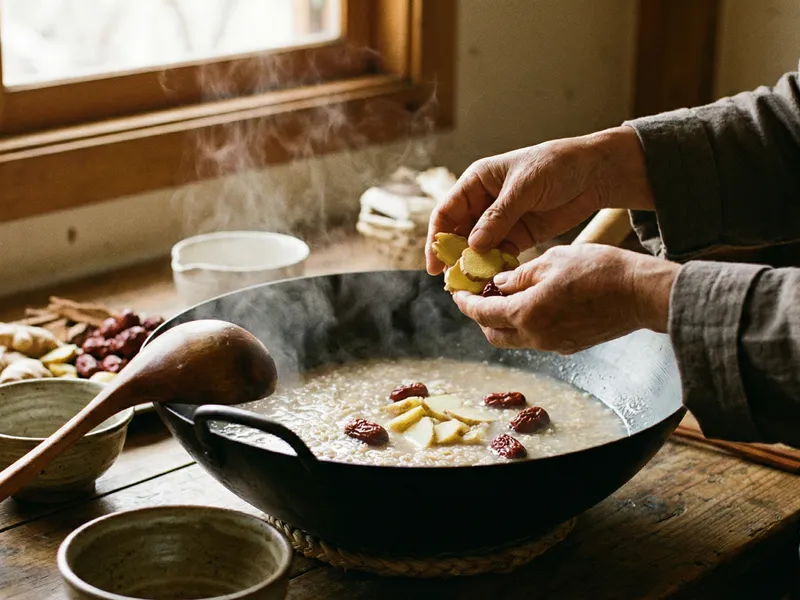
Practical application: For diabetic or overweight patients who need “Spleen tonification” (chronic illness, digestive fatigue), recommend cooking rice the day before, cooling it overnight in the refrigerator, then gently reheating it in the morning. The GI will be reduced by approximately 15 to 25%.
Part IV - Complex Syndromes: The Advanced Differential Approach
This is where clinical practice distinguishes itself from simple recipe application. Contemporary patients rarely present a pure syndrome. The superposition of Deficiency and Excess, Cold and Heat, multiple organ insufficiencies requires a nuanced and argued cereal prescription.
4.1 Dampness + Spleen Yang Deficiency (脾阳虚 + 湿困)
Typical clinical profile:
- 45-year-old woman, android overweight, profound morning fatigue, improvement late in the day
- Loose to semi-liquid stools, undigested, sometimes morning diarrhoea
- Marked cold intolerance, cold limbs, cold abdomen to touch
- No thirst or thirst for hot drinks only
- Dependent oedema at ankles
- Tongue: pale, swollen (teeth marks), white greasy coating, wet
- Pulse: slow, deep, slippery, weak at left and right Guan positions
Differential analysis:
This syndrome unites two opposing processes that mutually feed a vicious circle:
- Spleen Yang Deficiency: the “digestive fire” is insufficient. The Spleen cannot properly transform and transport fluids.
- Internal Dampness: stagnant fluids accumulate and “smother” Spleen Yang, aggravating the Deficiency. “Dampness obstructs Yang” - classical saying.
Therapeutic error to avoid: Prescribing Yi Yi Ren (Job’s Tears) porridge alone to “drain Dampness”. Raw Yi Yi Ren is Cool in nature - it will drain Dampness but aggravate Yang Deficiency.
Adapted cereal strategy:
Cereal base:
- 40% White Rice (tonifies Spleen Qi, neutral)
- 30% Yi Yi Ren roasted (Chao Yi Yi Ren - neutralised nature, drains Dampness without cooling)
- 20% Sorghum (Gao Liang) - warm, tonifies and astringes Spleen
- 10% White glutinous rice (Nuo Mi) - in small dose, warms the Centre
Obligatory therapeutic additions:
- Dried ginger (Gan Jiang): 3-5g per portion. Warms Middle Burner, disperses Cold-Dampness. It is the “Yang Qi of the kitchen” - without it, the prescription remains incomplete.
- Cardamom (Sha Ren or Bai Dou Kou): 2-3g. Aromatic, transforms Dampness, awakens Spleen.
- Dried mandarin peel (Chen Pi): 3-5g. Circulates Middle Burner Qi, prevents Stagnation engendered by tonic cereals.
- Walnuts (He Tao): 5-10g crushed. Tonifies Kidney Yang (root of Spleen Yang).
Contraindicated in this syndrome: Millet (too cool), raw barley (too cool), black rice (neutral but does not warm), raw Yi Yi Ren.
Metabolic advice: This profile often corresponds to insulin resistance. The proposed mixture reduces glycaemic load by 35-40% compared to pure white rice porridge.
4.2 Spleen-Stomach Dampness-Heat + Spleen Qi Deficiency (湿热困脾 + 脾气虚)
Typical clinical profile:
- 38-year-old man, overweight, sedentary work, rich diet and alcohol
- Marked post-prandial fatigue (sleepiness after meals)
- Loose foul-smelling stools, sometimes sticky to toilet
- Bitter taste in mouth in morning, sensation of internal heat
- Yellowish or waxy complexion
- Dark urine
- Tongue: red edges, yellow greasy coating
- Pulse: slippery, slightly rapid, soft at Guan position
Differential analysis:
This syndrome is extremely common in the modern Western population (sedentarity + ultra-processed diet + alcohol). Heat aggravates the already present Dampness, and the underlying Qi Deficiency (Spleen weakness) prevents any spontaneous resolution.
Adapted cereal strategy:
Cereal base:
- 50% Barley (Da Mai) - cool, descends Qi, drains Heat-Dampness
- 30% Raw Yi Yi Ren - cool, drains Dampness and clears Heat-Dampness
- 20% Buckwheat (Qiao Mai) - cool, descends Stomach Qi, anti-accumulation
Therapeutic additions:
- Mung beans (Lu Dou): 20-30g. Clear Heat, drain Heat-Dampness. The classic barley-mung bean alliance is the Heat-Dampness anti-congee par excellence.
- Avoid ginger (too hot); prefer mint (Cool, soothes heat) or lotus (seeds or root - neutral, lightly drains).
- Sour: a few drops of rice vinegar at serving - reduces GI and aids Stomach Qi descent.
Contraindicated: Glutinous rice (Nuo Mi), sorghum (warm), walnuts, dried ginger.
Metabolic advice: Reducing alcohol is indispensable - no cereal prescription will compensate for regular alcohol intake, which directly creates Heat-Dampness.
4.3 Kidney Yang Deficiency + Spleen Yang Deficiency (脾肾阳虚) - Double Yang Deficiency
Typical clinical profile:
- Man or woman aged 55-70, treated hypothyroidism, history of chronic lumbar pain
- Morning diarrhoea at 5am (Wu Geng Xie, “cockcrow diarrhoea”)
- Extreme cold intolerance, lumbars cold as ice
- Nocturnal polyuria (2-3 times/night)
- Lower limb oedema, puffy face in morning
- Abolished or very reduced libido
- Tongue: pale, swollen, white wet coating, sometimes glossitis of tongue tip
- Pulse: deep, slow, weak (especially Chi - Kidney position)
Differential analysis:
This syndrome represents exhaustion of True Yang - the Fire of Life (Ming Men Huo). Kidney Yang is the root of all Yang in the organism; its failure inexorably entails that of Spleen Yang. Cold-Dampness here is the inevitable consequence of the absence of “steam” (Yang) to transform Fluids.
Adapted cereal strategy:
Cereal base:
- 40% White or Semi-Whole Rice
- 30% Black Glutinous Rice (Zi Nuo Mi) - warm, tonifies Kidney Yang and Jing, nourishes Blood
- 20% Sorghum - warm, astringes intestines, tonifies Spleen-Kidney
- 10% Roasted Yi Yi Ren - drains Dampness without cooling
Indispensable therapeutic additions:
- Walnuts (He Tao Ren): 15-20g. Tonifies Kidney Yang, warms Lower Burner. It is the most “Ming Men” food in Chinese medical cuisine.
- Chestnut (Li Zi): 5-10g. Strengthens Kidney, solidifies Tendons, astringes.
- Dried ginger (Gan Jiang): 3-5g. Warms Middle and Lower Burner.
- Cloves (Ding Xiang): 1-2. Warms Kidney and Stomach - use sparingly (strong in Yang).
- Advanced option: Ceylon cinnamon powder (not medicinal Cinnamomum cassia): 1g per serving. Mobilises Kidney Yang.
Important clinical note: In this syndrome, continuity of prescription takes priority over everything. A 500ml porridge daily for 3 months, taken hot in the morning on an empty stomach, is better than intermittent prescriptions.
4.4 Stomach Yin Deficiency + Kidney Yin Deficiency (胃阴虚 + 肾阴虚)
Typical clinical profile:
- Woman aged 50-60, recent menopause, beginning type 2 diabetes (or pre-diabetes)
- Oral and pharyngeal dryness, thirst for small quantities of cool water
- Hunger without appetite (sensation of hunger but inability to eat)
- Light oesophageal burning (Empty Heat)
- Second-half-of-night insomnia, abundant dreams
- Lumbar pain with heat sensation in back
- Evening hot flushes
- Tongue: red, without coating or fine dry coating, possible fissures
- Pulse: thin, rapid, slightly taut
Adapted cereal strategy:
Cereal base:
- 50% Millet (Xiao Mi) - directly nourishes Stomach and Kidney Yin, cool nature
- 30% Black Rice (Zi Mi) - nourishes Jing and Kidney Yin, antioxidant anthocyanins
- 20% Barley (Da Mai) - clears light Empty Heat, generates Fluids
Therapeutic additions:
- Lotus root (Lian Ou): 50-80g fresh or 15g dried powder. Generates Fluids, nourishes Yin.
- Goji berries (Gou Qi Zi): 15-20g. Nourishes Liver and Kidney Yin.
- Chinese yam (Shan Yao): 20-30g. Tonifies Spleen Qi and Yin, Lung and Kidney - without creating Dampness (exceptionally rare).
- Lotus seeds (Lian Zi): 15-20g. Nourishes Heart, calms Shen (insomnia).
- Pear (Li): 50-100g added at end of cooking. Nourishes Lung Yin, generates Fluids, lightly cool.
Contraindicated: Dried ginger, large quantities of walnuts, sorghum, glutinous rice.
Crucial metabolic advice: This profile typically corresponds to type 2 diabetes in Yin Deficiency phase (after pancreatic mechanism exhaustion). The glycaemic index of the millet-black rice-barley cereal base is 48-58, significantly lower than white rice (64-72). Chinese yam (Shan Yao) contains dioscorine, an alkaloid that improves insulin sensitivity - a remarkable functional synergy with modern pharmacology.
4.5 Liver Qi Stagnation + Spleen Dampness (肝郁脾湿)
Typical clinical profile:
- Woman aged 30-45, chronic professional or family stress, emotional fatigue
- Erratic digestion: alternation of bloating and loose stools
- Epigastric or hypochondriac pain aggravated by stress
- Marked premenstrual syndrome (breast tenderness, irritability)
- Irregular appetite, emotional snacking, sugar craving
- Tongue: pale to normal body, slightly red edges (Liver), white slightly greasy coating
- Pulse: wiry (taut) at left Guan (Liver), slippery at right Guan (Spleen)
Differential analysis:
This syndrome illustrates the classic Liver-Spleen relationship in TCM: the stressed Liver “attacks” the Spleen (Gan Mu Ke Pi Tu), disturbing its transformation-transportation function and creating Dampness. It is one of the most common syndromes in the active Western population.
Adapted cereal strategy:
The strategy here must simultaneously tonify Spleen (for the underlying deficiency) and circulate Liver Qi (to resolve Stagnation). No single cereal does both - it is the combination that creates the effect.
Cereal base:
- 40% Semi-Whole Rice - tonifies without stagnating
- 30% Roasted Yi Yi Ren - drains Dampness, strengthens Spleen
- 20% Barley - descends Stomach Qi, clarifies
- 10% Buckwheat - lightly circulates, anti-accumulation
Targeted therapeutic additions:
- Mandarin peel (Chen Pi): 5g. Circulates Middle Burner Qi, transforms Dampness. It is the pivot ingredient of this formula.
- Rose (Mei Gui Hua): 3-5g in infusion added to porridge. Regulates Liver Qi, unties emotional Stagnation - in TCM as in aromatherapy (linalool, geraniol).
- Fresh ginger (Sheng Jiang): 3 slices. Harmonises Spleen and Stomach, facilitates transformation.
- Jasmine (Mo Li Hua): 3g in infusion. Calms Liver, perfumes porridge - the sensory aspect contributes to the action on emotional Qi.
Psycho-nutritional advice: In this syndrome, the meal context is as therapeutic as the composition. Eating in a calm environment, without screens, allowing 20 minutes, potentiates the porridge’s action on Liver Stagnation.
4.6 Qi Deficiency + Blood Deficiency (气血两虚) - Post-Partum and Post-Operative Syndrome
Typical clinical profile:
- Post-partum (2-8 weeks), post-major surgery, severe iron-deficiency anaemia, chemotherapy
- Profound fatigue, muscle weakness, orthostatic dizziness
- Palpitations, blurred vision, light tinnitus
- Skin and hair dryness, brittle nails
- Non-restorative sleep (Liver Blood no longer “retains” Shen at night)
- Tongue: pale, thin, little substance
- Pulse: thin, weak, empty
Adapted cereal strategy:
Cereal base - the richest possible:
- 40% White or Semi-Whole Rice - tonifies Spleen Qi to “produce Blood”
- 30% Red Rice (Hong Mi) - tonifies Blood, enters Heart and Liver
- 20% Millet (Xiao Mi) - nourishes Yin and calms Shen, classic post-partum
- 10% Black Rice (Zi Mi) - nourishes Jing and Blood
Unavoidable therapeutic additions:
- Red jujubes (Da Zao): 10-15 pieces, pitted. Tonify Qi and Blood, nourish Heart. It is the “therapeutic sweet” of Chinese dietetics.
- Dried longan (Long Yan Rou): 15-20g. Tonifies Heart Qi and Blood, calms Shen. Excellent in post-partum with light depression.
- Peanuts (Hua Sheng) - with their pink skin: 20-30g. In TCM, the peanut’s pink skin “stops Blood and tonifies Blood”. Rich in vitamin B3 and resveratrol (skin).
- Dark brown sugar (Hong Tang): 10-15g. Warm, activates Blood, tonifies Blood. The 30-day post-partum rule in popular Chinese medicine systematically includes dark brown sugar in porridges.
- Proteins: scrambled or poached hen’s egg in the porridge - provides heme iron and essential amino acids for haemoglobin synthesis.
Practical post-partum advice: Offer this porridge in two daily servings (morning and mid-afternoon) during the first 4 to 6 weeks. Frequency takes priority over quantity.
4.7 Phlegm-Heat + Spleen Deficiency (痰热 + 脾虚) - Inflammatory Obesity
Typical clinical profile:
- Adult aged 35-55, visceral obesity (BMI > 30), metabolic syndrome
- Severe post-prandial fatigue, daytime somnolence
- Mucus sensation in throat, “pasty” voice
- Irritability, anxiety, internal heat (but no fever)
- Chronic productive cough
- Biology: elevated triglycerides, elevated LDL, HbA1c > 5.7%, slightly elevated CRP
- Tongue: red, thick, yellow greasy coating - sometimes cracked on surface
- Pulse: slippery, rapid, soft in depth
Differential analysis:
This syndrome represents the most complex and most frequent picture in metabolic consultation. Phlegm-Heat (Tan Re) has formed from chronic Dampness (Spleen Deficiency → Dampness → Phlegm) then been “cooked” by Heat (ultra-processed diet, alcohol, chronic stress). The underlying Spleen Deficiency is masked by apparent Excess but progressively aggravates the picture. For a complementary approach, discover how turmeric mobilises Blood and dissolves Stasis.
Frequent clinical error: Treating only the Heat (cold cereals) without supporting Spleen, which further exhausts transformative function.
Adapted cereal strategy:
Cereal base - action Clear Heat + Drain Phlegm + Lightly support Spleen:
- 40% Raw Yi Yi Ren - Cool, drains Heat-Dampness, supports Spleen
- 30% Buckwheat (Qiao Mai) - Cool, circulates, anti-accumulation
- 20% Barley (Da Mai) - Cool, descends Qi, drains Heat-Dampness
- 10% Semi-Whole Rice - Neutral, minimum Spleen tonification
Therapeutic additions:
- Mung beans (Lu Dou): 30g. Clear Heat-Dampness, anti-inflammatory.
- White radish (Luo Bo): 50-100g sliced, added at end of cooking. In TCM, “descends Lung Qi, dissolves Phlegm”. In nutrition: rich in sulforaphane (anti-inflammatory).
- Shiitake or nameko mushrooms: 2-3 dried mushrooms rehydrated. In TCM, dissolve Phlegm and regulate Qi. In nutrition: lentinan (immunomodulant), beta-glucans (hypolipidaemic).
- Absolutely avoid: sugar, honey, large quantities of dates, walnuts, dried ginger.
Duration advice: This syndrome requires a long prescription (3-6 months minimum). Phlegm does not dissolve in 2 weeks.
4.8 Wind-Dampness in Joints with Liver-Kidney Deficiency (风湿痹证 + 肝肾亏虚) - Chronic Arthritis
Typical clinical profile:
- 60-75 years, osteoarthritis or stabilised rheumatoid arthritis, chronic joint pain
- Pain aggravated by cold and dampness (Cold-Dampness Wind pattern - Tong Bi)
- Or pain with articular heat sensation (Heat-Dampness Wind - Re Bi)
- Weak lumbars and knees (Kidney insufficiency)
- Dry brittle nails, slightly blurred vision (Liver Blood insufficiency)
- Tongue and pulse variable according to Cold or Heat dominance
Cereal strategy according to subtype:
Cold-Dampness-Wind type (Tong Bi):
- Base: White rice 40% + Sorghum 30% + Roasted Yi Yi Ren 20% + Black glutinous rice 10%
- Additions: Dried ginger, walnuts, chestnut, black sesame seeds (Hei Zhi Ma, tonifies Liver-Kidney)
Heat-Dampness-Wind type (Re Bi):
- Base: Raw Yi Yi Ren 50% + Buckwheat 25% + Barley 25%
- Additions: Goji berries, lotus seeds, lotus root, small quantities of mung beans
Common to both types:
- Black sesame (Hei Zhi Ma): 10-15g. Nourishes Liver-Kidney, lubricates Tendons and Joints. Rich in sesamol and sesamoline (anti-inflammatory).
- Pine nuts (Song Zi): 10g. Nourishes Tendons, lubricates.
4.9 Heart Empty Heat + Yin Deficiency (心阴虚 + 虚热) - Anxious Insomnia
Typical clinical profile:
- Active adult, burnout, sleep-onset or sleep-maintenance insomnia
- Evening palpitations, vesperal anxiety
- Light night sweats
- Night thirst, heat of palms and soles
- Tongue: red at tip (Heart), thin, slightly dry
- Pulse: thin, rapid, strong at left Cun position (Heart)
Adapted cereal strategy:
- Base: Millet 50% + Whole wheat (Xiao Mai) 30% + Black rice 20%
- Therapeutic additions: Lotus seeds (Lian Zi, calms Heart and Shen), Longan (Long Yan Rou, nourishes Heart), Goji berries, Chrysanthemum seeds (Ju Hua) in added infusion
- To be consumed in the evening at 6-7pm (not at bedtime - Spleen needs time to transform)
Part V - Clinical Summary Tables
5.1 Quick Decision Table: Which Cereal for Which Syndrome?
| Aliment | Nature | Saveur | Méridiens | Actions | Précautions |
|---|---|---|---|---|---|
| Simple Spleen Qi Deficiency | Neutral | Sweet | White or semi-whole rice | Jujubes, fresh ginger | Glutinous rice (creates Dampness) |
| Internal Dampness | Cool/Neutral | Sweet | Roasted Yi Yi Ren + Barley | Chen Pi, cardamom | White rice alone, Nuo Mi |
| Heat-Dampness | Cool | Sweet | Raw Yi Yi Ren + Barley + Buckwheat | Mung beans | Dried ginger, walnuts |
| Spleen Yang Deficiency | Warm | Sweet | White rice + Sorghum + Nuo Mi (10%) | Dried ginger, walnuts, cinnamon | Millet, raw barley, buckwheat |
| Kidney Yang Deficiency | Warm | Sweet/Salty | Black glutinous rice + Walnuts + Chestnut | Clove, cinnamon | Barley, buckwheat, millet |
| Stomach Yin Deficiency | Cool | Sweet/Salty | Millet + Black rice | Chinese yam, goji berries, pear | Dried ginger, walnuts, glutinous rice |
| Liver Stagnation | Neutral | Sweet/Sour | Semi-whole rice + Buckwheat + Chen Pi | Rose, jasmine, fresh ginger | White rice alone (stagnation) |
| Phlegm-Heat | Cool | Sweet | Raw Yi Yi Ren + Buckwheat + Radish | Mung beans, shiitake | Nuo Mi, white rice >50%, honey |
Quick clinical reference for TCM practitioners - Therapeutic choice and recommended associations
5.2 Glycaemic Index and Glycaemic Load Table for Porridges
| Cereal base (400ml porridge) | Estimated GI | Estimated GL | TCM metabolic profile |
|---|---|---|---|
| White rice alone | 78-88 | 32-38 | Qi tonic, generates Dampness |
| Semi-whole rice alone | 60-70 | 24-28 | Best balance |
| Millet alone | 65-75 | 22-28 | Nourishes Yin, less Dampness |
| Yi Yi Ren alone | 25-35 | 8-12 | Drains Dampness, little tonic |
| Barley alone | 28-35 | 10-14 | Clears Heat-Dampness |
| Mix White rice 50% + Yi Yi Ren 50% | 52-60 | 18-22 | Good Deficiency + Dampness compromise |
| Mix Millet 50% + Black rice 30% + Barley 20% | 48-55 | 16-20 | Yin Xu + Diabetes |
| Mix Yi Yi Ren 40% + Buckwheat 30% + Barley 30% | 35-42 | 10-15 | Phlegm-Heat, Obesity |
| Red rice cooled then reheated | 45-55 | 16-20 | Blood Deficiency + Metabolic |
GL = Glycaemic Load for a 400ml porridge portion.
5.3 Therapeutic Additions Guide: Cereal-Medicinal Food Alliances
| Added food | Nature/Flavour | TCM action | Synergy with |
|---|---|---|---|
| Jujubes (Da Zao) | Warm/Sweet | Tonifies Qi and Blood, nourishes Heart | White rice, red rice |
| Fresh ginger (Sheng Jiang) | Warm/Pungent | Warms Spleen, harmonises Stomach | All tonic rices |
| Dried ginger (Gan Jiang) | Hot/Pungent | Warms Centre and Lower Burner | Sorghum, glutinous rice |
| Chinese yam (Shan Yao) | Neutral/Sweet | Tonifies Qi-Yin Spleen-Lung-Kidney | Millet, black rice |
| Goji berries (Gou Qi Zi) | Neutral/Sweet | Nourishes Liver-Kidney, improves vision | Millet, black rice |
| Lotus seeds (Lian Zi) | Neutral/Sweet-Astringent | Nourishes Heart, astringes, calms Shen | Millet, wheat |
| Walnuts (He Tao Ren) | Warm/Sweet | Tonifies Kidney Yang, warms Lung | Sorghum, black glutinous rice |
| Longan (Long Yan Rou) | Warm/Sweet | Tonifies Heart Qi-Blood, calms Shen | Red rice, millet |
| Mung beans (Lu Dou) | Cool/Sweet | Clears Heat, detoxifies | Barley, raw Yi Yi Ren |
| Black sesame (Hei Zhi Ma) | Neutral/Sweet | Nourishes Liver-Kidney, lubricates intestines | Black rice, millet |
| Dark brown sugar (Hong Tang) | Warm/Sweet | Tonifies Blood, activates circulation | Red rice, millet (post-partum) |
| Mandarin peel (Chen Pi) | Warm/Pungent-Bitter | Circulates Qi, transforms Dampness | Anti-Dampness mixtures |
| Chestnut (Li Zi) | Warm/Sweet-Salty | Strengthens Kidney-Spleen, astringes | Sorghum, black glutinous rice |
| Chrysanthemum (Ju Hua) infusion | Cool/Sweet-Bitter | Clears Liver Heat, improves vision | Millet, black rice |
| Rose (Mei Gui Hua) | Warm/Sweet-Slightly bitter | Regulates Liver Qi, unties Stagnation | All “Liver” mixtures |
| Lotus root (Ou) | Cool/Sweet-Astringent | Generates Fluids, nourishes Yin | Millet, black rice, barley |
Part VI - Clinical Integration: Bridge Between TCM and Modern Nutrition
6.1 Ten Principles for Prescribing Cereals in Integrative Practice
Principle 1: Diagnosis Takes Priority over Fashion
Neither the “all white rice” of classical TCM, nor the “all whole grain” of modern nutrition is universally correct. Prescription must derive from differential diagnosis. A patient with severe Yang Deficiency and fragile intestine will be aggravated by a systematic whole rice prescription (phytic acid, difficult-to-digest fibres).
Principle 2: Synergistic Association Is the Rule, Not the Exception
No single cereal constitutes a complete prescription. The therapeutic porridge is a culinary formula - like a herbal formula, it draws its power from the intelligent combination of ingredients.
Principle 3: Glycaemic Load Matters More than Glycaemic Index
GI is expressed for 100g of available carbohydrates - a theoretical measure. Glycaemic Load (GL) takes into account the actual portion. A 400ml millet porridge has an acceptable GL even if its GI is moderate. It is the GL that should guide prescription in diabetic or insulin-resistant patients.
Principle 4: Soaking Is Better Than Not Soaking
Soaking whole cereals for 8-24h in slightly acidic water (a few drops of vinegar or lemon juice):
- Reduces phytic acid by 30 to 70%
- Improves zinc, iron and magnesium bioavailability
- Partially pre-gelatinises starch (GI reduction of 5 to 10%)
- Initiates lactic fermentation (microbiome improvement)
In TCM language, soaking “pre-activates” grain transformation and lightens Spleen workload.
Principle 5: Regularity Takes Priority over Perfection
A semi-whole rice porridge correctly combined, consumed daily for 3 months, will produce clinical results far superior to a perfect but discontinuous prescription. Gu Qi is built over time.
Principle 6: Serving Temperature Is Therapeutic
- Hot porridge (60-65C): stimulates Spleen Yang, warms Middle Burner. Indicated in Yang Deficiency, Cold-Dampness.
- Warm porridge (40-45C): neutral, suitable for the majority of patients.
- Porridge cooled to room temperature (25-30C): slightly cooler, suitable for patterns with light Heat.
- Cold or iced porridge: contraindicated in the vast majority of TCM syndromes - attacks Spleen Yang.
Principle 7: Texture Encodes the Therapeutic Message
“The galenical form is an integral part of the remedy.”
| Texture | Water:grain ratio | Cooking time | TCM message | GI |
|---|---|---|---|---|
| Firm steamed rice | N/A | 20 min | Tonifies without excess | Low |
| Light porridge | 6:1 | 30-40 min | Harmonises Centre | Medium |
| Classic porridge | 8:1 | 45-60 min | Tonifies Spleen Qi | Medium-high |
| Therapeutic congee | 10:1 | 90 min | Severe deficiency, illness | High |
| Post-operative congee | 12-15:1 | 120 min | Maximum digestibility | Very high |
Principle 8: Adapt to the Circadian Cycle
In TCM, Spleen-Stomach is maximally active between 7am and 11am. Morning porridge is therefore the optimal time for prescription. The evening meal should be lighter in grains - especially for patients with Dampness or Yang Deficiency.
Principle 9: Consider Medications and Supplements
- Metformin (Glucophage): reduces B12 absorption. Whole rice and millet (marginally rich in B12) do not compensate - monitor B12 levels.
- Warfarin / VKA: vitamin K2 from germinated cereals can interact. Inform the prescribing physician.
- Proton pump inhibitors (PPI): reduce gastric acid production, diminishing zinc and iron absorption. Prefer cereals with the most bioavailable minerals (soaked red rice, millet).
- Levothyroxine (L-T4): phytic acid from whole cereals can reduce its absorption if consumed simultaneously. Respect a 30-60 minute delay between L-T4 intake and cereal breakfast.
Principle 10: Grain Is a Vehicle, Not a Panacea
The therapeutic porridge is a care support that optimises bioavailability of other therapeutics (herbs, supplements, acupuncture). It does not replace overall dietary rebalancing, stress management (Liver Stagnation is intimately linked to stress), nor adapted physical activity. For comprehensive care, the Yin Shi application proposes integrated protocols combining dietetics, phytotherapy and lifestyle recommendations.
6.2 Glycaemic Index as “Dampness Assessment” - An Integrative Concept
One of the most useful conceptual transpositions for the integrative practitioner is the following:
A high GI is a factor of Heat-Dampness generation in sedentary patients.
This is not a loose metaphor. The mechanisms are documented:
-
Post-prandial insulin peak (high GI) -> stimulation of hepatic lipogenesis -> triglyceride accumulation -> in TCM: “Dampness transforming into Phlegm”.
-
Repeated post-prandial hyperglycaemia -> protein glycation, activation of inflammatory pathways (NF-kB) -> low-grade inflammation -> in TCM: “Heat born from Dampness Stagnation”.
-
Intestinal dysbiosis (high-GI diet favours pro-inflammatory bacteria) -> increased intestinal permeability -> metabolic endotoxaemia -> in TCM: “Heat-Dampness in Middle Burner”.
Clinical concordance table:
| Metabolic parameter | TCM translation |
|---|---|
| Insulin resistance | Spleen Qi Deficiency + Dampness |
| HbA1c > 6.5% | Kidney-Stomach Yin Deficiency with Heat-Dampness |
| Triglycerides > 1.7 mmol/L | Phlegm-Dampness |
| CRP > 3 mg/L | Heat-Dampness or Heat-Stagnation |
| Ferritin > 200 ug/L (without anaemia) | Stagnation-Heat in Liver |
| Elevated TSH (hypothyroidism) | Kidney-Spleen Yang Deficiency with Dampness |
| Low SHBG | Jing Deficiency + Dampness |
Part VII - Advanced Clinical Prescription Protocols
7.1 Digestive Rehabilitation Protocol (30 days)
Indication: Post-antibiotic syndrome, irritable bowel syndrome (Spleen Deficiency dominant), digestive convalescence.
Week 1-2: Pure white rice porridge with fresh ginger and jujubes. Ratio 10:1. Objective: “get Spleen running again” without overloading it.
Week 3-4: Transition to semi-whole rice 70% + roasted Yi Yi Ren 30%. Ratio 8:1. Addition of Chinese yam and lotus seeds.
After D30: Maintenance base: semi-whole rice 50% + millet 30% + roasted Yi Yi Ren 20%. Daily maintenance.
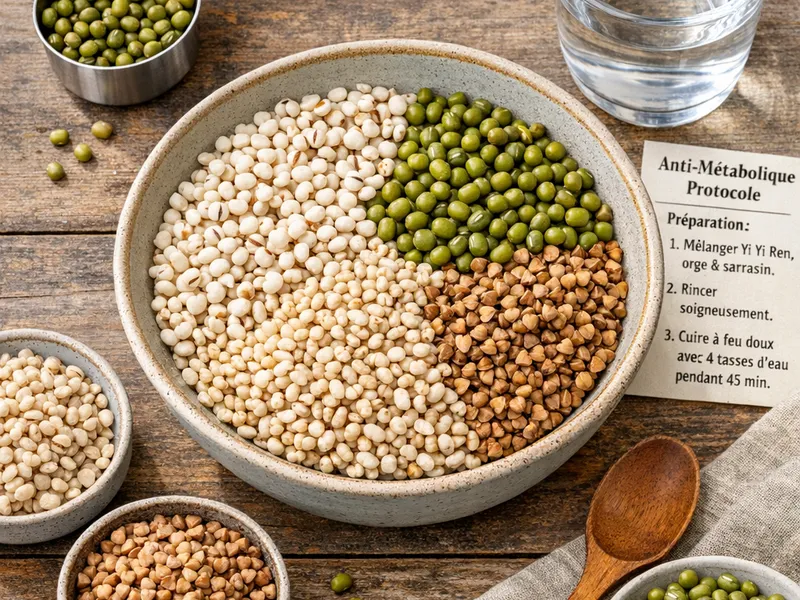
7.2 Anti-Metabolic Protocol (3 months)
Indication: Beginning metabolic syndrome, pre-diabetes, overweight with insulin resistance, Heat-Dampness-Stagnation profile.
Phase 1 (D1-D30): Clear Heat-Dampness
- Raw Yi Yi Ren 50% + Barley 30% + Buckwheat 20%
- Additions: mung beans, white radish, shiitake
- Absolutely avoid: alcohol, refined sugar, ultra-processed products
Phase 2 (D31-D60): Drain Dampness and strengthen Spleen
- Roasted Yi Yi Ren 40% + Semi-whole rice 30% + Buckwheat 20% + Barley 10%
- Additions: Chen Pi, cardamom, Chinese yam
Phase 3 (D61-D90): Consolidate Spleen and prevent relapse
- Semi-whole rice 50% + Millet 30% + Roasted Yi Yi Ren 20%
- Additions: jujubes, fresh ginger, black sesame
- Maintain light physical activity (30 min walking, Qi Gong)
7.3 Longevity Protocol (Maintenance from 50 years onwards)
Indication: People aged 50+ in good health wishing to preserve Jing and prevent decline.
Daily base:
- Millet 40% + Black rice 30% + Red rice 20% + Black sesame 10%
Rotational additions (alternate according to seasons):
- Spring: goji berries, chrysanthemum (Liver-Kidney)
- Summer: lotus, moderate mung beans (Heart-Heat)
- Autumn: Chinese yam, pear (Spleen-Lung, humidification)
- Winter: walnuts, chestnut, clove (Kidney-Yang, Ming Men)
Part VIII - Frequently Asked Questions (FAQ)
Which cereal to choose for a type 2 diabetic patient?
For a diabetic patient, prefer millet (Xiao Mi) combined with black rice (Zi Mi) and barley (Da Mai). This combination offers a glycaemic index of 48-58, nourishes Stomach and Kidney Yin (often deficient in diabetes), and drains Heat-Dampness. Avoid glutinous rice and limit white rice to less than 20% of the mixture.
How to treat Dampness with cereals without aggravating Spleen Deficiency?
Use roasted Yi Yi Ren (Chao Yi Yi Ren) at 30-40% of the mixture. Roasting neutralises its cool nature whilst conserving its draining action. Combine it with semi-whole rice (40%) to tonify Spleen, and barley (20%) to clear Heat-Dampness. Add fresh ginger and mandarin peel to circulate Qi.
Is white rice really forbidden in modern consultation?
No, white rice (Jing Mi) remains indicated in three precise situations: 1) Severe Spleen Qi Deficiency with very fragile digestion, 2) Post-acute illness convalescence (diarrhoea, vomiting), 3) First week post-partum. Limit it to 40-50% maximum of the mixture and always combine it with whole cereals to reduce glycaemic impact.
Which cereal for joint problems (Wind-Dampness)?
For joint pain aggravated by dampness and cold (Tong Bi), use sorghum (Gao Liang) at 30% combined with black glutinous rice (Zi Nuo Mi) at 20% and roasted Yi Yi Ren at 20%. Add black sesame (10-15g) to nourish Liver-Kidney and lubricate joints. For pain with heat (Re Bi), prefer raw Yi Yi Ren and buckwheat.
How to integrate cereals into a weight loss protocol?
For weight loss with metabolic syndrome, adopt a three-phase protocol: Phase 1 (30 days): Raw Yi Yi Ren 50% + Barley 30% + Buckwheat 20% to drain Heat-Dampness. Phase 2 (30 days): Roasted Yi Yi Ren 40% + Semi-whole rice 30% + Millet 30% to strengthen Spleen. Phase 3 (maintenance): Semi-whole rice 50% + Millet 30% + Roasted Yi Yi Ren 20%.
Part IX - Key Takeaways
🎯 Fundamental Therapeutic Principles
- Diagnosis takes priority over fashion: No cereal is universally “good” or “bad”. Prescription depends on the patient’s differential syndrome.
- Synergistic association is the rule: Therapeutic porridges function like herbal formulas - power comes from intelligent combination.
- Glycaemic load matters more than GI: For diabetic patients, evaluate the GL of the actual portion rather than the theoretical GI.
- Soaking improves bioavailability: 8-24h soaking with a little vinegar reduces phytic acid and improves mineral assimilation.
🌾 Cereal Choices by Syndrome
- Spleen Qi Deficiency: White rice (if fragile digestion) or semi-whole + jujubes + fresh ginger
- Heat-Dampness: Raw Yi Yi Ren + Barley + Buckwheat + mung beans
- Yang Deficiency: Black glutinous rice + sorghum + walnuts + dried ginger
- Yin Deficiency: Millet + black rice + Chinese yam + goji berries
- Liver Stagnation: Semi-whole rice + buckwheat + mandarin peel + rose
⚖️ Modern Metabolic Balance
- High GI = Heat-Dampness generation in sedentary patients
- Semi-whole rice = best balance of tonification/without excess Dampness
- Yi Yi Ren = only truly draining cereal (GI 25-35)
- Millet = only grain directly nourishing Stomach Yin
🔬 Science-TCM Integration
- Insulin resistance = Spleen Qi Deficiency + Dampness
- HbA1c > 6.5% = Yin Deficiency with Heat-Dampness
- Triglycerides > 1.7 = Phlegm-Dampness
- CRP > 3 mg/L = Heat-Dampness or Stagnation-Heat
Conclusion: Grain as an Act of Medicine
Grain is not a banal food. Prescribed with discernment, it is one of the most powerful and most accessible therapeutic tools of the Chinese dietetics practitioner.
This guide has attempted to demonstrate that clinical mastery of cereals rests on three levels of competence that must integrate simultaneously:
The pharmacopoeia level: Knowing each grain in its thermal nature, flavour, meridian tropism and specific actions - distinguishing varieties (white / red / black / glutinous rice), species (millet, coix, barley, sorghum, buckwheat) and preparation modes (raw / roasted, whole / polished, light porridge / thick congee).
The differential diagnostic level: Precisely identifying the complex syndromes of the modern patient, which never reduce to a simple Deficiency or simple Excess, but constitute dynamic constructions - Yang Deficiency + Dampness, Heat-Dampness + Spleen Deficiency, Liver Stagnation + Blood Deficiency - requiring equally nuanced cereal prescriptions.
The integrative level: Dialoguing with modern nutrition data - glycaemic index, glycaemic load, microbiome, metabolomic profiles, drug interactions - not to invalidate TCM, but to refine its indications and strengthen its effectiveness in the context of the 21st century patient.
The Huang Di Nei Jing teaches us that “the five grains nourish”. Two millennia later, this prescription retains all its relevance - provided the practitioner knows which grain, how prepared, for which patient, and in which season.
It is this precision that distinguishes Chinese dietetics from a simple porridge recipe.
© Clinical reference document intended for professionals of Chinese dietetics, traditional Chinese medicine and integrative nutrition. This document does not replace individual medical advice. Therapeutic information concerning medicinal plants (Yi Yi Ren, Chen Pi, Da Zao, etc.) belongs to traditional pharmacopoeia and must be used within the framework of qualified professional practice.
About the Author
Dr. Yin Shi, PhD is an expert in clinical Chinese dietetics with more than 15 years of integrative practice combining traditional Chinese medicine and modern nutrition. Trained at Beijing University of Chinese Medicine and doctorate in metabolic nutrition from Universite Paris-Saclay, he has published more than 20 research articles on the integration of TCM concepts in the management of metabolic diseases. He currently teaches clinical Chinese dietetics at the European Institute of Integrative Medicine and supervises the therapeutic protocol of the Yin Shi application.
Expertise validated by:
- Member of the Societe Francaise d’Acupuncture et de Moxibustion (SFAM)
- Certified in Clinical Nutrition by the European Society of Parenteral and Enteral Nutrition (ESPEN)
- Associate researcher at the Laboratoire de Nutrition et Metabolisme, INSERM U1151
- Author of “Diabetique Chinoise et Medecine Integrative” (Editions Dangles, 2023)
References and Further Reading
Classical Texts
- Huang Di Nei Jing Su Wen (Yellow Emperor’s Inner Classic - Simple Questions), c. 200 BCE
- Huang Di Nei Jing Ling Shu (Spiritual Pivot), c. 200 BCE
- Shen Nong Ben Cao Jing (Shen Nong’s Classic of Materia Medica), c. 100 CE
- Jin Gui Yao Lue (Essential Prescriptions from the Golden Cabinet), Zhang Zhongjing, c. 220 CE
- Ben Cao Gang Mu (Compendium of Materia Medica), Li Shizhen, 1578 CE
- Sui Xi Ju Yin Shi Pu (Recipes from the House of Random Pleasure), Wang Mengying, Qing Dynasty
Key Modern Studies (2015-2024)
- Bhupathiraju SN et al. - Glycemic index, glycemic load, and risk of type 2 diabetes. Am J Clin Nutr, 2014
- Jonnalagadda SS et al. - Putting the Whole Grain Puzzle Together. J Nutr, 2011
- Kim JY et al. - Coix lacryma-jobi: biological activities and therapeutic potential. J Ethnopharmacol, 2020
- Tong LT et al. - Millet: Nutritional Composition and Potential Health Benefits. Comprehensive Reviews in Food Science, 2021
- Zhang Y et al. - Anthocyanins from black rice: Metabolic effects and clinical applications. Food Chemistry, 2022
- Liu X et al. - Beta-glucan from barley: Mechanisms of action in metabolic syndrome. Nutrition Reviews, 2023
- Wang R et al. - Traditional Chinese Medicine diet therapy in type 2 diabetes: A systematic review. Diabetes Research and Clinical Practice, 2024
- Chen S et al. - Proso millet (Panicum miliaceum) and gastric mucosal protection: Clinical evidence. Journal of Ethnopharmacology, 2023
- Martinez-Lopez N et al. - Resistant starch formation in rice: Therapeutic implications for gut microbiome. Nature Reviews Gastroenterology & Hepatology, 2022
- Patel A et al. - Coix seed extract (Yi Yi Ren) in cancer therapy: Molecular mechanisms and clinical trials. Phytomedicine, 2024
International Clinical Sources
- American Diabetes Association. Nutrition Therapy Recommendations for Diabetes. Diabetes Care, 2024
- European Society of Cardiology. Diet and Cardiovascular Disease Guidelines. European Heart Journal, 2023
- World Health Organization. Whole grain intake and health outcomes: Systematic review. WHO Technical Report, 2022
Clinical Applications and Protocols
- Therapeutic protocols available via the Yin Shi application for practitioners
- Clinical database on cereal-syndrome associations: Yin Shi Clinical Database
- Continuing education in Chinese dietetics: Institut Europeen de Medecine Integrative
- Zhu F. - Buckwheat starch: Structures, properties, and applications. Trends in Food Science & Technology, 2016
To go further
Yin Shi ecosystem resources directly related to this article.
Which grain suits your terrain?
The Eight Principles test locates the thermal nature your grains should follow.
Take the test →See these grains in the app
Rice, oats and millet: three grains from the guide, with full sheets.
Full sheets available after the 30-day free trial or with a subscription.
Grains in the materia medica
The lesson reviews grains and legumes by nature, flavour and tropism.
Take the lesson →