Cold-Dampness (寒湿 Hán Shī) in Traditional Chinese Medicine is a mixed pathogen that combines Cold (contraction, stagnation, pain) and Dampness (heaviness, stagnation, obstruction). It causes symptoms of internal cold associated with heaviness and tenacious obstruction, particularly painful and difficult to disperse.
Cold-Dampness
寒湿
- Combines Cold contraction and Dampness heaviness
- Causes fixed, stabbing pains improved by heat
- Engenders bodily heaviness with cold sensation
- Obstructs Qi and Blood circulation
- May provoke cold oedemas and loose stools
- Requires warming foods that disperse Cold and dry Dampness
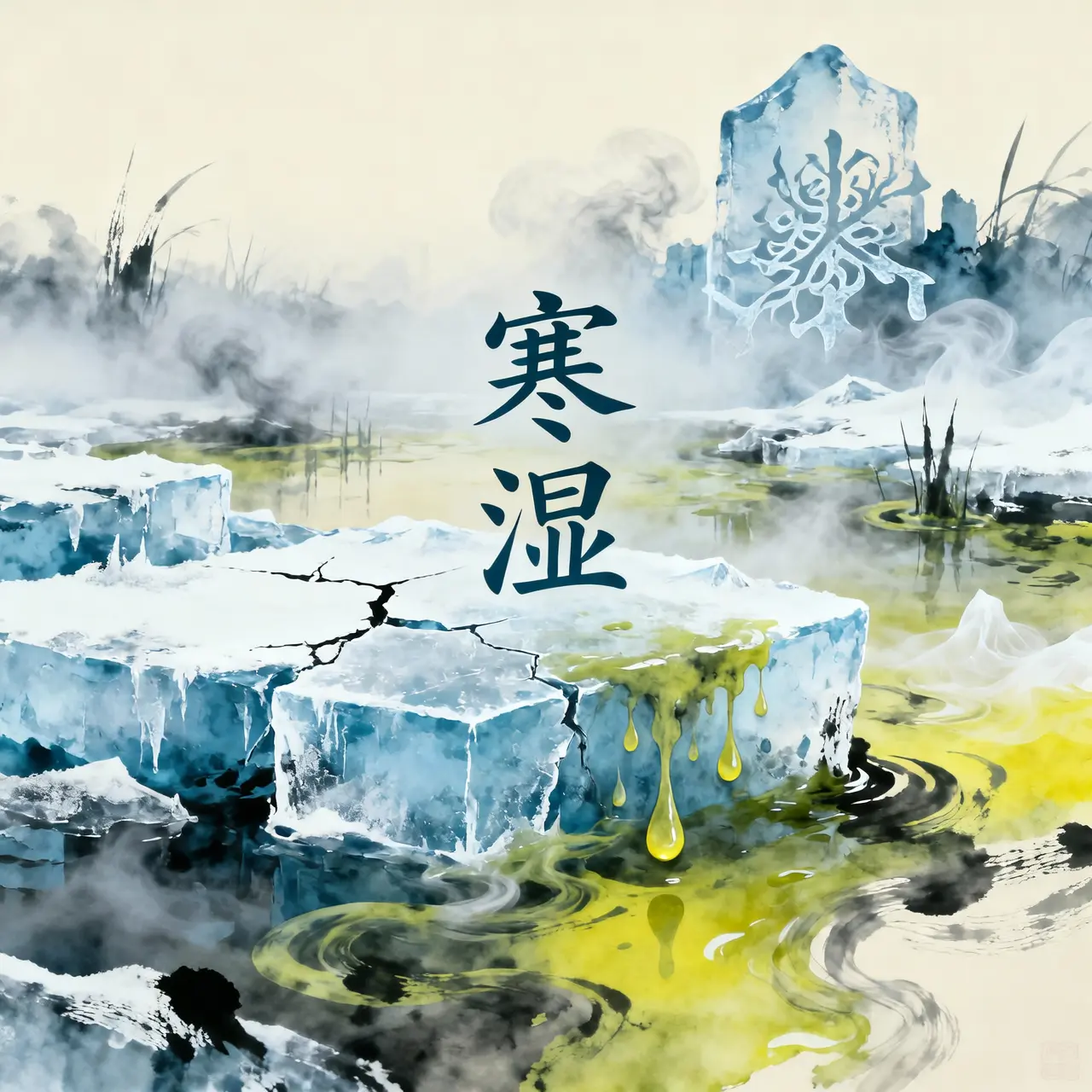
Cold-Dampness is like wet ice that infiltrates joints and tissues. It contracts, it numbs, it weighs down and it only leaves slowly, warmed by internal heat and dispersed by movement. It is particularly active in winter and spring, when cold and dampness dominate.
In Traditional Chinese Medicine
In TCM theory, Cold-Dampness is one of the most painful pathogens. It forms when Cold (internal or external) meets Dampness (internal or external) and combines with it. Cold contracts and slows; Dampness obstructs and stagnates. Their combination creates a pathogen that contracts, obstructs and numbs tissues, joints and organs.
Cold-Dampness manifests through:
- Joint and muscle pain: fixed, stabbing, deep pains, improved by heat and aggravated by cold and dampness, morning stiffness that slowly improves with movement and heat
- Bodily heaviness with cold: cold sensation in the body, cold and heavy limbs, heavy and numb fatigue
- Digestive disorders: nausea, bloating, loose and clear stools with cold sensation at elimination, lack of appetite, preference for hot foods and drinks
- Cold oedemas: swelling of joints, ankles, eyelids, with a cold sensation to the touch
- Urinary disorders: clear and abundant urine, cold sensation at urination, nocturia
- General disorders: persistent cold intolerance, cold sensation in the back and lumbar region, deep and heavy fatigue, pale and dull complexion
Cold-Dampness is particularly favoured by cold and humid climates, cold and humid housing, exposure to cold and dampness (especially when sweating), a diet that engenders Dampness and Cold (dairy products, sweets, cold and raw foods), weakened Kidney and Spleen Qi that does not transform fluids and does not warm the body, and exhausted Kidney Yang that can no longer disperse internal Cold.
Practical Applications
In Chinese dietary therapy, Cold-Dampness is dispersed by warming foods that disperse Cold and dry Dampness. Recommended foods include ginger, garlic, leeks, cinnamon, clove, fennel, basil, turmeric, chilli, celery, carrots, sweet potatoes, azuki beans, shiitake mushrooms, ginger-cinnamon infusions and clove infusion.
Lifestyle is crucial for preventing and treating Cold-Dampness: protection against cold and dampness (especially when sweating), warm and dry housing, moderate physical activity that circulates Qi and warms Yang (walking, tai chi, qi gong, activities in a warm interior), stress management that releases Qi Stagnation, hot and warming diet, and protection of the lumbar region and lower abdomen against cold. Exposure to cold and dampness, cold and humid housing, sedentary lifestyle, chronic stress and a cold and humid diet favour Cold-Dampness.
Concrete Examples
A patient presenting with Bi syndrome (痹症 Bì Zhèng) with Cold-Dampness may experience fixed, stabbing and deep joint pains, improved by heat and aggravated by cold and dampness, morning stiffness that slowly improves with movement, heavy limbs, persistent cold intolerance, cold sensation in the back and lumbar region, pale and dull complexion, pale swollen tongue with a white moist and greasy coating, and a deep slow pulse. The dietary protocol will include warming foods that disperse Cold-Dampness such as lamb stewed with ginger, garlic and cinnamon, rice porridge with leeks and ginger, roasted carrots and sweet potatoes, ginger-cinnamon-clove infusions, and daily protection against cold and dampness.
A patient presenting with Middle Burner Cold-Dampness with digestive disorders may experience nausea, bloating, loose and clear stools with cold sensation, lack of appetite, preference for hot foods, cold hands and feet, heavy fatigue, pale swollen tongue with teeth marks and a white moist coating, and a deep soft pulse. The dietary protocol will include warming foods that disperse Cold and dry Middle Burner Dampness such as rice porridge with ginger and dates, chicken stewed with carrots, leeks and ginger, sweet potatoes roasted in the oven, hot ginger-cinnamon infusions, and elimination of cold, raw, dairy and sweet foods.
Frequently Asked Questions
How does Cold-Dampness differ from simple Cold or Dampness?
Cold contracts and slows circulation, causing pain, coldness and white coating. Dampness obstructs and stagnates, causing heaviness, greasy coating and loose stools. Cold-Dampness combines both: the cold contracts the tissues and the dampness stagnates in the contracted tissues, creating deep, fixed, stabbing pains with heaviness and coldness. Simple Cold is easier to disperse with heat; simple Dampness is easier to dry with bitter and drying foods. Cold-Dampness requires both warming and drying simultaneously, and takes longer to disperse.
What climates favour Cold-Dampness?
Cold-Dampness is favoured by cold and humid climates (wet winters, damp springs, rainy autumns), cold and humid housing (basements, ground floors, poorly insulated housing, bathrooms without ventilation), exposure to cold and dampness (walking in the rain, sweating in the wind, wearing wet clothes, sitting on cold ground), and a diet that engenders Dampness and Cold (excess dairy products, sweets, cold drinks, raw foods, insufficient cooking). Cold and dry climates favour simple Cold; hot and humid climates favour Damp-Heat.
Which foods disperse Cold-Dampness?
Foods that disperse Cold-Dampness are warming and pungent, that disperse Cold and dry Dampness. We cite ginger (fresh and dried), garlic, leeks, spring onions, cinnamon, clove, fennel, basil, turmeric, chilli, celery, carrots, sweet potatoes, azuki beans, shiitake mushrooms, lamb, chicken, beef, rice, millet, ginger-cinnamon infusions, clove infusions, hot soups and stews. Foods to avoid are cold and raw foods (salads, raw vegetables, sushi, iced drinks), dairy products, sweets, greasy foods, and insufficiently cooked foods.
Conclusion
Cold-Dampness constitutes one of the most painful and tenacious mixed pathogens in Traditional Chinese Medicine. Understanding its mechanisms, manifestations, dietary approaches and lifestyle adaptations enables a clearer grasp of the therapeutic reasoning and support protocols offered within the Yin Shi universe.
To go further
Yin Shi ecosystem resources directly related to this article.
Cold or Heat: which way does your terrain lean?
The Eight Principles test locates your terrain between heat and cold, deficiency and excess.
Take the test →The Cold-Dampness that gums up the Spleen
The lesson describes the icy, heavy mixed pathogen that blocks transformation.
Take the lesson →