In our hyperconnected world, screens are omnipresent. Smartphones, tablets, computers: they are an integral part of our daily lives, shaping our interactions, our work and our leisure. But what is their real impact on our mood and wellbeing? Are they faithful allies, offering us connection and opportunity, or subtle enemies, undermining our serenity? This article explores the complex and often paradoxical relationship between screens and our emotional state, giving you essential keys to conscious, balanced use. Discover how to turn these digital tools into genuine supports for your wellbeing rather than sources of stress.

The rise of screens in our daily lives
The digital era has profoundly redefined our social and personal landscape. From the first rays of sunlight to the last moments before sleep, screens punctuate our days, becoming almost natural extensions of ourselves. This rapid and sometimes insidious integration, amplified by the pandemic which accelerated the massive adoption of digital tools, raises fundamental questions about their long-term effects, particularly on our psyche and our social behaviours. Understanding this omnipresent influence is the essential first step towards healthy, controlled use of technology, a proactive approach to preserving our mental balance.
Screens as allies: benefits for mood
It is undeniable that screens, when used judiciously, bring many benefits that can positively influence our mood and strengthen our sense of wellbeing.
Social connection and support
Digital platforms offer us unprecedented ways to stay connected with loved ones, make new friends beyond geographical borders and find support communities for shared interests or challenges. For those who feel isolated, an online forum, a specialised discussion group or a simple video call with a distant friend can be an invaluable source of comfort, understanding and joy, effectively fighting loneliness and strengthening the social fabric, even at a distance.
Learning and personal development
Access to an infinite quantity of knowledge through interactive tutorials, certified online courses or captivating documentaries considerably enriches our skills and stimulates our intellectual curiosity. Whether learning a new language, mastering a musical instrument, developing a new professional skill or taking up a new hobby, these opportunities can provide a deep sense of accomplishment, significantly improve self-esteem and open up new personal and professional horizons.
Entertainment and escape
Films, series, immersive video games, relaxing music, educational podcasts: screens are inexhaustible sources of entertainment suited to every preference. They offer necessary moments of relaxation and escape, reducing accumulated stress and allowing us to unwind effectively after a busy day. A good laugh shared over a comedy, immersion in a captivating virtual world or listening to a soothing melody can instantly lift the spirits and offer a precious escape from daily troubles.
The other side of the coin: when screens harm mood

Navigating the complex relationship between our screens and our emotional state.
Despite their manifest advantages, excessive, unregulated or inappropriate screen use can have significant negative repercussions on our mood, our mental health and our general wellbeing.
Information overload and anxiety
The constant, uninterrupted flow of information, often dominated by anxiety-inducing news (world crises, natural disasters, political conflicts), can lead to major cognitive overload. This “infobesity” makes it hard to distinguish the essential from the superfluous, rapidly exhausting our mental resources and generating a state of chronic anxiety, a feeling of being constantly overwhelmed and unable to process all the available information, which can lead to a sense of powerlessness and distress.
Social comparison and self-esteem
Social networks, in particular, tend to present an idealised and often unrealistic image of other people’s lives. This constant exposure to “perfect lives”, filtered and carefully staged, can feed a toxic social comparison. By comparing themselves with the successes, physical appearances or experiences of others, many people develop feelings of inadequacy, jealousy, body dissatisfaction and a significant drop in self-esteem, directly affecting their happiness and confidence.
Sleep problems and fatigue
The intense blue light emitted by smartphone, tablet and computer screens, especially in the evening, seriously disrupts the production of melatonin, the crucial hormone that signals to our body that it is time to prepare for sleep. This interference with our natural circadian rhythm can considerably delay falling asleep, fragment sleep and impair its restorative quality. The consequences include daytime fatigue, increased irritability, difficulty concentrating and a general reduction in cognitive and emotional performance the next day.
Reduced physical activity
Prolonged screen time is too often synonymous with sedentary behaviour. Spending hours in front of a screen drastically reduces the time allocated to physical activity, which is nevertheless essential. Lack of exercise is linked not only to physical health problems (obesity, cardiovascular disease) but also to an increased risk of depression and anxiety, since physical activity is a powerful mood regulator that promotes the release of endorphins, often called the happiness hormones.
Cyberbullying and online risks
The relative anonymity offered by the web can unfortunately embolden some aggressive and malicious behaviours, leading to cyberbullying. Victims of online harassment can suffer severe psychological distress, deep isolation, shame and, in the most extreme cases, suicidal thoughts. Confrontation with inappropriate, violent or dangerous content, or exposure to online predators, can also be a deeply traumatic experience requiring immediate psychological support.

Specific impact on teenagers and mental health
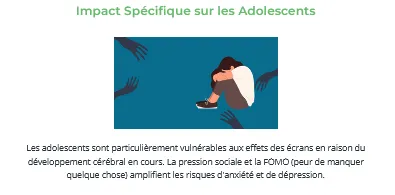
Teenagers, in the midst of brain development and identity formation, are particularly vulnerable to the negative effects of screens. Their brain plasticity makes them more sensitive to external influences and online social pressures. Recent studies show an increasingly evident link between excessive screen use and the rise of generalised anxiety disorders, depression, body-image problems and eating disorders in this age group. The pressure to maintain an impeccable online presence and the fear of missing out (FOMO) can be overwhelming.
The need to belong is intrinsically strong in young people, and social networks can become a source of constant validation, incessant comparison or, conversely, painful exclusion and rejection. It is therefore crucial to support teenagers in their digital navigation, helping them develop a critical mind towards the content they consume, understand how social networks work and acquire self-protection strategies and resilience in the face of the online world’s challenges.
Strategies for a balanced relationship with screens
This is absolutely not about demonising screens, which are extraordinary tools. The goal is rather to learn to use them in a healthy, conscious and intentional way. Here are some effective, practical strategies to adopt in order to cultivate a better digital balance:
Setting clear limits
- Establish screen-free times: Define moments and places where screens are banned, notably during family meals, an hour before bedtime to promote restorative sleep, and at family or friends’ gatherings to encourage real interactions.
- Use screen-time tracking apps: These tools, built into smartphones or downloadable, let you become aware of your actual consumption and set daily limits for each app. Receive notifications when you exceed your goals and adjust your habits accordingly.
- Create technology-free zones: Designate certain rooms in your home (such as the bedroom) or certain times of day as screen-free sanctuaries.
Practising digital disconnection
- Set up “digital detox” periods: This can be as simple as a few hours a day, half a day a week or a weekend a month. The idea is to disconnect completely to refocus on yourself and your real environment.
- Keep your phone out of reach: When working on a task requiring concentration, or engaging in a leisure activity, put your phone in another room, in airplane mode or out of sight to avoid constant distractions and intrusive notifications.
- Disable non-essential notifications: Reduce the temptation to check your device by turning off alerts from non-priority apps.
Prioritising offline activities
- Engage in non-digital hobbies: Rediscover the pleasure of reading a physical book, playing outdoor sports, gardening, creative arts (drawing, painting, music) or volunteering. These activities enrich mind and body without a screen.
- Spend time in nature: It is scientifically proven that contact with nature reduces stress, improves mood, decreases mental rumination and strengthens psychological resilience. A walk in the woods or a moment by the water can be deeply restorative.
- Strengthen real social bonds: Organise meet-ups with friends or family, take part in community events. Face-to-face interactions are vital for social and emotional wellbeing.
Educating and talking (especially for young people)
- For parents: Discuss the risks and benefits of screens openly and regularly with your children. Encourage them to share their online experiences and ask questions without fear.
- Establish clear rules of use: Co-create rules with children (appropriate age, screen time, type of content) and model healthy digital behaviour yourself. Be the example you want them to follow.
- Develop their critical thinking: Teach them to distinguish reliable information from fake news, to understand the commercial aims of platforms and to manage their online privacy.

Watching for signs of distress
Be alert to signs of screen-related addiction or distress, such as persistent irritability, marked social withdrawal, chronic sleep problems, a decline in school or work performance, or a significant change in mood. Never hesitate to seek help and advice from health professionals (doctors, psychologists, therapists) if you or a loved one needs it. Early recognition is essential for effective intervention.
Frequently asked questions about screens and mood
Can screens really make you depressed?
Although screens are not the direct and sole cause of depression, excessive and unregulated use, especially when it replaces real social activities, physical activity and sufficient sleep, can strongly contribute to the onset of depressive symptoms or exacerbate an existing depression by increasing isolation, negative social comparison and diminished self-esteem. The mediating role is crucial.
How does blue light from screens affect my sleep?
Blue light, particularly that emitted by LED screens, inhibits the production of melatonin, the sleep hormone. This suppression sends erroneous signals to your brain, making it believe it is still daytime. It disrupts your natural circadian rhythm, the 24-hour sleep-wake cycle, making it harder to fall asleep, prolonging the time it takes to fall asleep and reducing the quality of deep, restorative sleep. It is recommended to avoid screens for at least an hour before bed.
At what age should children have their first smartphone?
There is no universally recommended age, as maturity varies from child to child, but many child psychiatry and development experts suggest waiting until adolescence (around 12 to 14). The aim is to allow children to develop social, emotional and problem-solving skills in the real world before facing the complexity and constant pressures of the online world. Strict parental supervision is essential regardless of age.
What is screen addiction?
Screen addiction, often called internet use disorder (IUD) or cyberdependence, is a compulsive, excessive behaviour related to the use of digital devices and the internet. It is characterised by loss of control, constant preoccupation with online activity and significant negative consequences that interfere with major areas of daily life (work, school, social relationships, personal hygiene) and cause significant psychological distress. Withdrawal symptoms may appear when use is restricted.
Is a “digital detox” really effective?
Yes, a planned, conscious “digital detox” can be very effective. It allows you to reset your relationship with technology, reduce the stress and anxiety linked to constant connectivity, improve sleep quality and rediscover the pleasure of offline activities. Even short periods of disconnection can bring notable benefits for your mental wellbeing.

Navigating the complex relationship between our screens and our emotional state.
Glossary of digital wellbeing
Digital wellbeing:
A global concept designating an individual’s state of mental, physical and emotional balance and health within the digital environment. It is characterised by conscious, intentional and moderate use of technology, aiming to maximise its benefits while minimising its potential negative effects on real life.
Dopamine:
An essential neurotransmitter in the brain, often associated with sensations of pleasure, motivation and reward. Screen use, particularly notifications, likes and the instant gratification of games or social networks, can cause dopamine spikes, creating a powerful reward circuit that can, over time, lead to compulsive seeking behaviours and dependence.
Circadian rhythm:
The body’s internal biological clock, lasting about 24 hours, which regulates many physiological and behavioural processes, notably sleep-wake cycles, body temperature and hormone release. The blue light emitted by screens, especially in the evening, is a major disruptor of this rhythm.
Sedentary behaviour:
A lifestyle characterised by low energy expenditure and a significant lack of physical activity. Sedentary behaviour, often aggravated by excessive, prolonged screen time (sitting at work, video games, watching films), is a major risk factor for many chronic diseases and a contributor to deteriorating mental health.
Cyberbullying:
A form of deliberate and repeated harassment or intimidation that uses digital technologies (the internet, social networks, mobile phones, online games) to threaten, embarrass, intimidate or hurt another person. It can take various forms, such as spreading rumours, sending threatening messages or exclusion from online groups, and its psychological consequences are often serious.
Conclusion
The relationship between screens and our mood is undeniably complex and deeply nuanced. They are powerful tools of connection, learning and entertainment that have revolutionised our lives, but they also harbour significant traps that can seriously harm our mental wellbeing if their use is not managed with discernment. The key lies not in rejecting them outright, but in being aware of their impact and adopting a healthy balance. By implementing healthy-use strategies, setting clear limits and actively prioritising offline activities that nourish soul and body, we can turn our screens into genuine allies of our wellbeing rather than silent enemies eroding our serenity. Take resolute control of your screen time and commit to cultivating a fulfilled digital life, rich in real interactions and moments of full presence. Your mood, and your overall health, will thank you greatly.
Take action:
Evaluate your daily screen time honestly today. Identify one or two digital habits you would like to change to improve your wellbeing, and put a small concrete step in place to achieve it this week. For example, disable non-essential notifications or decide on a screen-free hour before bed. Share your tips for a better digital balance in the comments!
Article written by Yin Shi with the collaboration of mental health experts. Sources: studies published in the Journal of the American Academy of Child and Adolescent Psychiatry, WHO data and principles of nutritional psychiatry. In case of psychological distress, contact the Samaritans on 116 123 (UK, 24/7), the 988 Suicide and Crisis Lifeline (US), or a mental health professional.
To go further
Yin Shi ecosystem resources directly related to this article.
Have screens weighed on your well-being?
The WHO-5 index measures your psychological well-being over the past fortnight.
Take the test →Screens, between use and addiction
The lesson deals with behavioural addictions, including screens and pathological gambling.
Take the lesson →