Sleep is far more than mere rest. For teenagers, it is a cornerstone of their physical, mental and emotional development. Yet chronic sleep deprivation is increasingly common in this age group, and often underestimated. Growing academic demands, omnipresent access to screens and social pressures all contribute to a culture in which sleep is readily sacrificed. Unfortunately, this lack of adequate rest is not without consequences. It is closely linked to deep and widespread mental health problems, notably anxiety, attention disorders and, above all, depression. Understanding this connection is crucial for prevention and intervention. This article explores in depth why sleep is so vital for growing young people, how the disruption of sleep cycles harmfully affects their mood and behaviour, and above all, which concrete, science-based strategies can be put in place to drastically improve the quality of their nights. Discover how a conscious and sustained investment in your teenager’s sleep can positively transform their mental health, academic success and general wellbeing.
The vital importance of sleep for teenagers
Sleep in adolescence is not a luxury; it is an imperative and complex biological necessity. During this period of rapid growth, intense brain maturation and significant hormonal change, young people’s bodies and brains work intensely even at rest. Sufficient, quality sleep is essential for several vital functions, acting as an essential “recharge” and “repair” process. It actively supports cognitive development, consolidating memory (declarative and procedural memory alike) and facilitating the learning of new skills and information. It is during deep sleep that the brain sorts and stores the day’s experiences, strengthening neural connections. It also plays a leading role in emotional regulation, allowing the brain to process emotions and reduce the reactivity of the amygdala. A well-rested teenager is therefore better equipped to manage stress and anxiety, resolve conflicts and face daily challenges with greater resilience.
Moreover, sleep directly influences academic performance and concentration. A lack of sleep can cause a drastic drop in classroom attention, significant difficulty solving complex problems, reduced creativity and slowed mental and physical responsiveness. Physically, sleep is crucial: it regulates the immune system, making teenagers less prone to infections. It aids muscle growth and cellular repair, essential for their physical development. Sleep is also involved in hormonal regulation, influencing growth hormones, appetite hormones (ghrelin and leptin) and the stress hormone (cortisol). Teenagers’ sleep needs vary slightly from one individual to another, but most require between 8 and 10 full hours per night to function optimally. Unfortunately, many epidemiological studies show that the vast majority of teenagers sleep less than that, creating a chronic deficit accumulated night after night. This persistent shortfall weakens their physical and psychological resilience, making them considerably more vulnerable not only to psychological disorders but also to other health problems such as obesity and type 2 diabetes.

The link between sleep and depression in teenagers
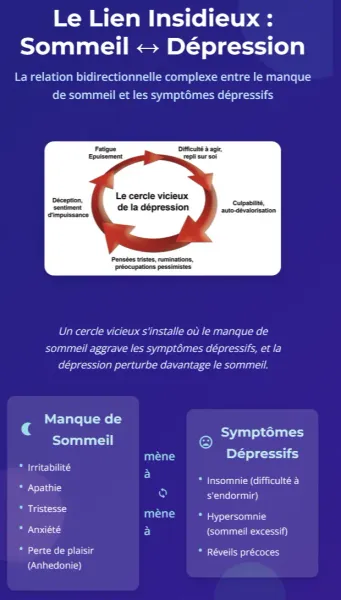
The relationship between sleep and depression is complex, insidious and bidirectional, often forming a vicious circle that is hard to break without targeted intervention. Lack of sleep can be both an early or aggravating symptom of depression and an independent risk factor that triggers or exacerbates it. A teenager suffering from depression may show varied sleep disorders: insomnia (difficulty falling or staying asleep), hypersomnia (excessive but non-restorative sleep) or frequent early waking. Conversely, insufficient or poor-quality sleep can exacerbate sadness, apathy, irritability, loss of pleasure (anhedonia) and feelings of hopelessness, the cardinal symptoms of depression. This interaction is reinforced by complex neurobiological mechanisms.
Melatonin and its disruption in adolescence: a natural delay amplified
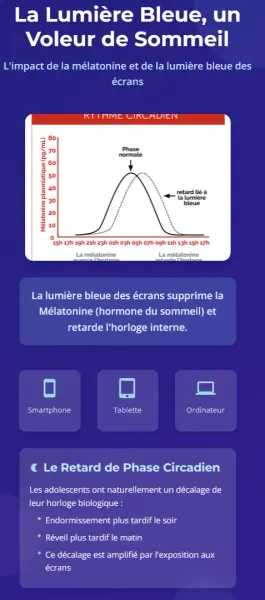
Melatonin, often called the “sleep hormone”, is a key hormone produced by the pineal gland in the brain; its secretion is stimulated by darkness and inhibited by light. It acts as a chemical signal telling the body it is time to prepare for sleep. In teenagers, there is a natural biological shift in melatonin production. Their internal body clock, or circadian rhythm, undergoes a physiological phase delay, naturally pushing them to fall asleep and wake up later than children or adults. This phenomenon, though natural, is dramatically amplified by modern lifestyles. Chronic, prolonged exposure to artificial light, particularly that emitted by digital screens (smartphones, tablets, computers, televisions) before bedtime, is a major culprit. Blue light, particularly intense, significantly suppresses melatonin production, delaying sleep onset and disturbing sleep quality. This makes falling asleep even harder for young people, who are already predisposed to staying up late because of their biology, their school obligations and their social interactions.
How sleep deprivation affects the teenage brain and mood
Disturbed sleep has direct and profound repercussions on teenagers’ emotional balance and brain function. Without adequate rest, the brain, in particular the prefrontal cortex (responsible for decision-making, planning and emotional regulation) and the amygdala (involved in the response to stress and emotions), does not have enough time to process and consolidate the day’s emotions. This can lead to hyperreactivity to negative stimuli, greater difficulty regulating intense emotions and reduced empathy. Sleep-deprived teenagers are often more irritable, more impulsive, more anxious, more prone to unexplained mood swings and may show intolerance to frustration. They may also struggle to concentrate on schoolwork or leisure, which negatively affects their academic performance, self-esteem and motivation. Chronic fatigue also reduces general motivation and interest in previously enjoyed activities, classic symptoms of depression (anhedonia). This general decline in emotional wellbeing, combined with an alteration of the mood-regulating neurotransmitters serotonin and dopamine, can precipitate the onset of depressive symptoms or worsen an existing depression. It is therefore imperative to address sleep habits as a central element of any strategy aimed at supporting the mental health and harmonious development of young people.
Practical strategies for improving teenagers’ sleep
Fortunately, there are many effective, scientifically proven strategies to help teenagers regain quality sleep. These adjustments, even gradual ones, can have a significant and measurable impact on their mood, general wellbeing and cognitive abilities. The aim is to create an environment and habits that promote deep, restorative rest, recognising that sleep is a skill that can be learned and improved. This is a holistic approach integrating daily routine, environment management, nutritional support and stress management.
Creating a relaxing, consistent bedtime routine
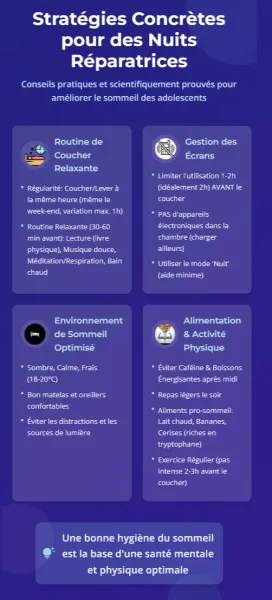
Regularity is the keystone of good sleep hygiene. Encouraging a consistent sleep schedule, that is going to bed and getting up at the same time every day (including weekends, with a maximum variation of one hour), helps synchronise and strengthen the teenager’s internal body clock. This reinforces the circadian rhythm and eases natural sleep onset and waking. Establishing a relaxing pre-bedtime routine is also essential to signal to body and mind that it is time to slow down. This routine, lasting at least 30 to 60 minutes, should include calm, soothing activities: reading a physical book (not on a bright screen), listening to soft, relaxing music, practising guided meditation or deep-breathing exercises. A warm bath or tepid shower before bed can also promote muscle relaxation and a slight drop in core body temperature, conducive to falling asleep. The bedroom environment should be a true “sleep sanctuary”: make sure it is ideally dark (shutters or blackout curtains), quiet (earplugs if needed, or white noise) and cool (temperature between 18 and 20°C). A good mattress and comfortable pillows suited to the teenager’s build also contribute significantly to better-quality, less fragmented sleep.
The impact of screens and managing blue light
Exposure to digital screens is arguably one of the greatest modern challenges for teenage sleep, acting as a true “sleep thief”. Blue light, emitted in large quantities by smartphones, tablets, computers and televisions, is particularly problematic because it interferes directly and powerfully with natural melatonin production. This short-wavelength light tells the brain it is daytime, even in the middle of the night, thus delaying the internal clock and making sleep onset very difficult. To counter this harmful effect, it is absolutely crucial to drastically limit screen use at least one to two hours (ideally two) before bedtime. Setting devices to “night” mode (which applies a blue-light filter) can help slightly, but complete abstinence remains the most effective strategy. It is also strongly advised not to leave electronic devices (phones, tablets) in the bedroom, and to charge them outside the room. This reduces not only the temptation to check notifications or browse late at night, but also exposure to alert-related micro-awakenings. Open discussions and clear family agreements on screen use are essential to creating an environment conducive to sleep.
Natural, dietary and physical-activity solutions
Certain natural and dietary approaches can effectively support better sleep, working alongside good sleep-hygiene habits. Although drawn from sources such as “Nourrir son moral: Guide alimentaire antidépresseur pour adolescents”, these tips are general, well-founded and complementary to a global approach. A herbal tea of camomile, valerian or verbena, known for their soothing and mildly sedative properties, can aid relaxation before sleep. Drinking warm milk, or eating bananas or cherries (notably Montmorency cherries), can be beneficial because these foods contain tryptophan, an essential amino acid precursor of serotonin and melatonin, thus promoting sleep onset and quality. A balanced, varied diet throughout the day is also paramount. Avoid heavy, spicy or overly sweet meals just before bedtime, as they can cause indigestion or disruptive blood sugar fluctuations. Caffeine (coffee, tea, fizzy drinks) and energy drinks, even consumed in the afternoon, can have a persistent stimulant effect and seriously disturb night-time sleep; their intake should be limited, or avoided, after midday. Regular physical exercise is a powerful ally for sleep and mood, helping to reduce stress and anxiety. However, it is best not to exercise intensely too close to bedtime (ideally not within 2 to 3 hours), as this can stimulate the body and make it harder to unwind. Opt instead for physical activity during the day or early evening.
The role of parents, schools and health professionals
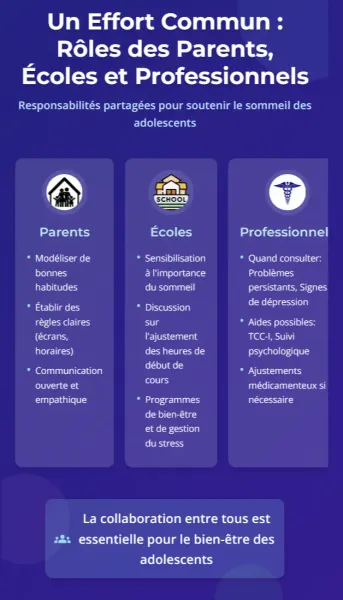
Improving teenagers’ sleep is a shared responsibility involving the teenagers themselves, their parents, educators and health professionals. Parents play a crucial role by modelling good sleep habits, setting clear and consistent rules on screen use and bedtimes, and creating a home environment conducive to rest. Open, empathetic communication is essential to understand the teenager’s sleep challenges and support them without judgement. Schools also have an important role: the debate around adjusting lesson start times for teenagers, who are naturally “night owls”, is an increasingly relevant topic. Educating pupils about the importance of sleep and sleep-hygiene strategies can also be built into school programmes. Finally, if sleep problems persist despite these efforts, or if signs of depression or other mental disorders appear (prolonged sadness, loss of interest, changes in appetite or weight, suicidal thoughts), it is imperative to consult a health professional. A doctor, child psychiatrist, sleep-specialist psychologist or therapist can assess the situation, make a precise diagnosis and propose an appropriate treatment plan, which may include cognitive behavioural therapy for insomnia (CBT-I), medication adjustments if necessary, or care for the underlying depression. Never underestimate the warning signs, and do not hesitate to seek help.
FAQ about sleep and depression in teenagers
- Q: How many hours of sleep does a teenager need? A: Most teenagers aged 13 to 18 need 8 to 10 hours of sleep per night to support optimal growth and development, and to maintain maximal cognitive and emotional performance.
- Q: Are naps good for teenagers? A: Short naps (about 20-30 minutes, often called “power naps”) can be beneficial for improving alertness and mood. However, long naps (over an hour) or late-afternoon naps (after 4 p.m.) can disrupt night-time sleep, making it harder to fall asleep.
- Q: When should you consult a professional about sleep or depression problems? A: It is crucial to consult a doctor or mental health specialist (paediatrician, psychologist, child psychiatrist) if sleep problems persist despite good sleep-hygiene practices, if they significantly affect the teenager’s daily functioning, or if symptoms of depression (prolonged sadness, loss of interest in usual activities, changes in appetite or weight, increased irritability, dark thoughts) are present and last more than two weeks.
- Q: How does blue light affect sleep? A: Blue light, emitted by digital screens, is perceived by the brain as daylight. It suppresses the production of melatonin, the sleep hormone, and delays the circadian rhythm, making it much harder to fall asleep and impairing deep-sleep quality.
- Q: My teenager uses headphones to listen to music to fall asleep; is that a good idea? A: Listening to soft, relaxing music can help some teenagers unwind and fall asleep. However, keep the volume low to avoid damaging hearing, and make sure the music is not too stimulating. Some teenagers find white noise or meditation podcasts more effective.
Glossary of key terms
- Melatonin: A crucial natural hormone, produced by the brain’s pineal gland in response to darkness, which regulates the sleep-wake cycle and signals to the body that it is time to prepare for rest.
- Circadian rhythm: The body’s internal clock, lasting about 24 hours, which regulates many physiological processes including sleep and wake cycles, body temperature and hormone production.
- Teenage depression: A serious and persistent mood disorder, characterised by deep sadness, loss of interest in previously enjoyed activities (anhedonia) and other symptoms significantly affecting daily functioning, behaviour and cognition in teenagers.
- Sleep hygiene: The set of behavioural and environmental practices and habits that are necessary and recommended for good restorative sleep, including regularity, creating a conducive environment and managing diet and exercise.
- Sleep phase delay: A circadian rhythm disorder common in teenagers, where the body clock is naturally shifted, pushing them to fall asleep and wake up later than socially expected.

Conclusion
In short, sleep is far more than mere rest; it is a fundamental, non-negotiable pillar of teenagers’ mental health, general wellbeing and optimal development. To ignore or underestimate the importance of adequate rest is to risk worsening or precipitating complex disorders such as depression, anxiety and learning difficulties. Understanding the biological specificities of their sleep cycle, the “phase delay” phenomenon and the harmful impact of modern habits, notably excessive screen exposure, is the first step towards effective intervention. By implementing practical, proactive strategies such as establishing regular, soothing pre-bedtime routines, strictly limiting evening screen time, optimising the sleep environment and integrating natural supports and a balanced diet, it is possible to significantly improve young people’s quality of life. Actively investing in your teenager’s sleep means investing in their general wellbeing, academic success, emotional balance and capacity to navigate the challenges of adolescence with resilience. For more advice and a comprehensive approach to young people’s mental health, we strongly encourage you to consult reliable resources and specialised guides, and never hesitate to seek professional help if difficulties persist. Every good night is one more step towards better mental health and a more serene future for our teenagers.
Frequently asked questions
How many hours of sleep should a teenager get?
Teenagers need 8 to 10 hours of sleep per night according to the American Academy of Sleep Medicine. Chronic sleep deprivation increases the risk of depression by 40 per cent in teenagers.
Can sleep deprivation cause depression?
Yes, chronic sleep deprivation alters the regulation of serotonin and cortisol, significantly increasing the risk of depression. Teenagers who sleep little have three times the risk of depressive symptoms.
Which foods promote sleep in teenagers?
Foods rich in tryptophan (banana, turkey, warm milk), magnesium (almonds, spinach) and omega-3 (salmon, walnuts) promote the production of melatonin and serotonin for restorative sleep.
Should screens be banned in the evening for teenagers?
It is recommended to limit screens for 1 hour before bedtime because blue light suppresses melatonin. Favour reading, a warm shower or calm activities to prepare the brain for sleep.
Sources and references
This article draws on the following sources:
- Traditional Chinese Medicine: Huangdi Neijing (黄帝内经), the Yellow Emperor’s Classic of Internal Medicine, a founding text of TCM
- Chinese dietetics: Bencao Gangmu (本草纲目), Li Shizhen’s Compendium of Materia Medica (1518-1593)
- Modern nutrition: recommended nutritional intakes for the French population, ANSES
- Mental health: peer-reviewed studies published in the Journal of the American Academy of Child and Adolescent Psychiatry
Author: Yin Shi, practitioner of traditional Chinese medicine and energetic dietetics. The information in this article is provided for educational purposes and does not replace professional medical advice. In case of depressive disorder, consult a qualified health professional.
To go further
Yin Shi ecosystem resources directly related to this article.
Has sleep worn down your spirits?
The PHQ-9 questionnaire spots the depressive signs that poor sleep sustains.
Take the test →Melatonin, tryptophan and teenage sleep
The lesson links nutrition to sleep: melatonin, tryptophan and chronobiology.
Take the lesson →Restorative sleep
The book weaves chronobiology and Chinese medicine together for the sleep troubles covered in the article.
Discover the book →