Introduction
Wondering why your emotions spin out of control or why stress sometimes overwhelms you? Don’t panic: your teenage brain is working flat out. During adolescence, your brain is like a giant building site: it remodels itself, builds new connections, and sometimes things get shaken up. In this article, we explain why your brain is in works mode, how that makes it vulnerable to depression, and how your plate can become your ally for staying on track. Ready to dive into the brain machine? Find out how to look after your brain under construction.
Why the teenage brain is a building site in full swing
A prefrontal cortex still learning the ropes
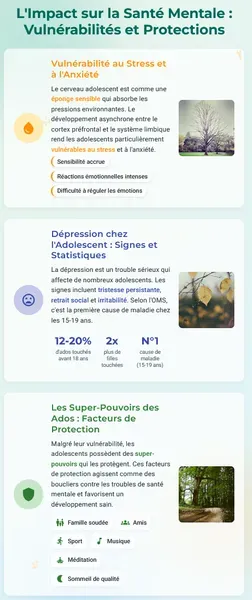
Picture your brain as a city under construction, with the prefrontal cortex as the site manager. Sitting just behind your forehead, it handles decisions, impulse control and emotion regulation. But in teenagers, it is still an apprentice; it will not be at its best until you are about 25. The result? You may struggle to:
- Stay calm in the face of an annoying comment.
- Plan your revision without procrastinating.
- Make decisions without acting on impulse.
This still-immature cortex makes you more sensitive to stress, which can raise the risk of depression. According to Nourrir son moral, this running-in period explains why your emotions sometimes feel overwhelming.
A limbic system on turbo
While the prefrontal cortex struggles along, the limbic system (the seat of emotion) is in overpowered mode. This part of the brain, which includes the amygdala (handling intense emotions) and the nucleus accumbens (pleasure-seeking), is hyperactive in adolescence. That is why:
- You can switch from laughter to tears in two seconds.
- You chase thrills (like scrolling TikTok until 2 a.m.).
- A rejection or a criticism hits you hard.
This emotional overdrive, combined with a prefrontal cortex under construction, creates fertile ground for depression, especially if stress piles up.
Champion-level neuroplasticity
Good news: your brain is ultra-flexible. Thanks to neuroplasticity, it can form new neural connections and even generate new neurons, particularly in the hippocampus, a key region for memory and emotion. During adolescence this plasticity peaks, which means you can:
- Rebuild brain circuits to manage your emotions better.
- Strengthen your resilience to stress.
- Improve your concentration and mood through the right choices.
But beware: this flexibility has a flip side: a stressful environment or a poor diet can also disrupt these circuits. That is where your plate comes in.

How the teenage brain becomes vulnerable to depression
Neurotransmitters in revolution
Your brain communicates through neurotransmitters, chemical messengers that regulate your mood. In adolescence they are still being tuned, which can cause turbulence:
- Serotonin: the happiness hormone, 90 per cent of which is produced in the gut, regulates mood and sleep. An imbalance can leave you sad or irritable.
- Dopamine: the motivation molecule that drives you to seek pleasure. A drop can make you lose interest in what you used to love.
- GABA: this neurotransmitter calms the brain. When it runs low, anxiety and stress take over.
These fluctuations, combined with the brain changes, increase the risk of depression, especially if you add academic stress, conflict or lack of sleep.
Stress: a problem amplifier
When you are stressed (exams, rows, social media), your brain releases cortisol, the stress hormone. In adolescence, your limbic system reacts more strongly to cortisol, which can:
- Disrupt communication between the prefrontal cortex and the limbic system.
- Weaken your reward circuits, robbing activities of their appeal.
- Increase brain inflammation, a key factor in depression.
Studies cited in Nourrir son moral show that chronic stress in teenagers can reduce neuroplasticity and worsen depressive symptoms.

Food: your tool for supporting the brain’s building site
Your brain needs the right fuel to function and rebuild. Here is how diet can boost your teenage brain and reduce the risk of depression.
Star nutrients for your brain
Some foods are like bricks for your brain’s building site. Here are the most important, according to Nourrir son moral:
- Omega-3 (DHA and EPA): these healthy fats, found in salmon, flaxseed and walnuts, strengthen neuron membranes and reduce inflammation. An Oxford University study (2015) shows omega-3 improves mood in young people.
- Magnesium: this anti-stress mineral, found in spinach, almonds and dark chocolate (70 per cent minimum), calms the nervous system. A deficiency is linked to anxiety and depression.
- B vitamins (B6, B9, B12): essential for producing serotonin and dopamine, they are found in eggs, lentils and green vegetables. A study in The American Journal of Clinical Nutrition (2017) links B12 deficiency to an increased risk of depression.
- Antioxidants: blueberries, green tea and peppers protect your neurons against oxidative stress, a factor in depression.
Foods to calm the emotional rollercoaster
To stabilise your mood and support your brain, focus on:
- Wholegrains (oats, brown rice): they provide steady glucose, avoiding the blood sugar spikes that disturb mood.
- Oily fish (sardines, mackerel): rich in omega-3, they support serotonin and reduce inflammation.
- Fruit and vegetables: green vegetables (spinach, broccoli) and berries (blueberries) deliver vitamins and antioxidants to protect your brain.
- Nuts and seeds: a handful of almonds or chia seeds a day covers your magnesium and omega-3 needs.
Avoiding the dietary traps
Some foods can complicate your brain’s works:
- Refined sugars (sweets, fizzy drinks): they trigger blood sugar spikes followed by crashes that drag down your mood.
- Fast food and processed foods: high in trans fats, they increase brain inflammation.
- Too much caffeine: excess coffee or energy drinks disrupts sleep and raises cortisol.

How to fit these foods into your daily life
You do not need to be a chef to feed your brain. Here are simple tips for busy teens:
- Energising breakfast: a bowl of oats with blueberries and a handful of almonds for maximum B vitamins and antioxidants.
- Smart snack: a banana with a few walnuts for a boost of magnesium and tyrosine (a dopamine precursor).
- Quick meal: a salmon, spinach and quinoa salad, ready in 10 minutes, for omega-3 and magnesium.
- Soothing herbal tea: a camomile infusion in the evening to calm your nervous system and improve your sleep.
Table of key foods for your brain:
| Food | Key nutrients | Benefit for the brain | | Salmon | Omega-3 (DHA, EPA) | Reduces inflammation, supports serotonin | | Spinach | Magnesium, vitamin B9 | Calms stress, supports mood | | Blueberries | Antioxidants | Protects neurons, improves memory | | Oats | Steady glucose, B vitamins | Constant energy, dopamine production | | Almonds | Magnesium, vitamin E | Reduces anxiety, protects neurons |
FAQ: the questions you are asking
What makes the teenage brain so special?
The teenage brain is undergoing major transformation: the prefrontal cortex (decisions, emotions) is still immature while the limbic system (emotions) is hyperactive. This combination makes you more emotional and stress-sensitive, but also highly adaptable thanks to neuroplasticity.
How does food help my brain?
Foods rich in omega-3 (salmon), magnesium (almonds) and B vitamins (eggs) support your neurotransmitters (serotonin, dopamine) and reduce inflammation. They stabilise your mood, improve concentration and strengthen your resilience to depression.
Which foods should I avoid so as not to worsen depression?
Limit refined sugars (fizzy drinks, sweets), fast food (chips, burgers) and excessive caffeine. These foods trigger blood sugar spikes, increase inflammation and disturb sleep, which can worsen depressive symptoms.
Glossary of key terms
- Prefrontal cortex: the brain region managing decisions, emotion control and planning. Still immature in teenagers.
- Limbic system: the centre of emotions, hyperactive in adolescence, responsible for intense reactions.
- Neuroplasticity: the brain’s ability to remodel itself and form new connections, particularly strong in teenagers.
- Neurotransmitters: chemical messengers (serotonin, dopamine, GABA) that regulate mood and behaviour.
- Cortisol: the stress hormone, which in excess can disrupt brain circuits.
Conclusion: take charge of your brain’s building site
Your teenage brain is an extraordinary building site, full of potential but also of challenges. By understanding how it works (prefrontal cortex still learning, limbic system on fire, champion neuroplasticity), you can better manage your emotions and reduce the risk of depression. By choosing foods rich in omega-3, magnesium and B vitamins, such as salmon, spinach or blueberries, you give your brain the fuel it needs to shine. So take charge of your plate and turn this building site into a work of art. Want to know more? Discover our article on serotonin and dopamine for a mood boost.
Article written by Yin Shi in collaboration with mental health experts. Sources: studies published in the Journal of the American Academy of Child and Adolescent Psychiatry, WHO data, and principles of nutritional psychiatry. If you or someone you know is in distress, contact the Samaritans on 116 123 (UK, 24/7), the 988 Suicide and Crisis Lifeline (US), or a mental health professional.
To go further
Yin Shi ecosystem resources directly related to this article.
Where do your spirits stand?
The PHQ-9 questionnaire spots the depressive signs that can hide behind the adolescent overhaul.
Take the test →The teenage brain: puberty, sport and image
The lesson covers puberty, restrictive risks and the adolescent's needs.
Take the lesson →