Wind-Dampness (风湿 Fēng Shī) in Traditional Chinese Medicine is a mixed external pathogenic factor that combines the characteristics of Wind (mobility, change, surface) and Dampness (heaviness, stagnation, depth). It penetrates the body through skin, muscles and joints, causing pain, heaviness and circulation troubles.
Wind-Dampness
风湿
- Combines Wind mobility and Dampness heaviness
- Penetrates muscles, joints and connective tissues
- Causes mobile and changing pains
- Engenders bodily heaviness and oedema
- Can block Qi and Blood circulation
- Requires foods that disperse Wind and dry Dampness
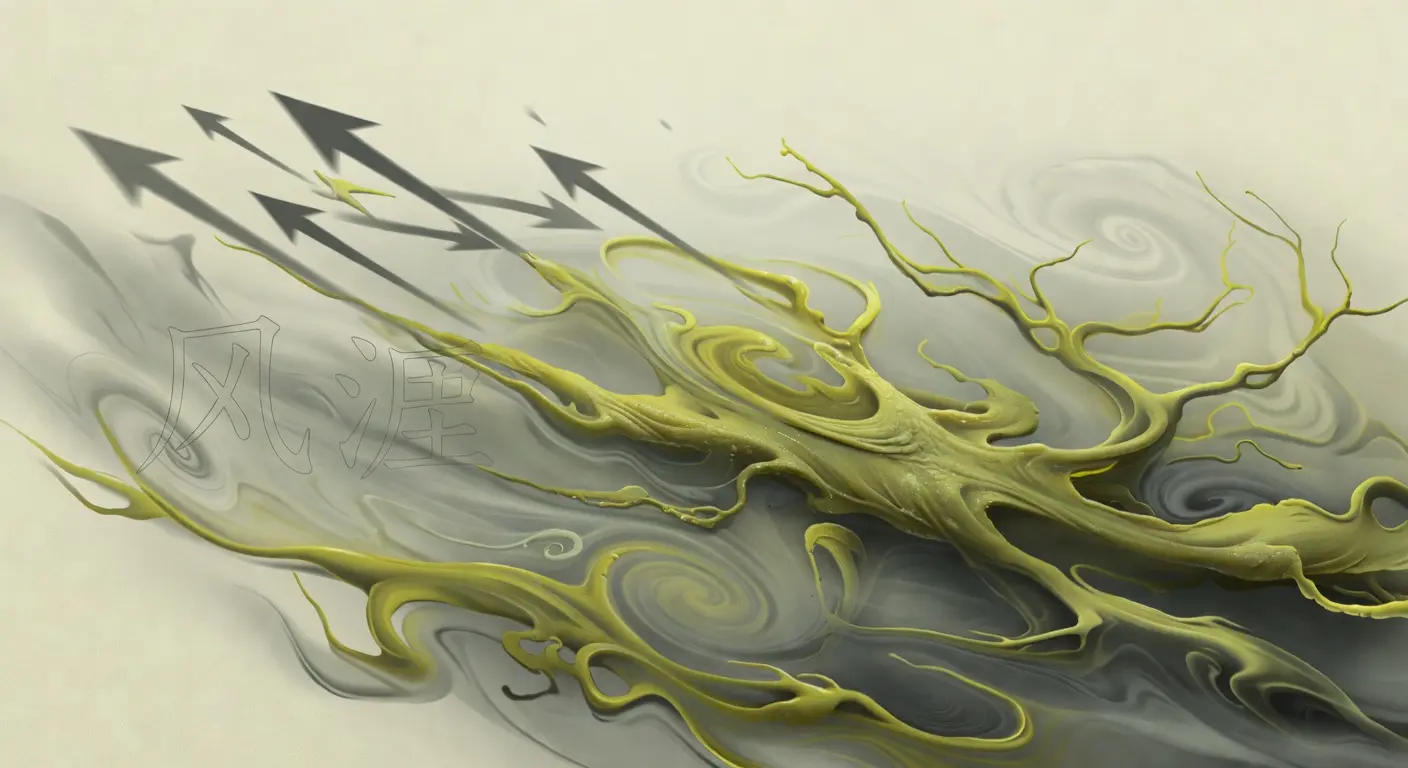
Wind-Dampness is like a humid breeze that infiltrates the body’s recesses. It moves, changes place, weighs on joints and numbs limbs. It is particularly active in autumn and spring, when climates are changeable and humid.
In Traditional Chinese Medicine
In TCM theory, Wind-Dampness is one of the combined six pernicious influences (六淫 Liù Yín). It forms when Wind (which penetrates the body surface) encounters Dampness (which accumulates in tissues and joints). This mixture creates a particularly tenacious pathogen that moves through the body, changes location and attacks joints, muscles and connective tissues.
Wind-Dampness manifests through:
- Joint and muscle pain: pain that changes place, migrates from one joint to another, aggravated by cold and humid wind
- Bodily heaviness: foggy head sensation, heavy limbs, fatigue difficult to explain
- Oedema: joint swelling, ankles, eyelids
- Morning stiffness: difficulty getting up in the morning, joint stiffness that improves with movement
- Skin troubles: eczema, urticaria that changes place, itching
- Digestive troubles: nausea, bloating, loose and sticky stools (Dampness affecting Middle Burner)
Wind-Dampness is particularly favoured by humid and windy climates, damp housing, exposure to cold and humid wind (especially when sweating), a diet that engenders Dampness (dairy products, sweets, cold and raw foods), and weakened Spleen Qi that cannot transform fluids.
Practical Applications
In Chinese dietary therapy, Wind-Dampness is dispersed by foods that chase Wind (pungent, aromatic, that circulate Qi) and dry Dampness (bitter, that drain fluids). Recommended foods include ginger, garlic, leeks, basil, mint, fennel, turmeric, chilli, celery, carrots, sweet potatoes, azuki beans, seaweed, shiitake mushrooms and ginger-lemongrass infusions.
Lifestyle is crucial for preventing and treating Wind-Dampness: protection against cold and humid wind (especially when sweating), dry and airy housing, moderate physical activity that circulates Qi and eliminates Dampness (walking, tai chi, qi gong), stress management that releases Qi Stagnation, and a diet that does not produce Dampness. Exposure to cold wind when sweating, damp housing, sedentary lifestyle, chronic stress and a diet that engenders Dampness favour Wind-Dampness.
Concrete Examples
A patient presenting with Bi syndrome (痹症 Bì Zhèng) with Wind-Dampness may experience joint pain that changes place (today the shoulder, tomorrow the knee), limb heaviness, foggy head sensation, morning stiffness, dull greyish complexion, pale tongue with white and greasy coating, and soft slow pulse. The dietary protocol will include foods that disperse Wind and dry Dampness such as chicken stewed with ginger, garlic and turmeric, millet porridge with azuki beans, sautéed celery with carrots, ginger-lemongrass infusions, and drastic reduction of dairy products and sweets.
A patient presenting with Wind-Dampness with skin troubles may present eczema that changes place, migrating itching, urticaria that appears and disappears, bodily heaviness, loose and sticky stools, pale tongue with white coating, and soft superficial pulse. The dietary protocol will include foods that disperse Wind and clarify Dampness such as millet porridge with azuki beans, tofu sautéed with mushrooms and spinach, lightly grated carrots with fresh basil, mint and chrysanthemum infusions, and elimination of dairy products, sweets and cold foods.
Frequently Asked Questions
What is the difference between Wind-Dampness and Dampness alone?
Wind-Dampness combines characteristics of Wind and Dampness. Dampness alone causes fixed heaviness, oedema, loose and sticky stools, pale swollen tongue with white greasy coating, and soft slow pulse. Wind-Dampness adds mobility: pain changes place, symptoms migrate, eczema and itching move, and symptoms are aggravated by wind and humid cold. Wind-Dampness is more superficial and mobile; Dampness alone is deeper and fixed.
How to recognise a Wind-Dampness syndrome?
Classic signs of a Wind-Dampness syndrome include joint and muscle pain that changes place and migrates, bodily and limb heaviness, foggy head sensation, morning stiffness that improves with movement, joint oedema, skin troubles (eczema, urticaria) that change place, migrating itching, nausea and bloating (Dampness in Middle Burner), loose and sticky stools, dull greyish complexion, pale tongue with white and greasy coating, and soft superficial (Wind) or soft slow (Dampness) pulse.
Which foods disperse Wind-Dampness?
Foods that disperse Wind-Dampness are generally pungent, aromatic, that circulate Qi and dry Dampness. Fresh ginger, garlic, leeks, basil, mint, fennel, turmeric, chilli (moderation), celery, carrots, sweet potatoes, azuki beans (diuretic and drying), seaweed, shiitake mushrooms, ginger-lemongrass, mint and basil infusions are cited. Foods to avoid are dairy products (engender Dampness), sweets (produce Dampness), cold and raw foods (slow transformation and produce Dampness), very fatty and fried foods (obstruct and produce Dampness), and iced drinks.
Conclusion
Wind-Dampness constitutes the fundamental mixed external pathogenic factor that causes joint pain, heaviness and circulation troubles in Traditional Chinese Medicine. Understanding its mechanisms, manifestations and dispersing dietary approaches enables a clearer grasp of the therapeutic reasoning and support protocols offered within the Yin Shi universe.
- Wind
- Dampness
- Cold
- Heat
- Spleen
To go further
Yin Shi ecosystem resources directly related to this article.
Surface or depth: where is your imbalance playing out?
The Eight Principles test locates your terrain between exterior and interior.
Take the test →Wind-Dampness and the Bi obstructions
The lesson presents the four types of painful obstruction where Wind and Dampness combine.
Take the lesson →