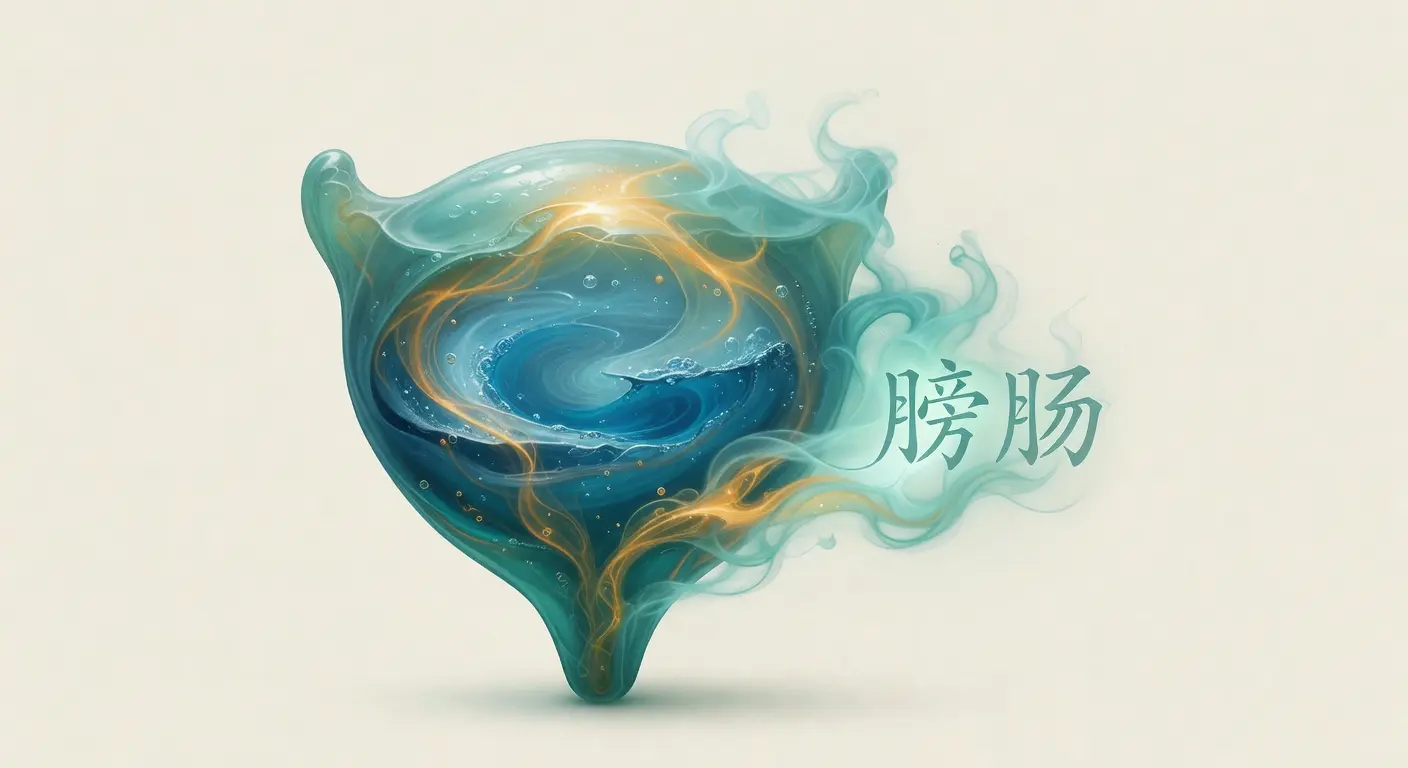
The Bladder (膀胱 Páng Guāng) in Traditional Chinese Medicine is the organ that stores urine, eliminates it from the body and coordinates with the Kidney for fluid management. It is the Fu (hollow organ) of the Kidney and depends directly on Kidney Qi for its elimination function.
Bladder
膀胱
- Stores urine produced by the Kidney
- Eliminates urine from the body in a controlled manner
- Coordinates with the Kidney for fluid management
- Depends on Kidney Qi for urinary elimination
- Governs continence and urination
- Affected by Cold, Heat and Dampness
The Bladder is the body’s wastewater reservoir. Like a retention basin, it receives urine from the Kidney, stores it temporarily and evacuates it in a controlled manner. A harmonious Bladder ensures regular urination, without pain or incontinence.
In Traditional Chinese Medicine
In TCM theory, the Bladder is a Fu (hollow) organ that stores and eliminates urine. It is coupled with the Kidney (表里 Biǎo Lǐ) : the Kidney (Zang, Yin) produces urine and controls fluid management, the Bladder (Fu, Yang) stores and eliminates it. Kidney Qi pushes urine towards the Bladder and expels it. A strong Kidney ensures normal urination; a weak Kidney causes urinary troubles (nocturia, incontinence, retention).
The Bladder governs:
- Storage : the capacity to retain urine until voluntary elimination
- Elimination : regular, complete and painless urination
- Coordination with the Kidney : Kidney Qi controls the opening and closing of the Bladder
- Continence : the capacity to retain urine (urinary sphincters)
- Urination : the capacity to urinate voluntarily and completely
The Bladder is particularly vulnerable to Cold (which contracts and causes clear and abundant urine, nocturia), to Heat (which causes burning urination, dark and scanty urine, infections), to Dampness (which causes cloudy urine, recurrent infections, oedema), and to Kidney Qi Deficiency (which causes incontinence, nocturia, urinary retention).
Practical Applications
In Chinese dietary therapy, the Bladder is supported by foods that regulate fluids, tonify the Kidney and facilitate urinary elimination. Bladder-supporting foods include azuki beans, black beans, sesame seeds, seaweeds, mushrooms, celery, carrots, cucumbers, pears, melons, green tea, jasmine, dandelion and plantain seed infusions.
Lifestyle directly influences Bladder quality: sufficient hydration, regular urination (without prolonged suppression), protection of the lower abdomen and lumbar region against cold, moderate physical activity that stimulates circulation, and stress management that calms the Kidney strengthen the Bladder. Dehydration, chronic suppression of urinary urges, exposure of the lumbar region to cold, physical overwork and chronic stress disturb the Bladder.
Concrete Examples
A patient presenting with Kidney Cold and Yang Deficiency may experience nocturia (frequent urination at night, especially between 23h and 3h), clear and abundant urine, stress incontinence (cough, laughter, physical effort), cold intolerance of the lumbar region and lower abdomen, deep fatigue, diminished libido, pale and swollen tongue with white coating, and deep weak pulse. The dietary protocol will include warming foods that tonify Kidney and Bladder Yang such as rice porridge with ginger and dates, lamb stewed with leeks and ginger, roasted walnuts as snacks, roasted fennel seeds and hot clove and liquorice infusions.
A patient presenting with Bladder Dampness-Heat may experience burning urination, frequent and imperative urge to urinate, cloudy and foul-smelling urine sometimes with blood, pain in the lower abdomen, sensation of heat and heaviness in the lower abdomen, red tongue with yellow and greasy coating, and rapid soft pulse. The dietary protocol will include foods that clarify Bladder Dampness-Heat such as millet porridge with azuki beans, sautéed celery with carrots, green tea and dandelion infusions, fresh cucumbers in small quantities, seaweeds in clear soup and increased consumption of warm water.
Frequently Asked Questions
What is the difference between Bladder and Kidney in TCM?
The Bladder and Kidney form a Zang-Fu couple (表里 Biǎo Lǐ) that collaborates in fluid management and urinary elimination. The Kidney (Zang, Yin) produces urine from metabolic fluids, controls fluid management and provides the Qi that pushes urine. The Bladder (Fu, Yang) stores urine and eliminates it in a controlled manner. The Kidney is the source, the Bladder is the reservoir. A Kidney disorder (Yang Deficiency, Yin Deficiency, Dampness-Heat) always affects the Bladder, but a Bladder disorder (infection, retention) can exist without Kidney disorder.
How to recognise a Bladder disorder?
Classic signs of a Bladder disorder include urinary troubles (nocturia, incontinence, urinary retention, burning urination, frequent and imperative urination), urinary infections (cystitis, pyelonephritis), clear and abundant urine (Cold, Yang Deficiency) or dark and scanty urine (Heat), cloudy or foul-smelling urine (Dampness-Heat), pain in the lower abdomen or lumbar region, oedema (elimination dysfunction), pale and swollen tongue with white coating (Cold) or red with yellow and greasy coating (Dampness-Heat), and deep weak pulse (Yang Deficiency) or rapid soft pulse (Dampness-Heat).
Which foods support the Bladder?
Bladder-supporting foods are generally of neutral nature, natural diuretics, rich in minerals and fluids, and which tonify the Kidney. Azuki beans, black beans, sesame seeds, seaweeds, mushrooms, celery, carrots, cucumbers, pears, melons, green tea, jasmine, dandelion and plantain seed infusions are cited. Foods to avoid are very cold foods that contract the Bladder, very hot foods that dry out urine, and alcoholic beverages that irritate the Bladder.
Conclusion
The Bladder constitutes the fundamental organ of urine storage and elimination in Traditional Chinese Medicine. Understanding its functions, pathologies and supportive dietary approaches enables a clearer grasp of the therapeutic reasoning and support protocols offered within the Yin Shi universe.
- Kidney
- Cold
- Heat
- Dampness
- Spleen
To go further
Yin Shi ecosystem resources directly related to this article.
Which TCM organ needs your attention?
The five-organ test spots the Zang-Fu system most called upon in you.
Take the test →The Bladder in the Lower Burner
The lesson places the Bladder in the Lower Burner, responsible for eliminating fluids.
Take the lesson →