Blood Deficiency (血虚 Xuè Xū) is a fundamental syndrome in Traditional Chinese Medicine, characterised by insufficiency of the nourishing substrate that irrigates organs, anchors spirit and ensures femininity, manifesting as pallor, dizziness, fatigue and menstrual cycle troubles.
Blood Deficiency
血虚
- Manifests as pallor, dizziness, fatigue and blurred vision
- Affects Liver, Heart, Spleen and menstrual cycles
- Causes insomnia, emotional agitation and dryness
- Requires foods rich in iron and quality nutrients
- Often accompanied by underlying Qi Deficiency
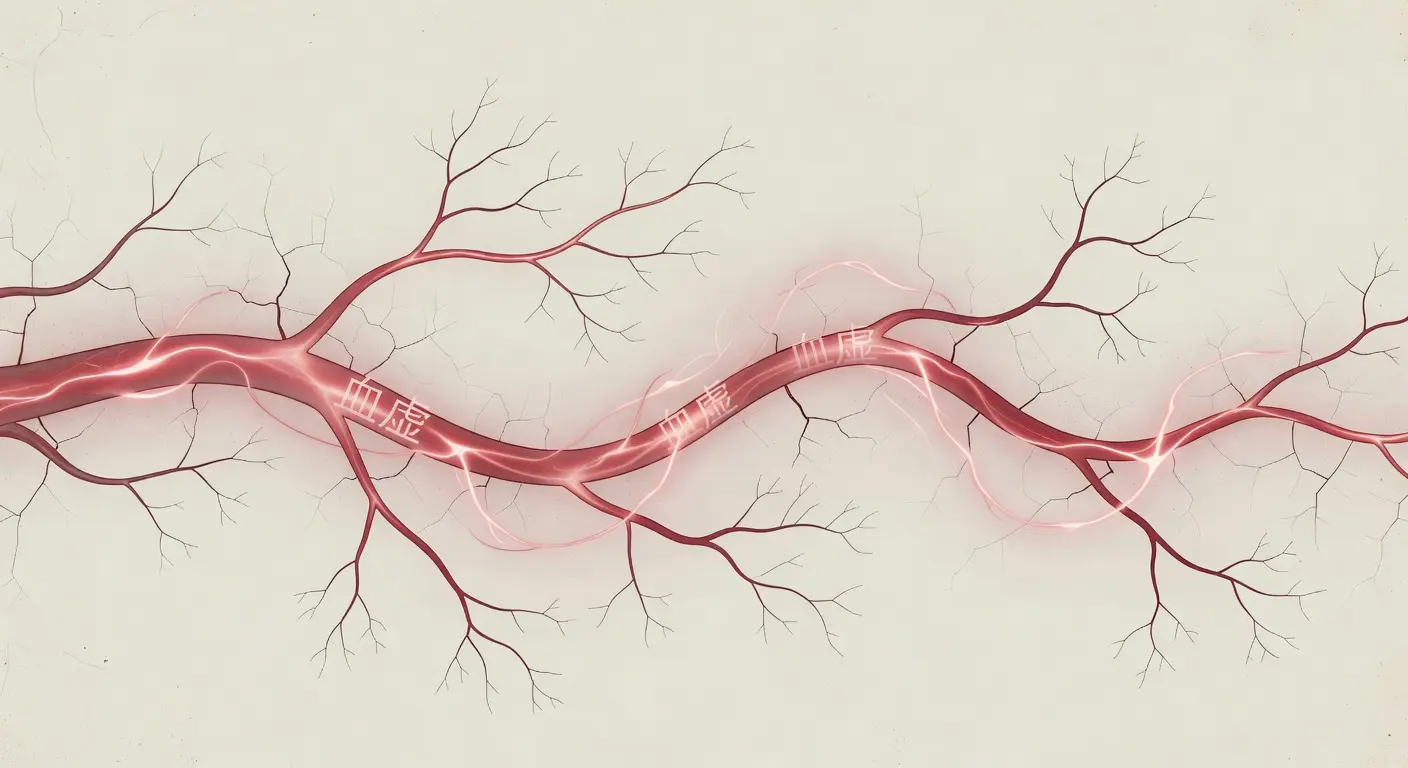
Blood Deficiency represents insufficiency of the nourishing substrate that gives colour, moisture and anchoring to the body. Without sufficient Blood, skin becomes dry, eyes lose their lustre, spirit becomes agitated and the feminine cycle weakens.
In Traditional Chinese Medicine
In TCM theory, Blood is produced by Spleen from transformed foods and by Kidney from Essence Jing. Liver plays a central role in Blood storage and regulation, whilst Heart governs its circulation and Shen anchoring. Blood Deficiency can therefore concern production (Spleen, Kidney) or management (Liver, Heart).
Main causes of Blood Deficiency are insufficient or poor-quality diet, weak digestion (Spleen Qi Deficiency), significant Blood loss (heavy periods, haemorrhages, frequent blood donations), mental overwork that consumes Heart and Liver Blood, ageing, or a fragile constitution from birth.
Blood Deficiency can concern different organs:
- Liver Blood Deficiency: dizziness, blurred vision, fragile nails, stiff tendons, poor cycles
- Heart Blood Deficiency: palpitations, insomnia, emotional agitation, altered memory, pale tongue
- Spleen Blood Deficiency: pallor, fatigue, loss of appetite, loose stools, dry skin
- General Blood Deficiency: generalised pallor, dizziness, chronic fatigue, diminished or delayed cycles
Practical Applications
In Chinese dietary therapy, Blood Deficiency is tonified by foods of warm or neutral nature, sweet or slightly salty flavour, rich in iron, quality proteins and nourishing nutrients. Foods that tonify Blood include spinach, beets, kale leaves, liver, beef, azuki beans, black sesame seeds, jujubes, dates, dried apricots, eggs, mussels and seaweed.
Cooking method directly influences Blood production: gentle stewing preserves nutrients, long bone stews extract minerals, hot consumed foods facilitate digestive transformation. Raw, cold or refrigerated foods slow Blood production.
Concrete Examples
A patient presenting with Liver Blood Deficiency may experience dizziness upon rising, intermittent blurred vision, brittle and striated nails, stiff tendons, delayed and scanty menstrual cycles with pale and liquid blood, dry skin and pale tongue. The dietary protocol will include Blood tonifying foods such as azuki bean and black sesame seed porridge, spinach sautéed with garlic, steamed chicken liver with ginger, dried apricots as snacks and jujube and longan infusions.
A patient presenting with Heart Blood Deficiency after prolonged intellectual overwork may experience palpitations, insomnia with difficulty falling asleep, emotional agitation, altered memory, mental fatigue, dull gaze and pale little-coated tongue. The dietary protocol will include foods that tonify Heart Blood such as jujube and longan porridge, poached eggs, sautéed spinach, lotus seed infusions and a clear chicken soup with carrots and dates.
Frequently Asked Questions
What is the difference between Blood Deficiency and biological anaemia?
Blood Deficiency in TCM is a broader concept than biological anaemia (haemoglobin deficit). A patient can have TCM Blood Deficiency with normal blood tests (functional anaemia), or conversely have biological anaemia without clinical signs of TCM Blood Deficiency. Blood Deficiency also includes Blood quality, its emotional anchoring and tissue irrigation, which are not measured by biological tests.
How to recognise Blood Deficiency?
Classic signs of Blood Deficiency include pallor of complexion and lips, fatigue, dizziness, blurred vision, dry and brittle hair, fragile nails, menstrual cycle troubles (diminished quantity, pale colour, delay), insomnia, emotional agitation, dry skin, pale little-coated tongue, and fine empty pulse. Complexion may present yellowish pallor (dull pallor).
Which foods tonify Blood?
Blood tonifying foods are generally of warm or neutral nature, rich in iron and quality proteins. Spinach, beets, kale leaves, beef or chicken liver, lean beef, azuki beans, black sesame seeds, jujubes, dates, dried apricots, eggs, mussels, seaweed, lean pork and bone broths are cited.
Conclusion
Blood Deficiency constitutes the fundamental syndrome of nourishing deficiency in Traditional Chinese Medicine. Understanding its causes, manifestations and dietary tonification approaches enables a clearer grasp of the therapeutic reasoning and support protocols offered within the Yin Shi universe.
- Blood
- Liver
- Spleen
- Qi Deficiency
- Blood Stasis
To go further
Yin Shi ecosystem resources directly related to this article.
Is your Blood still nourishing your tissues?
The Qi–Blood–Yin–Yang questionnaire spots which pillar of your energy is weakening.
Take the test →Recognising and nourishing Blood deficiency
The lesson gives the diagnosis of Blood deficiency and the associated dietary prescriptions.
Take the lesson →