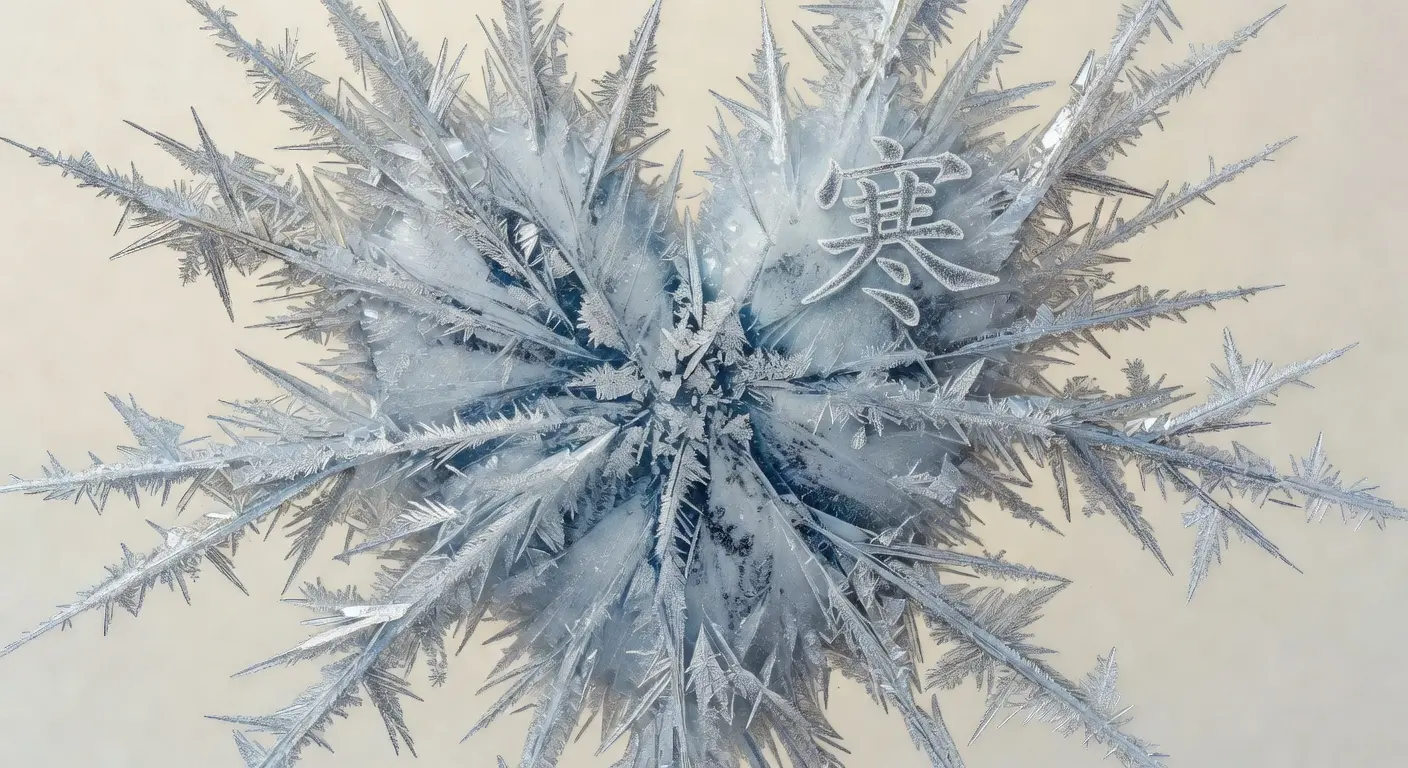
Cold (寒 Hán) is a fundamental pathogenic factor in Traditional Chinese Medicine, internal or external, that contracts vessels, slows Qi and Blood circulation, and causes pain, cold intolerance, pallor and diminished functional activity.
Cold
寒
- Contracts vessels and slows circulation
- Causes cold intolerance, pallor and pain improved by warmth
- Affects the Kidney, Spleen, Heart and joints
- May be external (cold, sprain) or internal (Yang deficiency)
- Requires hot foods and cooking methods, and protection against cold
Cold is a Yin factor that contracts, slows and freezes. Like ice blocking a river’s course, Cold immobilises Qi and Blood, causes pain and weakens transformation.
In Traditional Chinese Medicine
In TCM theory, Cold is a pathogenic factor that can be external (climatic attack: winter cold, excessive air conditioning, sudden cold exposure, swimming in cold water) or internal (Yang deficiency that no longer produces sufficient internal heat, cold and raw diet, naturally cold constitution from birth). Cold is characterised by its contracting, slowing and freezing nature.
External Cold penetrates through the body surface (skin, nape, back, extremities) and causes acute syndromes: cold, sprain, acute lower back pain, joint pain. It manifests as cold intolerance, shivering, absence of sweating, localised pain, pallor, pale tongue with white coating, and a tight, superficial pulse.
Internal Cold results from Yang deficiency or excessive consumption of cold (diet, drinks, environment). It manifests as chronic cold intolerance, cold extremities, loose stools, clear urine, pallor, pale and swollen tongue, and a deep, slow pulse. Internal Cold is deeper, more chronic and more difficult to treat than external Cold.
Cold often combines with other factors:
- Cold-Wind: colds, headaches, sprains, muscle contractures (Wind carrying Cold)
- Cold-Dampness: heavy, cold joint pain, oedema, loose stools (Dampness accumulating in cold)
- Cold with Blood stasis: intense fixed pain, dusky complexion, purple tongue (Cold freezing Blood)
Practical Applications
In Chinese dietary therapy, Cold is treated with foods of hot or warm nature, pungent or aromatic, that warm Yang, disperse Cold and restart circulation. Foods that warm Cold include ginger, garlic, leeks, cooked onions, cinnamon, clove, cumin, lamb, beef, chicken, dates, nuts, dry-roasted seeds, boiling soups and hot spice infusions.
Cooking method is crucial in Cold treatment: long, slow cooking, stews, boiling soups, roasts and foods consumed very hot warm Cold. Raw, cold, refrigerated foods, iced drinks and salads aggravate Cold.
Concrete Examples
A patient presenting with external Cold with Wind (acute cold) may experience intense cold intolerance with shivering, absence of sweating, occipital headaches, dry cough, blocked nose with clear and abundant mucus, a pale tongue with thin white coating, and a tight, superficial pulse. The dietary protocol will include diaphoretic foods that disperse external Cold such as rice porridge with fresh ginger and leeks, hot chicken broth with garlic and ginger, very hot ginger and cinnamon infusions, and a warm blanket to provoke slight sweating.
A patient presenting with internal Cold with Kidney Yang deficiency may experience deep and chronic cold intolerance, cold lower back pain, icy extremities, loose stools or morning diarrhoea, clear and abundant urine, diminished libido, a pale and swollen tongue with thick white, moist coating, and a deep, weak pulse. The dietary protocol will include Yang-warming foods such as lamb stewed with leeks and ginger, rice porridge with dates and cinnamon, dry-roasted nuts as a snack, dry-roasted fennel seeds and hot clove and liquorice infusions.
Frequently Asked Questions
What is the difference between external Cold and internal Cold?
External Cold is a pathogenic factor that penetrates the body from outside (cold climate, air conditioning, cold water, cold wind). It causes acute syndromes (cold, sprain, acute lower back pain) with shivering, absence of sweating, localised pain and tight superficial pulse. Internal Cold results from Yang depletion (Yang deficiency) or excessive internal cold consumption. It causes chronic syndromes (persistent cold intolerance, loose stools, clear urine, cold extremities) with deep and weak pulse. External Cold can become internal if it penetrates deeply, and internal Cold predisposes to external Cold penetration.
How to recognise Cold?
The classic signs of Cold include cold intolerance (with seeking of warmth), pain improved by heat and aggravated by cold, loose stools (internal Cold) or absence of stools (external Cold that blocks), clear and abundant urine (internal Cold), pallor or bluish complexion, pale tongue with white coating, tight and superficial pulse (external Cold) or deep and slow (internal Cold), absence of thirst (external Cold) or thirst with desire for hot drinks (internal Cold), localised sensation of cold, and stiff, painful limbs.
Which foods warm Cold?
Foods that warm Cold are generally of hot or warm nature, pungent or aromatic, and consumed very hot. These include fresh ginger, garlic, leeks, cooked onions, cinnamon, clove, cumin, lamb, beef, chicken, dates, nuts, dry-roasted seeds (sesame, fennel, pumpkin), boiling root vegetable soups, hot spice infusions, and long-simmered bone broths. Foods to avoid are all raw, cold, refrigerated foods, iced drinks, cold salads, refrigerated fruits and dairy products.
Conclusion
Cold constitutes the pathogenic factor of contraction and slowing in Traditional Chinese Medicine. Understanding its causes, manifestations and warming dietary approaches enables a better grasp of the therapeutic reasoning and support protocols proposed in the Yin Shi universe.
- Heat
- Dampness
- Yang deficiency
- Spleen
- Kidney
To go further
Yin Shi ecosystem resources directly related to this article.
Cold or Heat: which way does your terrain lean?
The Eight Principles test locates your terrain between heat and cold, deficiency and excess.
Take the test →Cold and Heat, the two thermal natures
The lesson ranks foods by thermal nature and shows how they correct internal cold.
Take the lesson →