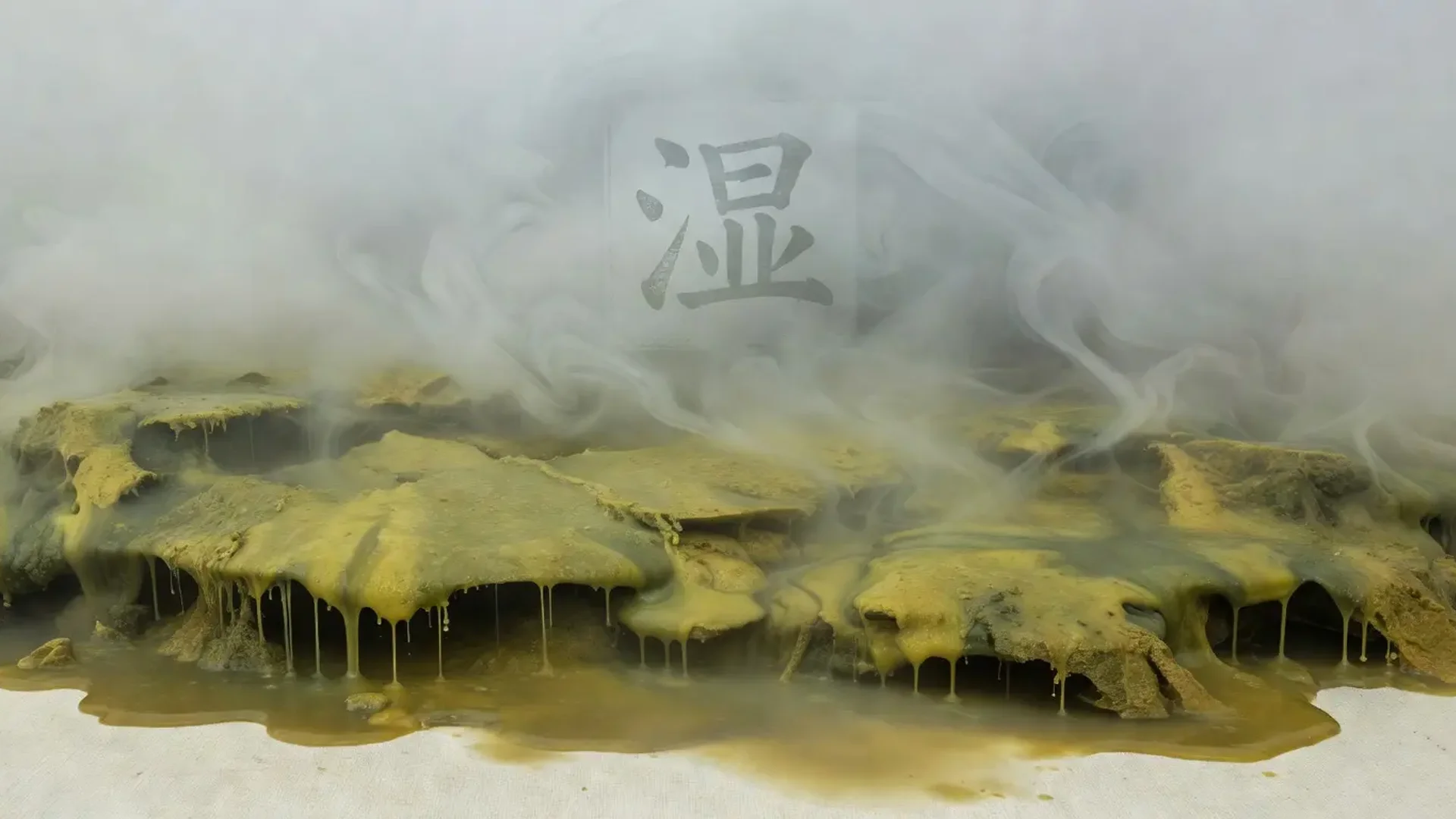
Dampness (湿 Shī) is a fundamental pathogenic factor in Traditional Chinese Medicine, internal or external, that accumulates in tissues and organs, causing bodily heaviness, bloating, digestive upset and a sensation of “head in the fog”.
Dampness
湿
- Accumulates in tissues, organs and joints
- Causes bodily heaviness, bloating and digestive upset
- May combine with Cold (Dampness-Cold) or Heat (Dampness-Heat)
- Requires drying, diuretic and warming foods
- Produces a dull complexion, coated tongue and soggy pulse
Dampness is heavy, viscous and tenacious. It infiltrates the body slowly like mist in a valley, obstructing the mechanisms of transformation and circulation of Qi and Blood.
In Traditional Chinese Medicine
In TCM theory, Dampness is a pathogenic factor that can be external (climatic attack: rain, fog, damp housing, water work) or internal (Spleen dysfunction that poorly transforms fluids). The Spleen is the central organ in Dampness management: when Spleen Qi is weak or the diet is too rich, Dampness accumulates.
Dampness is characterised by its heaviness, viscosity and tendency to stagnate. It first accumulates in the “Centre” (Spleen-Stomach), then may spread to the lower limbs (oedema), skin (eczema, boils), lungs (cough with abundant phlegm), head (sensation of heavy head, “mental fog”) or joints (dull, diffuse pain).
Dampness often combines with other factors:
- Dampness-Cold: joint pain aggravated by cold and dampness, watery diarrhoea, pale and dull complexion
- Dampness-Heat: urinary infections, wet and red eczema, yellow leucorrhoea, sensation of heat and heaviness
- Dampness with Qi deficiency: oedema, fatigue, loose stools, loss of appetite
Practical Applications
In Chinese dietary therapy, Dampness is treated with foods that dry it, transform it and promote its circulation. Foods that eliminate Dampness include brown rice, millet, aduki beans, leeks, onions, celery, carrots, pumpkins, mushrooms (shiitake), ginger, maize (stigmas), kombu seaweed, jasmine tea and plantain seed infusions.
Cooking method directly influences Dampness management: light steaming, grilling, foods consumed hot and warm, and moderate meals dry Dampness. Cold, raw, refrigerated, fatty, fried or overly sweet foods increase internal Dampness.
Concrete Examples
A patient presenting with a Dampness-Cold syndrome with Spleen Qi deficiency may experience diffuse bodily heaviness, abdominal bloating after meals, loose and sticky stools, a sensation of head in the fog, loss of appetite, a pale and dull complexion, a pale and swollen tongue with a thick, greasy white coating, and a soggy, slow pulse. The dietary protocol will include drying and warming foods such as millet porridge with ginger, chicken stewed with leeks and carrots, aduki beans in clear soup, sautéed shiitake mushrooms and hot ginger-lemongrass infusions.
A female patient presenting with a Dampness-Heat syndrome in the Lower Burner may experience yellow and malodorous leucorrhoea, vulval itching, burning urination, a sensation of heat and heaviness in the lower abdomen, a dull complexion with redness on the cheeks, a red tongue with a yellow, greasy coating, and a rapid, soggy pulse. The dietary protocol will include foods that drain Dampness-Heat such as aduki beans in clear soup with pumpkin, sautéed celery with carrots, green tea and jasmine infusions, fresh cucumbers in small quantities and kombu seaweed in soup.
Frequently Asked Questions
What is the difference between Dampness and Yin deficiency?
Dampness is an excess of viscous, stagnant fluids in the body (pathological excess), manifesting as heaviness, greasy coating, dull complexion. Yin deficiency is a lack of fluids and substance (deficit), manifesting as dryness, internal heat, evening fever, red tongue without coating. Dampness is an excess of bad fluids; Yin deficiency is a lack of good fluids. A patient may simultaneously have Yin deficiency and Dampness (“deficiency with excess”), which complicates treatment.
How to recognise Dampness?
The classic signs of Dampness include diffuse bodily heaviness (like wearing a wet coat), abdominal bloating, loose and sticky stools (difficult to clean), sensation of head in the fog or heavy head, loss of appetite, dull and greyish complexion, swollen tongue with teeth marks on the edges and a thick, greasy white or yellow coating, ankle oedema, soggy and slow pulse, and a tendency to gain weight even with a moderate diet.
Which foods eliminate Dampness?
Foods that eliminate Dampness are generally of warm or neutral nature, slightly pungent or bitter, and consumed hot. These include brown rice, millet, aduki beans, leeks, onions, celery, carrots, pumpkins, shiitake mushrooms, ginger, maize (stigmas), kombu seaweed, jasmine tea, plantain seed infusions, fennel seeds and citrus fruits. Foods to avoid are dairy products, fried foods, sweets, alcohol, raw and cold foods.
Conclusion
Dampness constitutes the pathogenic factor of heaviness and stagnation in Traditional Chinese Medicine. Understanding its causes, manifestations and dietary elimination approaches enables a better grasp of the therapeutic reasoning and support protocols proposed in the Yin Shi universe.
- Cold
- Heat
- Spleen
- Qi deficiency
- Stomach
To go further
Yin Shi ecosystem resources directly related to this article.
Dampness, between TCM and the microbiome
The free lesson from the free course draws a parallel between TCM Dampness and microbiome imbalances.
Take the lesson →Is Dampness weighing your terrain down?
The CCMQ questionnaire spots the Phlegm-Dampness constitution among the nine terrains.
Take the test →