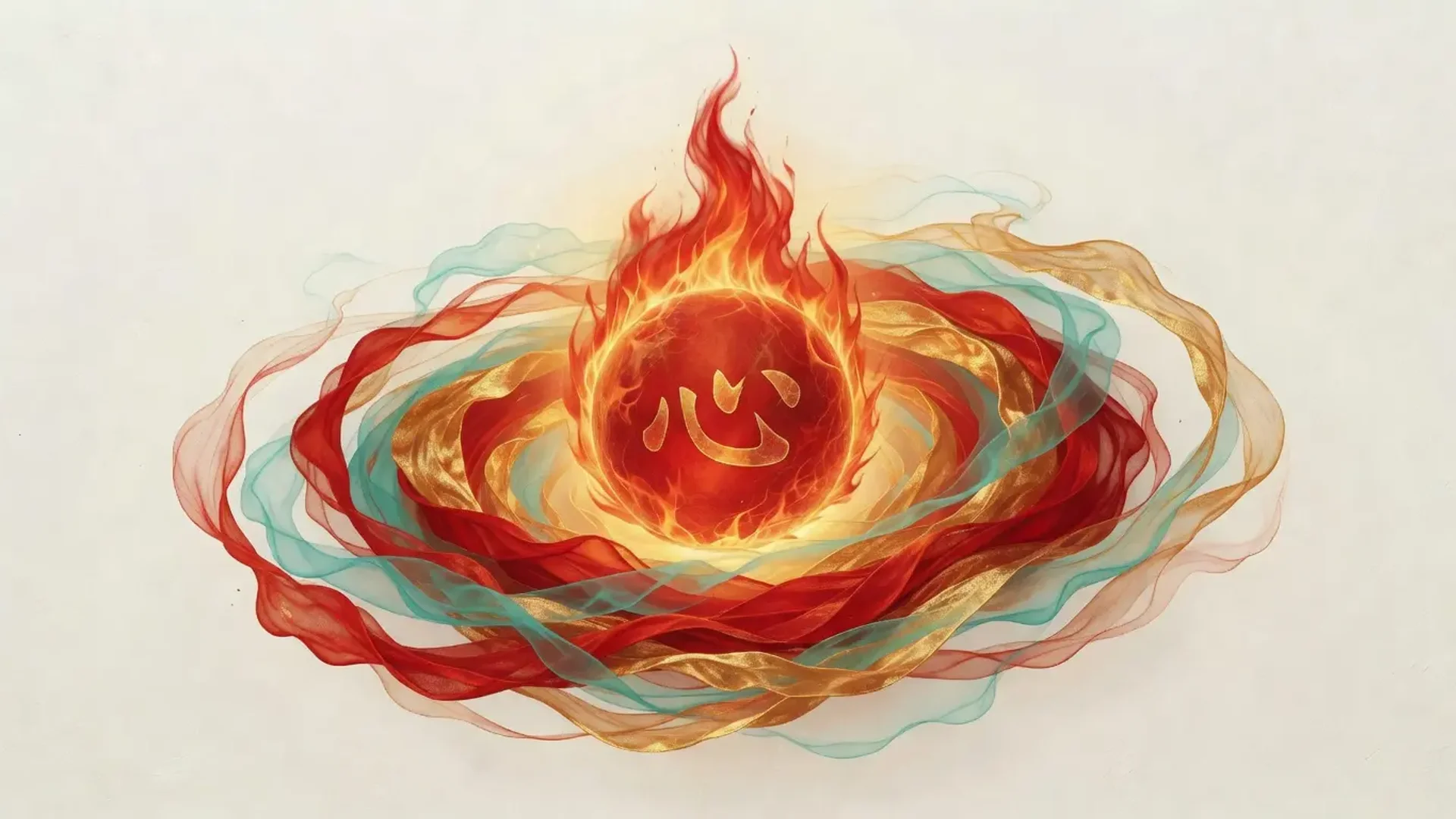
The Heart (心 Xīn) in Traditional Chinese Medicine is the Sovereign organ, the leader of all organs. It governs Blood, houses the spirit Shen, controls the tongue and blood vessels, and opens into the tongue. The Heart is the throne where consciousness and psychic life reside.
Heart
心
- Governs Blood and controls the blood vessels
- Houses Shen and governs consciousness
- Controls the tongue and speech
- Opens into the blood vessels and the face
- Houses joy and controls emotions
- Coordinates with the Small Intestine
The Heart is the Sovereign of organs, the seat of the emperor. Like a monarch upon the throne, it governs Blood, houses Shen and coordinates the entire bodily kingdom. A strong Heart ensures clear consciousness, balanced emotions and harmonious circulation.
In Traditional Chinese Medicine
In TCM theory, the Heart is the most important organ for psychic life and Blood circulation. It is the Sovereign (君主之官 Jūn Zhǔ Zhī Guān) that governs all other organs. The Heart produces Blood (in collaboration with the Spleen) and circulates it through the blood vessels, ensuring the life and warmth of all tissues.
The Heart governs:
- Blood: production, circulation and regulation of blood volume
- Blood vessels: arteries, veins, capillaries and quality of circulation
- Shen: spirit, consciousness, memory, emotions, sleep
- Tongue: speech, taste, colour and quality of the tongue (diagnosis)
- Face: complexion radiance, colour, warmth of the face
- Joy: the emotion associated with the Heart, which in excess weakens the Heart
- Coordination with the Small Intestine: Heart Fire descends to the Small Intestine to warm digestive transformation
The Heart is particularly vulnerable to Heat (Heart Fire: insomnia, agitation, mouth ulcers), Blood deficiency (which no longer nourishes Shen: palpitations, insomnia, agitation), Yin deficiency (Heat of Heart Yin: hot flushes, night sweats, palpitations), excessive joy (which exhausts Heart Qi), and repressed emotions (anger, frustration) which rise towards the Heart.
Practical Applications
In Chinese dietary therapy, the Heart is nourished and tonified by foods that enrich Heart Blood, clear Heart Fire, calm Shen and support circulation. Foods that support the Heart include jujubes, goji berries, longan, saffron, eggs, chicken liver, dark green vegetables, spinach, carrots, lotus seeds, honey, chrysanthemum and liquorice infusions.
Lifestyle directly influences Heart quality: management of emotions (especially excessive joy and anger), meditation and mental calm, moderate physical activity that strengthens the heart without exhausting it, sufficient sleep (Heart Blood regenerates during sleep), and a nutrient-rich diet that nourishes Blood reinforce the Heart. Excessive joy, repressed emotions, mental overwork, short nights, excessive coffee and alcohol weaken or disturb the Heart.
Concrete Examples
A patient presenting with Heart Fire may experience palpitations, insomnia with nocturnal agitation, painful mouth ulcers on the tongue, intense thirst, facial redness, emotional agitation, a very red tongue with a dry yellow coating, and a rapid full pulse. The dietary protocol will include foods that clear Heart Fire and nourish Yin such as millet porridge with black beans, tofu stir-fried with mushrooms and spinach, steamed pears with honey, chrysanthemum and lemon juice infusions, and a drastic reduction of coffee, alcohol and very hot spices.
A patient presenting with Heart Blood deficiency may experience palpitations, insomnia with difficulty falling asleep, mental fatigue, altered memory, dull gaze, diffuse emotional agitation, a pale poorly coated tongue, and a fine empty pulse. The dietary protocol will include foods that tonify Heart Blood and anchor Shen such as jujube and longan porridge, poached eggs, garlic-sautéed spinach, steamed chicken liver, lotus seed infusions, a clear chicken soup with carrots and dates, and small quantities of dry-roasted black sesame seeds.
Frequently Asked Questions
What is the difference between TCM Heart and anatomical heart?
The Heart in TCM is a functional and energetic concept that encompasses the anatomical heart (circulatory organ) but also other functions: production and circulation of Blood, anchoring of Shen (consciousness, emotions, sleep), speech, taste, colour of the tongue (diagnosis), facial radiance, and management of joy. The TCM Heart partially corresponds to the cardiovascular system, central nervous system and endocrine system in Western medicine. The TCM Heart is the “leader” of all organs, which has no strict anatomical equivalent.
How to recognise a Heart disorder?
Classic signs of a Heart disorder include palpitations, insomnia with agitation or difficulty falling asleep, restless dreams or nightmares, altered memory, mental confusion, mouth ulcers (Heart Fire), facial redness (Heat) or pallor (Blood deficiency), thirst (Heat) or absence of thirst (Cold), a red tongue with yellow coating (Heart Fire) or pale poorly coated tongue (Blood deficiency), and a rapid full pulse (Heat) or fine empty pulse (deficiency). The emotions associated with the Heart are joy (in excess it weakens) and agitation (which disturbs Shen).
Which foods nourish the Heart?
Foods that nourish the Heart are generally of warm or neutral nature, nourishing to Blood, Yin and Shen, and which clear Fire according to the imbalance. We cite jujubes, goji berries, longan, saffron, eggs, chicken liver, dark green vegetables, spinach, carrots, lotus seeds, honey, chrysanthemum, liquorice, jujube and longan infusions. Foods to avoid are very hot and drying foods (grilled foods, fried foods, very hot spices) for Heat, and cold raw foods that weaken Blood for Blood deficiency. Excessive coffee and alcohol weaken or disturb the Heart.
Conclusion
The Heart constitutes the sovereign organ of circulation, consciousness and emotions in Traditional Chinese Medicine. Understanding its functions, pathologies and dietary tonification approaches enables a clearer grasp of the therapeutic reasoning and support protocols offered within the Yin Shi universe.
To go further
Yin Shi ecosystem resources directly related to this article.
Which TCM organ needs your attention?
The five-organ test spots the Zang-Fu system most called upon in you.
Take the test →The Heart, governor of the Shen
The lesson details the Heart's role: circulating the Blood and anchoring the spirit.
Take the lesson →