Kidney deficiency (肾虚 Shèn Xū) in Traditional Chinese Medicine designates an insufficiency of Qi, Yin, Yang or Kidney Jing (肾 Shèn), which stores deep essence (Jing 精 Jīng), governs growth, reproduction, bones, marrow, brain, teeth, hair, hearing, balance, willpower and fear. It is one of the deepest and most chronic imbalances in TCM, particularly in pathologies linked to ageing, fertility, sexuality, bones, memory and vitality.
Kidney Deficiency
肾虚
- Insufficiency of Kidney Qi, Yin, Yang or Jing
- Inability to store deep essence (Jing)
- Inability to govern growth, reproduction and ageing
- Inability to nourish bones, marrow, brain, teeth and hair
- Inability to govern water, fluids and urination
- Inability to capture Qi and ensure deep breathing
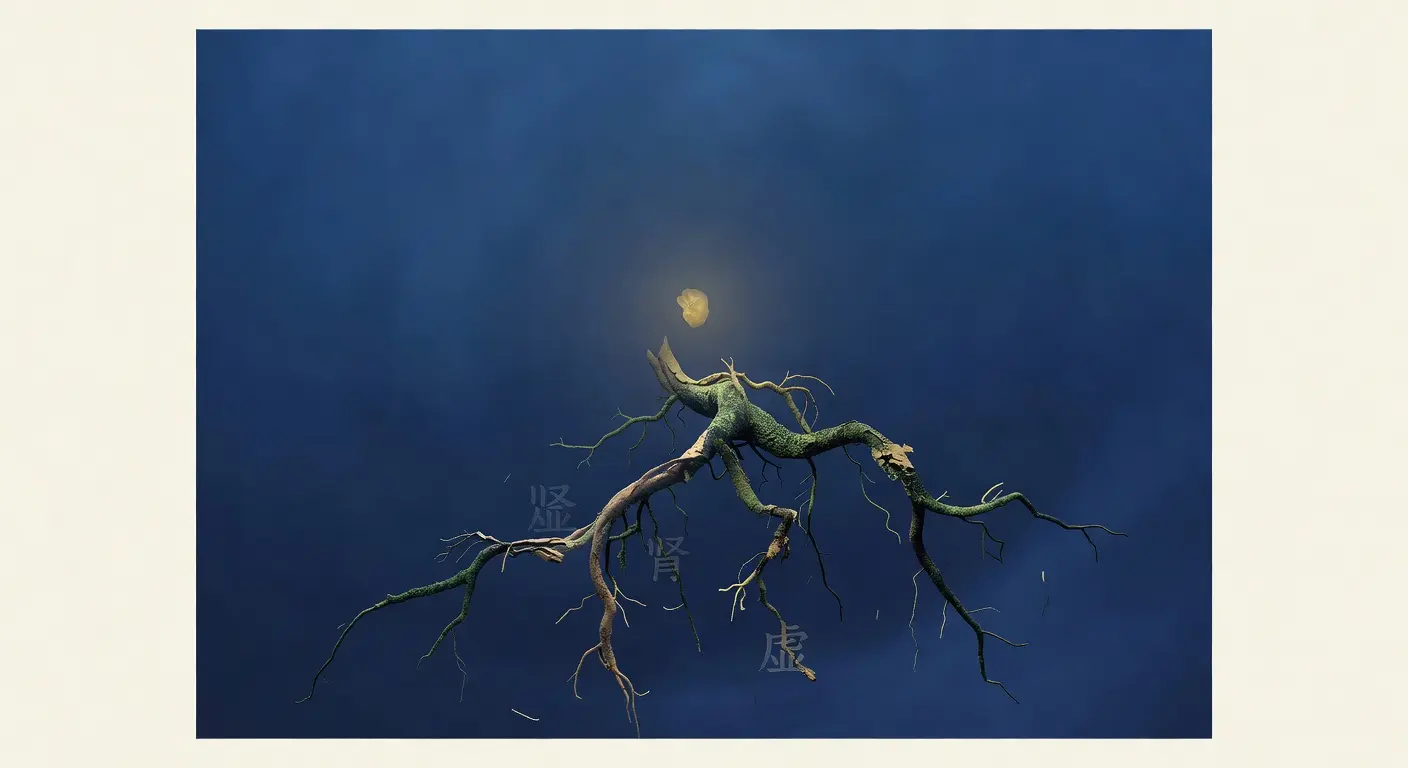
Kidney deficiency is like a lake that is drying up. The rivers that flow from it become trickles, the lands it irrigates crack, the fish die, the trees wither, and the entire landscape loses its vitality. Nourishing rains, deep springs, and protection against the burning sun are needed for the lake to fill again.
In Traditional Chinese Medicine
In TCM theory, the Kidney (肾 Shèn) is the deepest and most fundamental organ of the organism. It stores Jing (Essence 精 Jīng), which is the fundamental substance of growth, development, reproduction, sexual maturity, fertility, gestation, breastfeeding and ageing. Jing divides into inherited essence (先天之精 Xiān Tiān Zhī Jīng) and acquired essence (后天之精 Hòu Tiān Zhī Jīng). The Kidney also governs water and fluids (肾主水 Shèn Zhǔ Shuǐ), reception of Qi (肾主纳气 Shèn Zhǔ Nà Qì), bones and marrow (肾主骨生髓 Shèn Zhǔ Gǔ Shēng Suǐ), ears and hearing (肾开窍于耳 Shèn Kāi Qiào Yú Ěr), and willpower and fear (肾主恐 Shèn Zhǔ Kǒng).
Kidney deficiency is characterised by an insufficiency of these functions, which may be due to:
- Natural ageing: with age, Jing gradually depletes, causing normal physiological ageing
- Weak inherited essence: fragile constitution, innate weakness, growth retardation, infertility, impotence, frigidity
- Insufficient acquired essence: poor quality diet, malnutrition, weak digestion, shallow breathing, lack of physical activity, insufficient sleep
- Physical and mental overwork: excessive work, lack of sleep, excessive physical activity, intellectual overwork, which exhaust Jing and Kidney Qi
- Excessive sexuality: excessive sexual frequency, excessive masturbation, frequent ejaculations, which dissipate Jing and Kidney Qi
- Multiple pregnancies and breastfeeding: each pregnancy and breastfeeding consume the mother’s Jing and Blood
- Chronic diseases: kidney diseases, endocrine diseases, autoimmune diseases, chronic infections, cancers, which weaken the Kidney
- Aggressive medical treatment: antibiotics, chemotherapy, corticosteroids, surgery, which weaken the Kidney
- Chronic Cold and Dampness: cold and damp housing, cold exposure (lumbar region, feet, ankles), which penetrate the Kidney and weaken Yang
- Excessive and chronic fear: fear, anxiety, panic, terror, which make Kidney Qi descend and exhaust Jing
- Lack of rest and recovery: work without rest, continuous activity, lack of holidays, which prevent the Kidney from regenerating
Kidney deficiency divides into several types:
- Kidney Yang deficiency (肾阳虚 Shèn Yáng Xū): insufficiency of the Kidney’s heat and transformation. Manifestations: persistent and deep cold intolerance, chronic and deep lower back pain improved by heat, frequent nocturia, stress incontinence, diminished libido, impotence, profound fatigue, sensation of cold in the lower abdomen and lumbar region, pale and dull complexion, pale and swollen tongue with white, moist coating, deep and weak pulse
- Kidney Yin deficiency (肾阴虚 Shèn Yīn Xū): insufficiency of the Kidney’s fluids, coolness and substance. Manifestations: intense and sudden hot flushes, abundant night sweats, chronic and deep lower back pain, vaginal dryness, diminished libido, infertility, profound fatigue, sensation of heat in the lower abdomen and lumbar region, red and little-coated complexion, red and little-coated tongue with cracks, thin and rapid pulse
- Kidney Jing deficiency (肾精虚 Shèn Jīng Xū): insufficiency of the Kidney’s deep essence. Manifestations: growth retardation, sexual maturity retardation, infertility, impotence, frigidity, fragile bones, osteoporosis, hair loss, premature white hair, memory loss, concentration disorders, senile dementia, dizziness, tinnitus, balance disorders, deafness, dull complexion, pale or red tongue with little coating, deep and weak or thin and rapid pulse
- Kidney Qi deficiency (肾气虚 Shèn Qì Xū): insufficiency of the Kidney’s functional Qi. Manifestations: profound fatigue, shortness of breath, short and shallow breathing, nocturia, incontinence, organ prolapse (uterus, bladder, rectum), libido disorders, pale complexion, pale tongue with thin white coating, deep and weak pulse
Practical Applications
In Chinese dietary therapy, Kidney deficiency is tonified with foods that strengthen the Kidney, nourish Jing, Kidney Yin and Yang, govern fluids, and support growth, reproduction and vitality. Recommended foods include dark and black foods (black beans, black sesame seeds, black seaweed, black mushrooms, blueberries, blackberries, blackcurrants, black grapes), salty foods (seaweed, sea fish, prawns, oysters, mussels, sardines, anchovies), foods that tonify Kidney and Jing (bone and marrow broths, lotus seeds, nuts, almonds, pumpkin seeds, sunflower seeds, eggs, oily fish, lean meats), foods that nourish Kidney Yin (tofu, black beans, black sesame seeds, lotus seeds, goji berries, longan, jujubes, pears, apples, cucumbers, courgettes), foods that warm Kidney Yang (lamb, beef, chicken, ginger, garlic, cinnamon, clove, sesame seeds, nuts, sweet potatoes, cooked carrots), seasonal vegetables, seasonal fruits, aromatic herbs, mushrooms, seaweed, eggs, poultry, lean and oily fish, and infusions of liquorice, ginger, goji berries, black sesame seeds, black beans and lotus.
Lifestyle is crucial for treating Kidney deficiency: moderate physical activity that tonifies Kidney and Qi (walking, tai chi, qi gong, swimming, yoga), stress management that avoids excessive fear and panic (meditation, deep breathing, relaxation, emotional expression, psychotherapy, protection rituals), sufficient sleep that allows the Kidney to store Jing (7 to 9 hours, ideally 22h-6h, more in winter), balanced sexuality that does not dissipate Jing (frequency adapted to age, constitution and season, more conservation in winter), regular and moderate diet that nourishes Kidney and Jing, sufficient hydration (warm or room-temperature water, no iced drinks), protection against cold and dampness (especially in winter, particularly the lumbar region, lower abdomen, feet and ankles), and life in harmony with seasons (in winter: rest, conservation, introspection, reduced activity) strengthen the Kidney. Physical and mental overwork, chronic stress, excessive fear, panic, lack of sleep, excessive sexuality, drugs, alcohol, tobacco, a diet that exhausts Jing (excess sweets, fried foods, alcohol, coffee), chronic cold and dampness, and excessive activity in winter weaken or unbalance the Kidney.
Concrete Examples
A patient presenting with Kidney Yang deficiency with cold intolerance, lower back pain and nocturia may experience persistent and deep cold intolerance, chronic and deep lower back pain improved by heat, frequent nocturia (frequent night urination), stress incontinence, diminished libido, impotence, profound fatigue, sensation of cold in the lower abdomen and lumbar region, pale and dull complexion, pale and swollen tongue with white, moist coating, and deep and weak pulse. The TCM dietary protocol will include hot and Kidney Yang-tonifying foods such as lamb stewed with ginger, garlic and cinnamon, rice porridge with dates, nuts and ginger, sweet potatoes roasted in the oven with honey and sesame seeds, dry-roasted black sesame seeds as snacks, bone and marrow broths with seaweed and mushrooms, hot clove, cinnamon and ginger infusions, and daily protection of the lumbar region and lower abdomen against cold.
A female patient presenting with Kidney Yin deficiency with hot flushes, night sweats and lower back pain may experience intense and sudden hot flushes, abundant night sweats, chronic and deep lower back pain, vaginal dryness, diminished libido, infertility, profound fatigue, sensation of heat in the lower abdomen and lumbar region, red and little-coated complexion, red and little-coated tongue with cracks, and thin and rapid pulse. The TCM dietary protocol will include fresh and Kidney Yin-nourishing foods such as black bean and goji berry porridge, tofu sautéed with mushrooms and spinach, dry-roasted black sesame seeds as snacks, pears steamed with honey and lotus seeds, lotus seed infusions, cucumbers and courgettes in light salad, grilled or steamed oily fish (salmon, mackerel, sardines), seasonal green vegetables sautéed, fresh seasonal fruits, and chrysanthemum, pear juice, goji berries and black sesame seed infusions.
Frequently Asked Questions
What is the difference between Kidney deficiency and Spleen deficiency?
Spleen deficiency (脾虚 Pí Xū) is a digestion, transformation and transport imbalance that causes digestive disorders (loss of appetite, bloating, loose stools), fatigue that worsens after meals, Dampness production, falling of clear Qi (prolapse), and inability to contain Blood (bleeding). Kidney deficiency (肾虚 Shèn Xū) is a deep reserve, growth, reproduction and vitality imbalance that causes urinary disorders (nocturia, incontinence, retention), libido and fertility disorders, bone and neurological disorders, memory and concentration disorders, white hair and hair loss, premature ageing, and profound and chronic fatigue. Spleen deficiency is often a cause of Kidney deficiency, for the Spleen produces the Qi and Blood that nourish the Kidney. Conversely, Kidney deficiency can weaken the Spleen, for the Kidney provides the Yang that warms and motivates the Spleen. Kidney deficiency treatment favours foods and activities that specifically tonify the Kidney (dark and black foods, salty foods, bone broths, lotus seeds, nuts, sesame seeds, balanced sexuality, sufficient sleep, protection against cold and dampness). Spleen deficiency treatment favours foods and activities that specifically tonify the Spleen (whole grains, roots and tubers, long-cooked legumes, cooked vegetables, warm and hot aromatic herbs, regular meals, attentive chewing, peaceful digestion).
How to recognise Kidney deficiency?
The classic signs of Kidney deficiency include urinary disorders (frequent nocturia, urinary incontinence, urinary retention, clear and abundant or dark and scanty urine, painful urination, recurrent urinary infections), reproductive disorders (infertility, impotence, frigidity, libido disorders, menstrual disorders, early menopause, miscarriages, spontaneous abortions, growth retardation, sexual maturity retardation), bone and joint disorders (fragile bones, osteoporosis, fractures, chronic and deep lower back pain, bone and joint pain, stiffness, sciatica, disc herniation), neurological and cognitive disorders (memory disorders, concentration disorders, senile dementia, dizziness, tinnitus, balance disorders, deafness, headaches, insomnia, frequent dreams, nightmares, fear, anxiety, panic), skin and hair disorders (dry, dull, wrinkled skin, premature white hair, hair loss, fragile, striated, ridged nails), sleep disorders (insomnia, night waking, frequent dreams, nightmares, night sweats), abnormal cold intolerance or heat, profound and chronic fatigue that does not improve with rest, sensation of emptiness in the lower abdomen and lumbar region, pale and swollen tongue with white, moist coating (Kidney Yang deficiency) or red and little-coated tongue with cracks (Kidney Yin deficiency), and deep and weak pulse (Kidney Yang deficiency) or thin and rapid (Kidney Yin deficiency). Kidney deficiency may manifest as Kidney Yang deficiency (cold intolerance, lower back pain, nocturia, incontinence), Kidney Yin deficiency (hot flushes, night sweats, dryness), Kidney Jing deficiency (infertility, growth retardation, premature ageing), or Kidney Qi deficiency (fatigue, shortness of breath, prolapse).
Which foods tonify the Kidney?
Foods that tonify the Kidney are generally dark, black, salty, that tonify Kidney and Jing, nourish Kidney Yin and Yang, govern fluids, and support growth, reproduction and vitality. These include dark and black foods (black beans, black sesame seeds, black seaweed, black mushrooms, blueberries, blackberries, blackcurrants, black grapes), salty foods (seaweed, sea fish, prawns, oysters, mussels, sardines, anchovies), foods that tonify Kidney and Jing (bone and marrow broths, lotus seeds, nuts, almonds, pumpkin seeds, sunflower seeds, eggs, oily fish, lean meats), foods that nourish Kidney Yin (tofu, black beans, black sesame seeds, lotus seeds, goji berries, longan, jujubes, pears, apples, cucumbers, courgettes), foods that warm Kidney Yang (lamb, beef, chicken, ginger, garlic, cinnamon, clove, sesame seeds, nuts, sweet potatoes, cooked carrots), seasonal vegetables, seasonal fruits, aromatic herbs, mushrooms, seaweed, eggs, poultry, lean and oily fish, and infusions of liquorice, ginger, goji berries, black sesame seeds, black beans and lotus. Foods to avoid are those that exhaust Jing (excess sweets, fried foods, alcohol, coffee, drugs), those that engender Kidney Heat or Dryness (alcohol, coffee, chilli, fried foods, grilled foods, excessive sweets), those that produce Dampness (dairy products, sweets, fried foods, processed foods), smoking, drugs, and physical and mental overwork.
Conclusion
Kidney deficiency constitutes the fundamental imbalance of insufficiency of deep reserves in Traditional Chinese Medicine. Understanding its causes, manifestations, types and dietary, therapeutic and lifestyle approaches to tonify it enables a better grasp of the therapeutic reasoning and support protocols proposed in the Yin Shi universe.
- Kidney
- Jing
- Yin deficiency
- Yang deficiency
- Water
To go further
Yin Shi ecosystem resources directly related to this article.
Are your deep reserves depleted?
The Qi–Blood–Yin–Yang questionnaire spots which pillar of your energy is weakening.
Take the test →Kidney Jing deficiency
The lesson links deep Kidney deficiency to ageing and memory, and the foods that answer it.
Take the lesson →