Leaky Gut and Dampness: when the intestine “weeps”
In 2000, Alessio Fasano discovered zonulin, a protein that regulates the opening of tight junctions in the intestinal barrier. When zonulin is overactivated, the intestine becomes permeable - this is the leaky gut syndrome. Bacterial toxins (LPS) pass into the blood, triggering low-grade systemic inflammation.
In TCM, this phenomenon has been described for centuries as Dampness (湿 Shī). Dampness is a subtle pathogen that slowly infiltrates, obstructs the meridians, weighs down the body and mind. It stems from a Spleen too weak to “transform and transport” properly.
Two descriptions of the same reality: the loss of digestive frontier impermeability.
Explore the full analysis in Digestion: The TCM & Science Alliance and the Complete Guide.
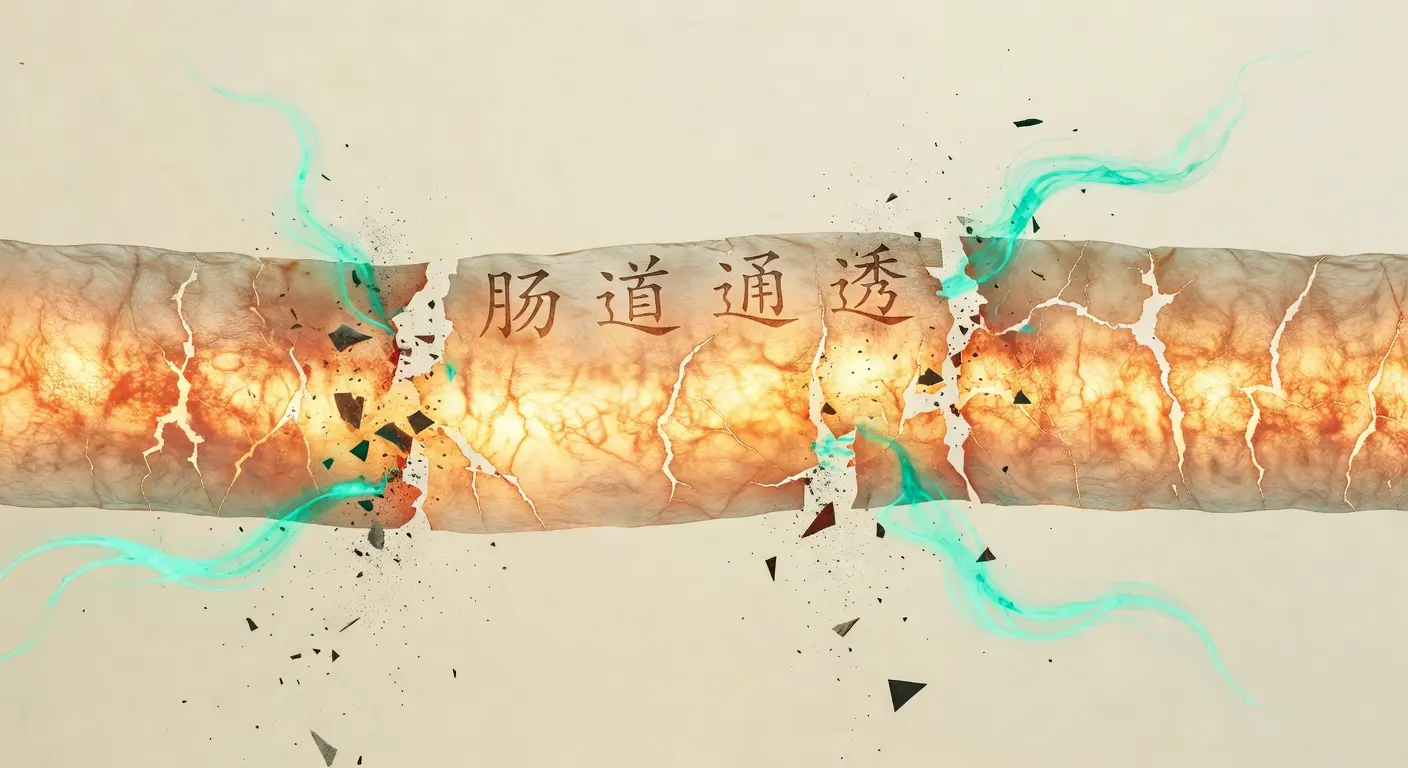
The intestinal barrier: the vital frontier
The small intestine is lined with a layer of epithelial cells joined by tight junctions. These junctions selectively control what passes from the intestinal lumen to the blood. It is an intelligent frontier: it lets nutrients through and blocks toxins.
When tight junctions loosen, the intestine becomes “porous”. Macromolecules and bacterial endotoxins (LPS) cross the barrier. The immune system reacts: systemic inflammation, metabolic endotoxaemia, activation of the innate immune system.
When the Spleen is weak, Dampness accumulates; when Dampness accumulates, Qi stagnates; when Qi stagnates, diseases appear.
Clinical correspondences
| Phenomenon | TCM Correspondence | Mechanism | Actions | Precautions |
|---|---|---|---|---|
| Loose tight junctions | Infiltrating Dampness (湿困) | Loss of impermeability | Spleen can no longer contain | Spleen Yang Deficiency |
| Metabolic endotoxaemia (LPS) | Damp Toxins (湿毒) | LPS in blood = circulating toxins | Systemic inflammation = Dampness-Heat | Metabolic risk |
| Low-grade inflammation | Dampness-Heat (湿热) | High CRP, IL-6, TNF-α | Heat smouldering in depth | Chronification if untreated |
| Mucosal oedema | Accumulated Dampness (湿聚) | Swelling of the wall | Spleen submerged by Dampness | Progressive obstruction |
| Malabsorption | Spleen no longer transforms | Nutrient deficiency despite intake | Qi Deficiency + Dampness = vicious circle | Progressive undernutrition |
Integrative synthesis - Fasano, 2011; Cani et al., 2007; Pi Wei Lun
The Dampness / Permeability vicious circle
The link between TCM Dampness and intestinal permeability forms a self-sustaining vicious circle:
- Inadequate diet (cold, raw, sugar, industrial products) -> weakens the Spleen
- Weak Spleen -> no longer transforms properly -> Dampness accumulates
- Accumulated Dampness -> damages the intestinal barrier (tight junctions)
- Damaged barrier -> increased permeability -> endotoxins in the blood
- Endotoxins -> systemic inflammation -> Dampness-Heat
- Dampness-Heat -> further aggravates Spleen weakness
This vicious circle explains why chronic digestive disorders are so difficult to treat with a single approach. Integrative medicine breaks the circle at several levels simultaneously.
Warning signs: recognising leaky gut / Dampness
The following signs should alert to possible intestinal permeability associated with Spleen Dampness:
- Digestive: chronic bloating, sticky stools, multiple food intolerances, diarrhoea/constipation alternation
- Systemic: unexplained fatigue, joint pain, skin problems (eczema, acne), allergies
- Emotional: mental fog, unstable mood, anxiety (link with the gut-brain axis)
- Linguistic (TCM): swollen tongue with teeth marks, thick and sticky coating
FAQ
How to diagnose leaky gut in integrative practice?
Combine the tools of both medicines: in TCM, tongue observation (swollen, teeth marks, thick coating) and pulse (empty or slippery); in science, the lactulose/mannitol permeability test, serum zonulin dosage, and inflammatory markers (CRP, calprotectin). The book’s 8-week repair protocol combines both approaches. See the protocol
Is TCM Dampness always linked to intestinal permeability?
Not systematically. Dampness can come from external factors (climate, environment) or internal ones (diet, emotions). However, in chronic digestive disorders, internal Dampness is very often associated with an alteration of the intestinal barrier. Cross-diagnosis allows distinguishing the origins.
To go further
- Microbiome and Spleen Qi - The fundamental parallel
- Intestinal Repair in 8 Weeks - The complete protocol
- Hypochlorhydria and Yang Deficiency - Reawakening the Digestive Fire
- Complete Guide to the Integrative Alliance - Overview
For complete protocols with dosages and clinical cases:
Order the book Digestion: The TCM & Science Alliance
To go further
Yin Shi ecosystem resources directly related to this article.
Is your intestinal barrier holding?
The five-organ test locates the digestive system behind the permeability.
Take the test →Tight junctions, zonulin and endotoxaemia
The lesson explains intestinal permeability and its parallel with Dampness in TCM.
Take the lesson →Digestion: where TCM meets science
Intestinal permeability is one of the book's direct areas of coverage.
Discover the book →