When science rediscovers what TCM has known for 2,000 years
In 2010, an international team published in Nature a catalogue of 3.3 million bacterial genes from the human microbiome (Qin et al., 2010). In the same year, TCM practitioners were diagnosing Spleen Qi Deficiency in patients presenting the same symptoms - bloating, post-prandial fatigue, irregular stools.
Two languages, one and the same phenomenon.
This parallel is no coincidence. It reveals a deep convergence between two medical systems that, each in their own way, describe the most fundamental digestive function: the body’s capacity to transform food into vital energy.
Explore the full analysis of this parallel in Digestion: The TCM & Science Alliance, and the pillar article of this series on the Complete Guide to the Integrative Alliance.
Spleen Qi (脾气 Qì Pí): the key function
The Spleen is the source of post-natal Qi and Blood. If the Spleen is deficient, the five organs and six bowels receive no nourishment.
In TCM, the Spleen (脾 Pí) accomplishes three essential functions for digestion:
- Transformation and transport (运化 Yùn Huà): breaking down food into nutritive essence and distributing it
- Rising of the pure (升清 Shēng Qīng): sending nutrients upwards to nourish the Heart and lungs
- Control of blood (统血 Tǒng Xuè): keeping blood within the vessels
When the Spleen functions well, energy circulates, digestion is smooth, stools are formed. When it weakens, Dampness settles in, stools become loose, fatigue sets in after meals.
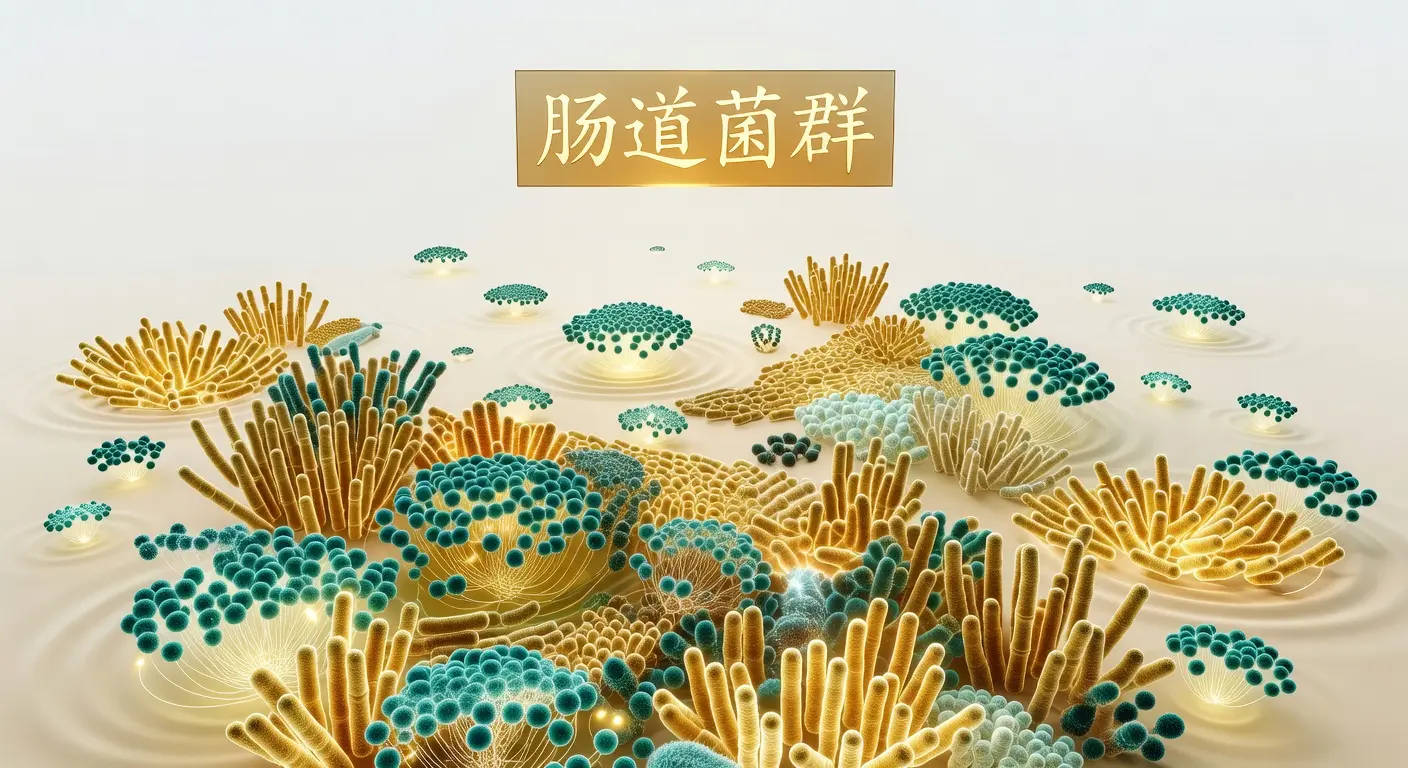
The microbiome: the ecosystem that transforms
Modern science has discovered that our intestine harbours between 30,000 and 40,000 billion bacteria - more than the number of our own cells (Sender et al., 2016). This ecosystem accomplishes functions that TCM attributes to the Spleen:
- Decomposition of fibres into short-chain fatty acids (butyrate, propionate, acetate) - exactly the “transformation” function of the Spleen
- Production of vitamins (K, B12, folate) - the “distribution of nutritive essence”
- Immune modulation - the “control of blood” and protection of the mucosal barrier
- Communication with the brain via the vagus nerve - the Spleen/Mind connection (意 Yì)
| Function | TCM | Modern science | Mechanism | Imbalance |
|---|---|---|---|---|
| Food transformation | 运化 Yùn Huà | Bacterial fermentation | SCFA production (butyrate, propionate) | Dysbiosis = inefficient transformation |
| Nutrient distribution | 升清 Shēng Qīng | Intestinal absorption | Active transport, portal passage | Qi Deficiency = malabsorption |
| Barrier protection | 统血 Tǒng Xuè | Mucosal integrity | Tight junctions, IgA secretion | Permeability = infiltrating Dampness |
| Brain communication | 意 Yì (Mind) | Gut-brain axis | Vagus nerve, serotonin (95%) | Dysbiosis = anxiety, depression |
Adapted from Cryan et al., 2019 and Pi Wei Lun, 1249
Dysbiosis = Spleen Qi Deficiency: the clinical correspondence
Intestinal dysbiosis and Spleen Qi Deficiency share remarkably similar clinical pictures. Understanding this correspondence allows cross-referencing diagnoses for increased precision.
Common signs of dysbiosis / Spleen Qi Deficiency
- Fatigue after meals: the Spleen cannot transform; the microbiome cannot ferment correctly
- Bloating and gas: Qi stagnation in TCM; abnormal gas production by fermentation in science
- Loose or irregular stools: the Spleen cannot “transform and transport”; the unbalanced microbiome does not regulate transit
- Pale tongue with teeth marks: classic sign of Spleen Qi Deficiency; in science, marker of low-grade inflammation and nutritional deficiencies
- Multiple food intolerances: the Spleen “no longer supports”; the impoverished microbiome no longer tolerates fermentable substrates
What each approach brings to the other
What TCM brings to dysbiosis treatment
- Early identification: the tongue, pulse and clinical signs reveal Qi Deficiency before dysbiosis is measurable by tests
- Causal treatment: tonifying the Spleen rather than merely reseeding the microbiome
- Individualisation: each TCM profile (Cold/Deficiency, Dampness, Stagnation) requires a different protocol
- Dietetics as medicine: food is the first therapeutic tool, not a complement
What science brings to Spleen Qi Deficiency treatment
- Objective measurement: microbiome tests (coproculture, metagenomics) quantify dysbiosis
- Targeted probiotics: specific strains for precise dysbiosis profiles
- Mechanism understanding: why does Astragalus tonify the Spleen? Because it modulates microbiome diversity and strengthens the mucosal barrier
- Efficacy follow-up: biomarkers allow objectively measuring progression
FAQ
Which foods tonify Spleen Qi and the microbiome simultaneously?
Warm and cooked foods that nourish the Spleen in TCM are often the same ones that promote a healthy microbiome: bone broth (collagen + glutamine), cooked root vegetables (bioavailable prebiotic fibres), lacto-fermented foods (natural probiotics + warm nature according to preparation), fresh ginger (accelerates gastric emptying + prebiotic properties). The book details food correspondences in chapter 6.
Can dysbiosis cause Spleen Qi Deficiency, or the reverse?
Both directions exist. Spleen Qi Deficiency (inadequate diet, digestive overwork) creates favourable terrain for dysbiosis. Conversely, dysbiosis (after antibiotics, industrial diet) weakens the transformative function of the Spleen. It is a vicious circle that only simultaneous treatment of both dimensions can break. Understanding intestinal repair
To go further
The microbiome / Spleen Qi parallel is only one of seven bridges between TCM and digestive science. Discover the other correspondences:
- Leaky Gut and Dampness TCM - Leaky Gut under two perspectives
- Gut-Brain Axis and Second Brain - Spleen and Mind
- Complete Guide to the Integrative Alliance - Overview
For complete protocols with dosages, clinical tables and practical cases:
Order the book Digestion: The TCM & Science Alliance
To go further
Yin Shi ecosystem resources directly related to this article.
The parallel between Spleen Qi and the microbiome
The free lesson from the free course draws a parallel between microbiome balance and Dampness.
Take the lesson →Is your Spleen transforming properly?
The five-organ test locates the Spleen whose Qi parallels the microbiome.
Take the test →Digestion: where TCM meets science
The book sets the microbiome and the TCM reading in dialogue throughout its chapters.
Discover the book →