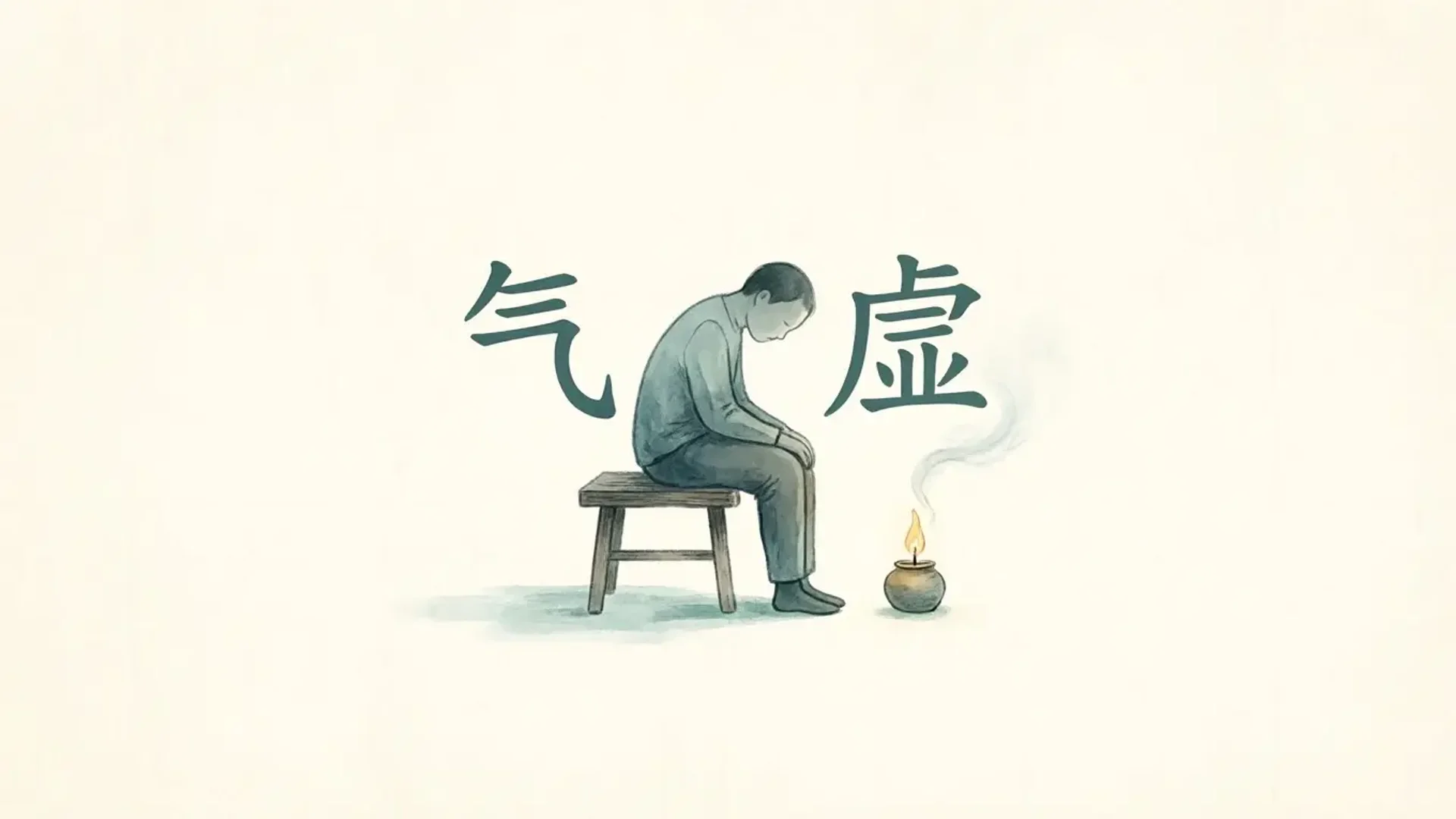
Qi Deficiency (气虚 Qì Xū) is the most common syndrome in Traditional Chinese Medicine, characterised by general energetic exhaustion that manifests as chronic fatigue, breathlessness, lowered immunity and difficulty recovering.
Qi Deficiency
气虚
- Manifests as chronic fatigue and breathlessness
- Affects digestion, voice and immunity
- May concern general Qi or a specific organ
- Often accompanied by pallor and spontaneous sweating
- Requires tonification through diet and rest
Qi Deficiency is the first stage of energetic exhaustion. It often precedes Yang Deficiency or Blood Deficiency if exhaustion continues. Early tonification through diet and rest restores Qi before it triggers other imbalances.
In Traditional Chinese Medicine
In TCM theory, Qi Deficiency occurs when Qi production is insufficient or its consumption is excessive. Main causes are inadequate or irregular diet, physical or mental overwork, chronic illness, significant Blood loss, ageing, or a fragile constitution from birth.
Qi Deficiency can be general (affecting the whole bodily Qi) or localised to a specific organ:
- Spleen Qi Deficiency: loss of appetite, loose stools, fatigue after meals, bloating
- Lung Qi Deficiency: shortness of breath, weak voice, frequent colds, spontaneous sweating
- Kidney Qi Deficiency: deep fatigue, lower back pain, dizziness, memory troubles
- Heart Qi Deficiency: palpitations, breathlessness, insomnia, agitation
- Spleen-Pancreas Qi Deficiency: loss of appetite, loose stools, fatigue, muscle loss
Practical Applications
In Chinese dietary therapy, Qi Deficiency is tonified by foods of warm or neutral nature, sweet flavour, rich in energy and easy to assimilate. Foods that tonify Qi include rice, millet, sweet potatoes, cooked carrots, chicken, lean beef, dates, jujubes, ginger, azuki beans and sesame seeds.
Lifestyle is essential in Qi tonification: sufficient rest, regular and warm meals, moderate physical activity that develops Qi without exhausting it, and stress management strengthen Qi. Excessive work, irregular meals, insufficient sleep and repressed emotions deplete Qi.
Concrete Examples
A patient presenting with Spleen Qi Deficiency may experience chronic fatigue, loss of appetite in the morning, loose or morning diarrhoea stools, a sensation of heaviness after meals, pale complexion and pale tongue with white coating. The dietary protocol will include Qi tonifying foods such as rice porridge with ginger and dates, chicken stewed with carrots and jujubes, roasted sweet potatoes and sweet liquorice infusions.
A patient presenting with Lung Qi Deficiency after chronic bronchitis may experience shortness of breath, weak voice, spontaneous sweating on chest and back, tendency to repeated colds and fatigue after the slightest effort. The dietary protocol will include foods that tonify Lung Qi such as whole rice porridge with dates and almonds, chicken stewed with leeks and ginger, pears cooked with honey and liquorice and astragalus infusions.
Frequently Asked Questions
What is the difference between Qi Deficiency and Yang Deficiency?
Qi Deficiency is functional energetic exhaustion without signs of cold. Yang Deficiency is a more advanced stage where the heat and transformation principle is weakened, manifesting with cold signs (cold intolerance, cold extremities, loose stools). Qi Deficiency can evolve towards Yang Deficiency if exhaustion continues without tonification.
How to recognise Qi Deficiency?
Classic signs of Qi Deficiency include chronic and persistent fatigue, shortness of breath even at rest, weak voice, spontaneous sweating (especially during the day), pallor of complexion and lips, tendency to infections, slowness to recover after effort or illness, and pale tongue with white coating. The pulse is weak, empty or irregular.
Which foods tonify Qi?
Qi tonifying foods are generally of warm or neutral nature, sweet flavour, rich in energy and easy to digest. Rice, millet, sweet potatoes, cooked carrots, lean chicken, lean beef, dates, jujubes, fresh ginger, azuki beans, sesame seeds, walnuts and bone broths are cited.
Conclusion
Qi Deficiency constitutes the fundamental syndrome of energetic exhaustion in Traditional Chinese Medicine. Understanding its causes, manifestations and dietary tonification approaches enables a clearer grasp of the therapeutic reasoning and support protocols offered within the Yin Shi universe.
- Qi
- Spleen
- Lung
- Yang Deficiency
- Tonification
To go further
Yin Shi ecosystem resources directly related to this article.
Is your Qi in reserve or in deficit?
The Qi–Blood–Yin–Yang questionnaire spots which pillar of your energy is weakening.
Take the test →Recognising and nourishing Qi deficiency
The lesson gives the diagnosis of Qi deficiency and the associated dietary prescriptions.
Take the lesson →