Spleen deficiency (脾虚 Pí Xū) in Traditional Chinese Medicine designates an insufficiency of Spleen Qi (脾主运化 Pí Zhǔ Yùn Huà), which governs the transformation of food and drink into Qi and Blood, and the transport of these nutrients to organs, tissues and limbs. It is one of the most frequent imbalances in TCM, particularly in modern stressed and poorly nourished societies.
Spleen Deficiency
脾虚
- Insufficiency of Spleen Qi (脾主运化 Pí Zhǔ Yùn Huà)
- Inability to transform food into Qi and Blood
- Inability to transport nutrients to organs and tissues
- Production of Dampness and Phlegm
- Falling of clear Qi and organ prolapse
- Bleeding from inability to contain Blood
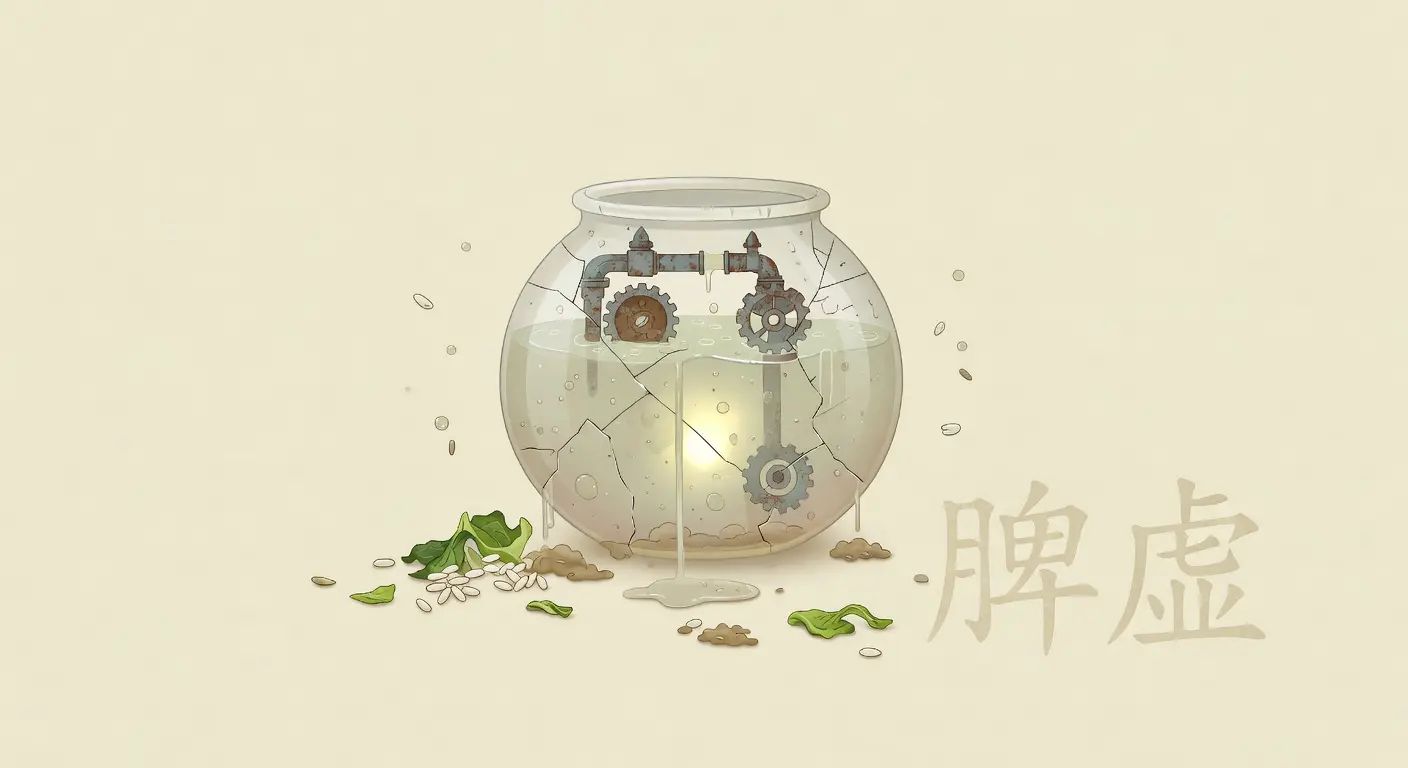
Spleen deficiency is like a windmill whose blades are worn and can no longer grind grain. Grain accumulates, ferments, becomes damp and mouldy. Flour is lacking, bread is not made, and the whole village goes hungry. The mill must be repaired, the blades sharpened, and grinding done slowly and regularly.
In Traditional Chinese Medicine
In TCM theory, the Spleen (脾 Pí) is the central organ of digestion, transformation and assimilation. It transforms food and drink into Qi (vital energy) and Blood (nourishing substance), and transports these nutrients to Zang-Fu organs, tissues, muscles, bones, skin, hair and sense organs. It also governs the rising of clear Qi (脾主升清 Pí Zhǔ Shēng Qīng), which maintains organs and tissues in place against falling (prolapse), and Blood (脾统血 Pí Tǒng Xuè), which it contains within vessels to prevent bleeding.
Spleen deficiency is characterised by an insufficiency of these functions, which may be due to:
- Inappropriate diet: irregular meals, excessive quantities, excess cold and raw foods, dairy products, sweets, fried foods, processed foods, iced drinks, insufficient chewing, meals taken in stress or haste
- Emotional overload: excessive worry, obsessive reflection, mental rumination, chronic stress, which block Spleen Qi
- Physical and mental overwork: excessive work, lack of sleep, excessive physical activity, which exhaust Spleen Qi
- Chronic illness: chronic digestive diseases, recurrent infections, which weaken the Spleen
- Aggressive medical treatment: antibiotics, chemotherapy, corticosteroids, surgery, which weaken the Spleen
- Damp climate: damp housing, rainy season, which overloads the Spleen and produces Dampness
- General Qi deficiency: malnutrition, famine, excessive fasting, which exhaust Spleen Qi
The clinical manifestations of Spleen deficiency include persistent and profound fatigue, loss of appetite especially in the morning, sensation of abdominal fullness and bloating after meals, loose stools or diarrhoea, weight loss or weight gain with oedema, pale and dull complexion, pale and swollen lips, pale and swollen tongue with teeth marks on the edges and thin or moist white coating, soggy and weak pulse, muscle weakness, tendency to organ prolapse (stomach, intestines, uterus, bladder, rectum), tendency to bleeding (menorrhagia, metrorrhagia, haematemesis, melaena, haematuria, bruising), mental fog, excessive worry and reflection, Dampness and Phlegm production, and weakened immunity.
Spleen deficiency may be complicated by:
- Spleen Dampness (脾虚湿盛 Pí Xū Shī Shèng): the weakened Spleen cannot transport fluids, which accumulate and produce Dampness. Manifestations: bodily heaviness, fatigue, mental fog, loose and sticky stools, white and greasy tongue coating, soggy and slippery pulse
- Falling of Spleen Qi (中气下陷 Zhōng Qì Xià Xiàn): Spleen Qi is so weakened it can no longer rise and maintain organs in place. Manifestations: organ prolapse, sensation of abdominal emptiness, chronic diarrhoea, incontinence, exhaustion
- Spleen Blood deficiency (脾虚血虚 Pí Xū Xuè Xū): the weakened Spleen cannot produce sufficient Blood. Manifestations: pale complexion, dizziness, memory disorders, insomnia, scanty periods, pale and little-coated tongue, thin and weak pulse
- Spleen Yang deficiency (脾阳虚 Pí Yáng Xū): Spleen Yang is weakened, causing Spleen Qi deficiency with Cold signs. Manifestations: cold intolerance, cold limbs, loose and clear stools, clear and abundant urine, pale and dull complexion, pale and swollen tongue with white, moist coating, deep and weak pulse
Practical Applications
In Chinese dietary therapy, Spleen deficiency is tonified with foods that strengthen Spleen Qi, harmonise the Stomach, disperse Dampness, and support transformation and transport. Recommended foods include whole grains and cereals (white rice, glutinous rice, millet, quinoa, buckwheat, wheat, barley, oats, rye, spelt), roots and tubers (sweet potatoes, carrots, beetroot, turnips, celeriac, parsnips, Jerusalem artichokes, cassava, yam), long-cooked legumes (aduki beans, black beans, lentils, chickpeas, broad beans, edamame), cooked vegetables (pumpkins, squashes, carrots, beetroot, turnips, celery, courgettes, leeks, cabbages, kohlrabi, spinach, broccoli, asparagus, peas), cooked or moderately fresh fruits (cooked apples, cooked pears, bananas, dates, figs, grapes, jujubes, longans, goji berries), warm and hot aromatic herbs and spices (ginger, liquorice, turmeric, cardamom, coriander, fennel, anise, cinnamon, clove, leeks, garlic), lean meats and poultry (chicken, turkey, rabbit, duck, lean beef, lean lamb), lean fish (cod, haddock, salmon, mackerel, sardines, anchovies), eggs, seeds and nuts (sesame seeds, nuts, almonds, pumpkin seeds, sunflower seeds), seaweed, mushrooms, and infusions of liquorice, ginger, turmeric, cardamom and coriander.
Lifestyle is crucial for treating Spleen deficiency: regular and moderate meals (three meals per day at fixed times, no excessive snacking, neither too copious nor too light), attentive chewing (20 to 30 times per mouthful), peaceful digestion (no stress, screens, work or arguments during meals, focus on food, eat slowly, savour each mouthful), varied and balanced diet (cereals, vegetables, proteins, fruits, nuts and seeds), sufficient hydration (warm or room-temperature water, no iced drinks), moderate physical activity that tonifies Spleen Qi (walking, tai chi, qi gong, yoga, swimming), sufficient sleep that allows the Spleen to regenerate (7 to 9 hours, ideally 22h-6h), stress management that avoids excessive worry and reflection (meditation, deep breathing, relaxation, emotional expression, psychotherapy, art therapy, writing, music, dance, nature), an upright and relaxed posture that favours the rising of clear Qi, and balanced sexuality that does not dissipate Qi strengthen Spleen Qi. Irregular meals, malnutrition, overeating, rapid chewing, meals taken in stress, iced drinks, excess cold and raw foods, dairy products, sweets, fried foods, processed foods, sedentary lifestyle, chronic worry, excessive reflection, mental overwork, lack of sleep, smoking, alcohol, drugs, antibiotics, corticosteroids, surgery, damp climates, and chronic diseases weaken or unbalance Spleen Qi.
Concrete Examples
A patient presenting with Spleen Qi deficiency with fatigue, loss of appetite and loose stools may experience persistent and profound fatigue that worsens after meals, loss of appetite especially in the morning and sensation of abdominal fullness after meals, loose stools or morning diarrhoea, sensation of bodily heaviness, pale and dull complexion, pale and swollen lips, pale and swollen tongue with teeth marks on the edges and thin white coating, soggy and weak pulse, muscle weakness, tendency to infections, and mental fog. The TCM dietary protocol will include warm and mild foods that tonify Spleen Qi such as rice porridge with ginger and dates, chicken stewed with carrots, sweet potatoes and ginger, carrots and sweet potatoes roasted in the oven, aduki beans stewed with seaweed and ginger, dry-roasted sesame seeds as snacks, liquorice and ginger infusions, and elimination of cold, raw, dairy, sweet and fried foods that weaken the Spleen.
A female patient presenting with Spleen deficiency with Dampness from inappropriate diet and damp climate may experience bodily heaviness and fatigue that worsens with dampness, loss of appetite and preference for dry foods, occasional nausea and vomiting, abdominal bloating, loose and sticky stools, sensation of mental fog, dull and yellowish complexion, swollen tongue with white, moist and greasy coating, soggy and slippery pulse, and tendency to oedema. The TCM dietary protocol will include warm and drying foods that disperse Spleen Dampness such as rice porridge with aduki beans and ginger, chicken sautéed with turmeric, basil and celery, carrots and sweet potatoes roasted in the oven, shiitake mushrooms sautéed with garlic and ginger, dry-roasted sesame seeds as snacks, ginger and turmeric infusions, and drastic elimination of damp and heavy foods (dairy products, sweets, fried foods, processed foods, iced drinks, excess cold and raw foods).
Frequently Asked Questions
What is the difference between Qi deficiency and Spleen deficiency?
Qi deficiency (气虚 Qì Xū) is a general imbalance that affects all the organism’s Qi, causing global fatigue, shortness of breath, spontaneous sweating, tendency to infections, weak voice, pale tongue and weak pulse. Spleen deficiency (脾虚 Pí Xū) is a specific imbalance that affects Spleen Qi, causing digestive disorders (loss of appetite, bloating, loose stools), fatigue that worsens after meals, Dampness production, falling of clear Qi (prolapse), and inability to contain Blood (bleeding). Spleen deficiency is a frequent cause of general Qi deficiency, for the Spleen produces the Qi and Blood that nourish the whole organism. Conversely, general Qi deficiency can weaken the Spleen. Spleen deficiency treatment favours foods and activities that specifically tonify Spleen Qi (whole grains, roots and tubers, long-cooked legumes, cooked vegetables, warm and hot aromatic herbs, regular meals, attentive chewing, peaceful digestion, moderate physical activity, stress management). General Qi deficiency treatment favours foods and activities that tonify global Qi (whole grains, vegetables, fruits, aromatic herbs, moderate physical activity, sufficient sleep, stress management).
How to recognise Spleen deficiency?
The classic signs of Spleen deficiency include persistent and profound fatigue that worsens after meals, loss of appetite especially in the morning and sensation of abdominal fullness after meals, abdominal bloating and flatulence, loose stools or diarrhoea (especially in the morning or after meals), weight loss or weight gain with oedema, pale and dull complexion with pale and swollen lips, pale and swollen tongue with teeth marks on the edges and thin or moist white coating, soggy and weak pulse, muscle weakness and muscle atrophy, tendency to organ prolapse (stomach, intestines, uterus, bladder, rectum), tendency to bleeding (menorrhagia, metrorrhagia, haematemesis, melaena, haematuria, bruising), mental fog and difficulty concentrating, excessive worry and reflection, Dampness and Phlegm production (white phlegm, white and greasy tongue coating, oedema, bodily heaviness), and weakened immunity with tendency to infections (colds, flu, bronchitis, sinusitis, urinary infections, skin infections). Spleen deficiency may be complicated by Spleen Dampness (heaviness, mental fog, greasy coating), falling of Spleen Qi (prolapse, chronic diarrhoea), Spleen Blood deficiency (pale complexion, dizziness, scanty periods), or Spleen Yang deficiency (cold intolerance, clear stools, clear urine).
Which foods tonify Spleen Qi?
Foods that tonify Spleen Qi are generally mild, warm, cooked, that strengthen transformation and transport, harmonise the Stomach, disperse Dampness, and support the rising of clear Qi. These include whole grains and cereals (white rice, glutinous rice, millet, quinoa, buckwheat, wheat, barley, oats, rye, spelt), roots and tubers (sweet potatoes, carrots, beetroot, turnips, celeriac, parsnips, Jerusalem artichokes, cassava, yam), long-cooked legumes (aduki beans, black beans, lentils, chickpeas, broad beans, edamame), cooked vegetables (pumpkins, squashes, carrots, beetroot, turnips, celery, courgettes, leeks, cabbages, kohlrabi, spinach, broccoli, asparagus, peas), cooked or moderately fresh fruits (cooked apples, cooked pears, bananas, dates, figs, grapes, jujubes, longans, goji berries), warm and hot aromatic herbs and spices (ginger, liquorice, turmeric, cardamom, coriander, fennel, anise, cinnamon, clove, leeks, garlic), lean meats and poultry (chicken, turkey, rabbit, duck, lean beef, lean lamb), lean fish (cod, haddock, salmon, mackerel, sardines, anchovies), eggs, seeds and nuts (sesame seeds, nuts, almonds, pumpkin seeds, sunflower seeds), seaweed, mushrooms, and infusions of liquorice, ginger, turmeric, cardamom and coriander. Foods to avoid are those that weaken the Spleen (iced drinks, excess cold and raw foods, dairy products, sweets, fried foods, processed foods), those that produce Dampness (dairy products, sweets, fried foods, processed foods, alcohol), meals taken in stress, haste, anger or worry, and rapid and insufficient chewing.
Conclusion
Spleen deficiency constitutes the fundamental imbalance of insufficiency of transforming and transporting function in Traditional Chinese Medicine. Understanding its causes, manifestations, complications and dietary, therapeutic and lifestyle approaches to tonify it enables a better grasp of the therapeutic reasoning and support protocols proposed in the Yin Shi universe.
- Spleen
- Qi
- Qi deficiency
- Dampness
- Diet in TCM
To go further
Yin Shi ecosystem resources directly related to this article.
Is your Spleen transforming food properly?
The Qi–Blood–Yin–Yang questionnaire spots which pillar of your energy is weakening.
Take the test →Spleen Qi deficiency
The lesson describes the most common digestive pattern and the foods that support it.
Take the lesson →