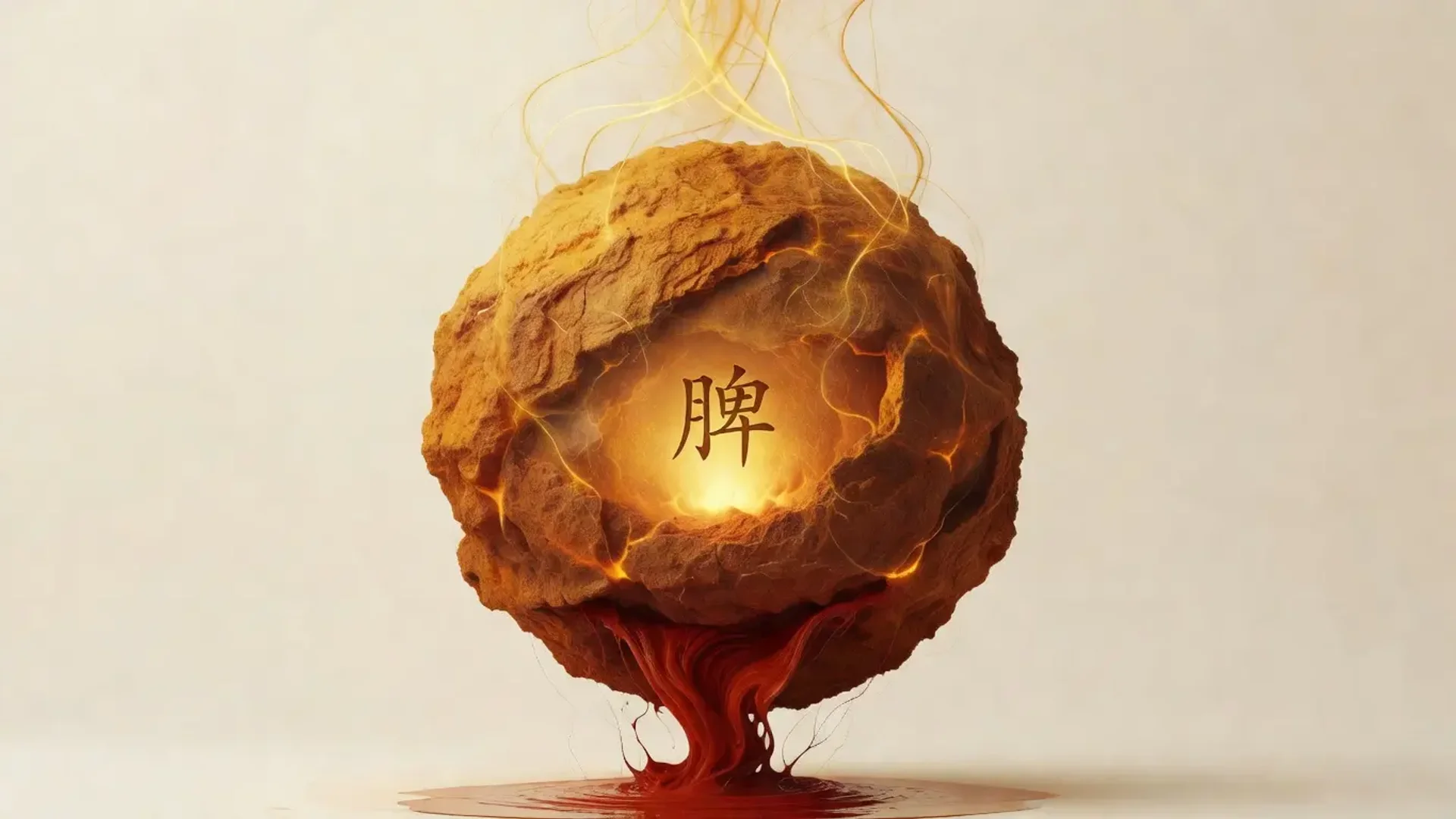
The Spleen (脾 Pí) in Traditional Chinese Medicine is the fundamental organ of transformation and digestion. It transforms food and drink into Food Qi (谷气 Gǔ Qì) and Blood, governs muscles and the four limbs, and ensures the ascent of clear Qi towards the upper part of the body.
Spleen
脾
- Transforms food and drink into Qi and Blood
- Controls the ascent of clear Qi towards the upper body
- Governs muscles, the four limbs and the complexion
- Maintains organs in place (prevents prolapse)
- Controls fluids and prevents Dampness
- Houses the intention Yi and concentration
The Spleen is the Sovereign of transformation and digestion. Like a mill, it grinds food and extracts the Qi and Blood that nourish the entire organism. A strong Spleen ensures abundant energy, firm muscles and a radiant complexion.
In Traditional Chinese Medicine
In TCM theory, the Spleen is the most important organ for energy production. It transforms food and drink into Food Qi (谷气 Gǔ Qì) and Blood, then sends clear Qi (清气 Qīng Qì) upwards (to Lung, Heart, brain) and turbid Qi (浊气 Zhuó Qì) downwards (to Large Intestine, Bladder). This “ascent of clear Qi” function is essential for alertness, concentration and vitality.
The Spleen governs:
- Digestive transformation: the production of Qi and Blood from food
- Ascent of clear Qi: sending energy upwards (brain, heart, lungs)
- Muscles and limbs: muscular strength, tone, vitality of arms and legs
- Complexion: skin radiance, facial quality
- Organs in place: prevention of prolapse (stomach, uterus, rectum, bladder)
- Fluids: fluid management to avoid Dampness accumulation
- Intention Yi: concentration, memory, study and reflection capacity
The Spleen is particularly vulnerable to Dampness (which obstructs it), Cold (which slows transformation), excessive thinking (which consumes Spleen Qi) and inadequate diet (which deprives the Spleen of raw material).
Practical Applications
In Chinese dietary therapy, the Spleen is tonified by foods of warm or neutral nature, sweet flavour, rich in energy and easy to transform. Foods that tonify the Spleen include rice, millet, sweet potatoes, cooked carrots, chicken, lean beef, dates, jujubes, ginger, adzuki beans, sesame seeds and bone broths.
Lifestyle directly influences Spleen quality: regular warm meals, quality food, attentive chewing, peaceful digestion (without stress or screens), moderate physical activity and sufficient sleep strengthen the Spleen. Irregular meals, raw and cold foods, mental overwork, repressed emotions (especially excessive thinking and worry), iced drinks and excess sugar weaken the Spleen.
Concrete Examples
A patient presenting with Spleen Qi deficiency may experience chronic fatigue, lack of appetite especially in the morning, loose stools or morning diarrhoea, a sensation of heaviness after meals, bloating, a pale and dull complexion, soft and weak muscles, a pale swollen tongue with teeth marks on the edges and a white coating, and a weak soft pulse. The dietary protocol will include Spleen Qi tonifying foods such as rice porridge with ginger and dates, chicken stewed with carrots and jujubes, roasted sweet potatoes, dry-roasted sesame seeds as snacks and sweet liquorice and ginger infusions.
A patient presenting with Dampness syndrome with Spleen Qi deficiency may experience diffuse bodily heaviness, abdominal bloating, loose sticky stools, a sensation of head in fog, lack of appetite, a dull greyish complexion, ankle oedema, a pale swollen tongue with teeth marks and a thick greasy white coating, and a weak slow pulse. The dietary protocol will include foods that tonify the Spleen and dry Dampness such as millet porridge with ginger, chicken stewed with leeks and carrots, adzuki beans in clear soup, sautéed shiitake mushrooms and ginger-lemongrass infusions.
Frequently Asked Questions
What is the difference between Spleen and Stomach?
The Spleen and Stomach are a Yang-Yin pair that collaborates in digestion. The Stomach (Yang) “receives and descends”: it accepts food, coarsely grinds it and sends it downwards. The Spleen (Yin) “transforms and transports”: it extracts Qi and Blood from food and sends them upwards (ascent of clear Qi). The Stomach likes moisture and moderate coolness; the Spleen likes dryness and warmth. A Stomach in excess (heat) weakens the Spleen; a Spleen in deficiency (Qi deficiency) disturbs the Stomach.
How to recognise a Spleen disorder?
Classic signs of a Spleen disorder include chronic fatigue (especially after meals), lack of appetite, loose stools or diarrhoea (especially morning or after meals), bloating, sensation of abdominal heaviness, pale and dull complexion, soft muscles, muscle loss, oedema (especially ankles), sensation of head in fog, difficulty concentrating, pale swollen tongue with teeth marks on the edges and a white coating, and a weak soft pulse. Spleen disorders also include prolapse (stomach, uterus, rectum) and bleeding (the Spleen controls Blood).
Which foods tonify the Spleen?
Spleen tonifying foods are generally of warm or neutral nature, sweet flavour, rich in energy and easy to digest. We cite rice, millet, sweet potatoes, cooked carrots, pumpkin, lean chicken, lean beef, dates, jujubes, fresh ginger, adzuki beans, sesame seeds, nuts, bone broths and liquorice and ginger infusions. Foods to avoid are raw and cold foods, iced drinks, dairy products, excessive sugar, fried foods and excess refined foods.
Conclusion
The Spleen constitutes the fundamental organ of transformation, digestion and energy production in Traditional Chinese Medicine. Understanding its functions, pathologies and dietary tonification approaches enables a clearer grasp of the therapeutic reasoning and support protocols offered within the Yin Shi universe.
To go further
Yin Shi ecosystem resources directly related to this article.
The Spleen, linchpin of transformation
The free lesson from the free course explains how the Spleen extracts Qi from food.
Take the lesson →Which TCM organ needs your attention?
The five-organ test spots the Zang-Fu system most called upon in you.
Take the test →