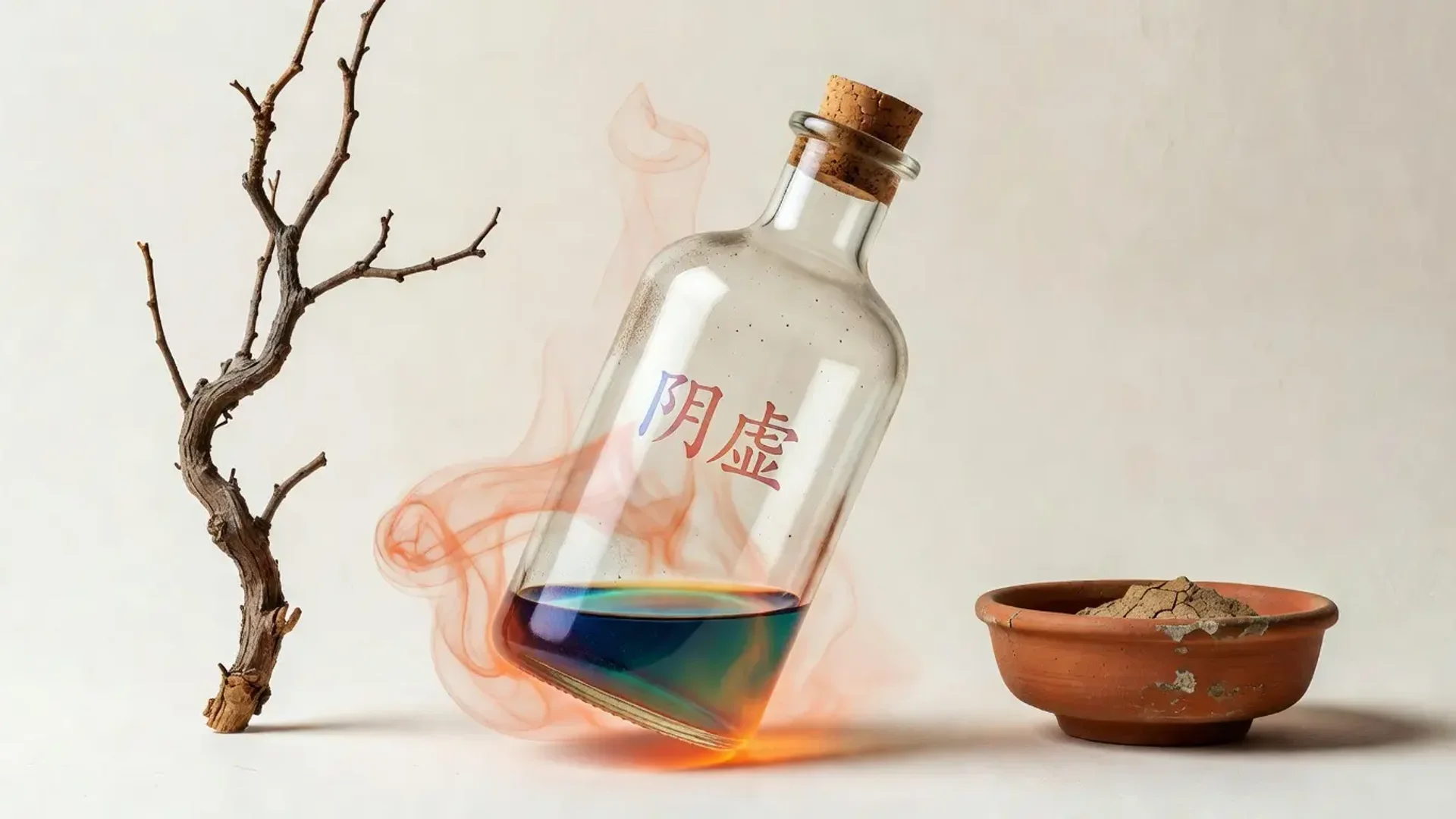
Yin Deficiency (阴虚 Yīn Xū) is a fundamental syndrome in Traditional Chinese Medicine, characterised by exhaustion of the substance, coolness and rest principle that manifests as internal heat, hot flushes, thirst, agitation and drying of organic fluids.
Yin Deficiency
阴虚
- Manifests as hot flushes, thirst and agitation
- Affects Kidney, Liver, Heart and Spleen
- Causes insomnia, night sweats and drying
- Requires cool, fluid-rich and nutrient-dense foods
- Can evolve towards Yin Heat if untreated
Yin Deficiency represents exhaustion of fluids, tissues and nourishing substance. Without sufficient Yin to cool and anchor, Yang becomes relatively excessive and engenders internal heat that consumes more fluids.
In Traditional Chinese Medicine
In TCM theory, Yin Deficiency occurs when the substance, coolness and rest principle is weakened. Main causes are prolonged mental overwork, chronic short nights, acute fever that consumes fluids, ageing, excessive sexual activity, overly hot and drying diet, or a naturally hot constitution from birth.
Yin Deficiency can concern different organs:
- Kidney Yin Deficiency: evening hot flushes, night sweats, lower back pain, tinnitus, decreased libido, thirst
- Liver Yin Deficiency: blurred vision, dry eyes, dizziness, irritability, stiff tendons
- Heart Yin Deficiency: insomnia with agitation, palpitations, thirst, emotional agitation, red tongue
- Spleen Yin Deficiency: thirst, drying constipation, weight loss, red tongue without coating
- Lung Yin Deficiency: dry cough, irritated throat, thirst, dry skin, hoarse voice
Practical Applications
In Chinese dietary therapy, Yin Deficiency is treated by foods of cool or cold nature, rich in fluids, quality nutrients and nourishing substances. Foods that nourish Yin include tofu, black beans, azuki beans, black sesame seeds, pears, bananas, mushrooms, seaweed, spinach, lean pork, eggs, mussels and juicy fruits.
Cooking method directly influences Yin preservation: gentle stewing, clear soups, steam-cooked vegetables, foods consumed warm or at room temperature, and light evening meals preserve fluids. Frying, excessive grilling, very hot spices, alcohol and coffee consume Yin.
Concrete Examples
A menopausal patient presenting with Kidney Yin Deficiency may experience intense late afternoon and evening hot flushes, night sweats that wet the sheets, intense thirst with desire to drink small sips frequently, tinnitus, agitation, insomnia and red tongue without coating. The dietary protocol will include Yin nourishing foods such as black bean and sesame seed porridge, tofu sautéed with mushrooms and spinach, pears steamed with a little honey, and chrysanthemum and fresh pear juice infusions.
A patient presenting with Liver Yin Deficiency (often linked to chronic mental overwork) may experience intermittent blurred vision, dry eyes with sand sensation, dizziness, irritability, stiff and cracking tendons, red tongue and fine rapid pulse. The dietary protocol will include foods that nourish Liver Yin such as spinach sautéed with garlic, steamed chicken liver (tonifies Blood and Liver Yin), dry-roasted black sesame seeds, go qi zi (goji berry) infusions and poached eggs.
Frequently Asked Questions
What is the difference between Yin Deficiency and perverse Heat?
Yin Deficiency is internal exhaustion of fluids and substance that engenders relative heat (Yang becomes excessive relative to weakened Yin). Perverse Heat is an external pathogenic factor that penetrates the body from outside, provoking acute fever, thirst and inflammation signs. Yin Deficiency produces chronic low heat, whilst perverse Heat produces acute high fever.
How to recognise Yin Deficiency?
Classic signs of Yin Deficiency include evening hot flushes (worse in the evening), night sweats, thirst with desire to drink small sips, dry mouth and throat, dehydrated skin, insomnia with nocturnal agitation, red tongue without coating (or with thin dry coating), fine rapid pulse, irritability, dizziness, blurred vision and drying constipation.
Which foods nourish Yin?
Yin nourishing foods are generally of cool or cold nature, rich in fluids, quality nutrients and nourishing substances. Tofu, black and azuki beans, black sesame seeds, pears, bananas, mushrooms, seaweed, spinach, lean pork, eggs, mussels, seafood, clear vegetable broths, chrysanthemum infusions and pear juice are cited.
Conclusion
Yin Deficiency constitutes the fundamental syndrome of internal heat in Traditional Chinese Medicine. Understanding its causes, manifestations and nourishing dietary approaches enables a clearer grasp of the therapeutic reasoning and support protocols offered within the Yin Shi universe.
- Yin
- Yang Deficiency
- Kidney
- Liver
- Heat
To go further
Yin Shi ecosystem resources directly related to this article.
Is your Yin still nourishing?
The Qi–Blood–Yin–Yang questionnaire spots which pillar of your energy is weakening.
Take the test →Yin deficiency and empty heat
The lesson explains how Yin deficiency produces an "empty-fire" heat and how diet answers it.
Take the lesson →