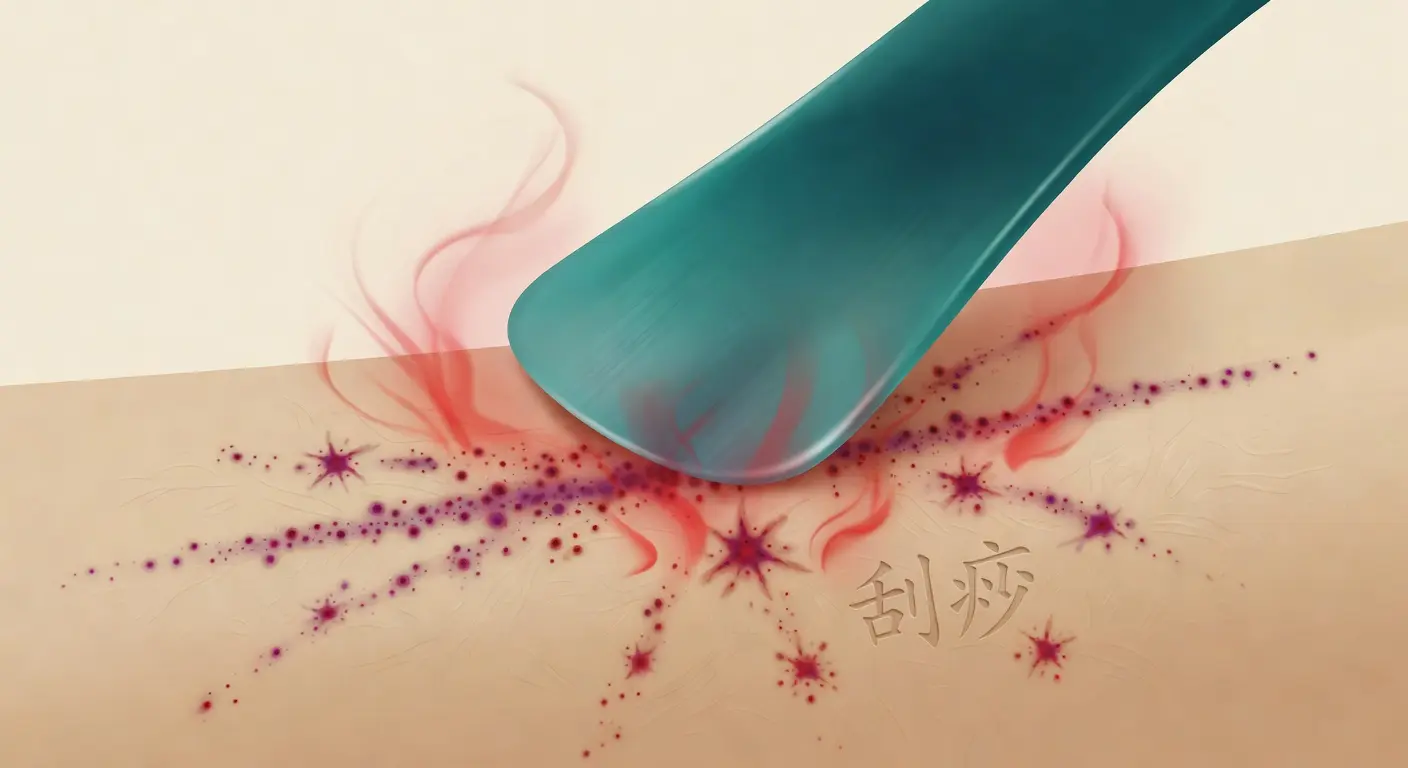
Gua Sha (刮痧 Guā Shā) in Traditional Chinese Medicine is a scraping therapy that consists of rubbing the skin with a flat tool (made of jade, buffalo horn, ceramic or metal) to release external perversities (Wind, Cold, Heat, Dampness), circulate Qi and Blood, clear Heat, disperse Stagnations, relieve pain and strengthen immunity.
Gua Sha
刮痧
- Releases external perversities (Wind, Cold, Heat, Dampness)
- Circulates Qi and Blood through scraping
- Clears Heat and disperses Stagnations
- Relieves muscular and joint pain
- Strengthens immunity and Wei Qi
- Relaxes muscles and fascias
Gua Sha is like scraping the body’s surface to release what is stuck under the skin. By rubbing with a flat tool, external perversities are brought up, Qi and Blood circulation is activated, Heat is cleared and deep muscular tensions are released, leaving the skin warm, red and revitalised.
In Traditional Chinese Medicine
In TCM theory, Gua Sha works by rubbing the skin with a flat tool to create friction that releases external perversities (Wind, Cold, Heat, Dampness) that are stuck on the body’s surface (skin, muscles, fascia), circulates Qi and Blood, clears Heat, disperses Qi and Blood Stagnations, and releases muscular tensions. The friction creates local heat that dilates blood vessels, increases local circulation, and activates the immune system.
Gua Sha is practised on different body zones:
- The back and shoulders: for colds, flu, muscular tensions, neck pain, back pain
- The neck and nape: for neck pain, headaches, neck tensions, colds
- The arms and legs: for joint pain, muscular tensions, circulation disorders
- The face: for headaches, sinusitis, skin disorders, relaxation (with a gentler technique)
- The chest: for coughs, bronchitis, chest oppression
- The abdomen: for digestive disorders, bloating, constipation
Gua Sha is indicated for:
- External perversity syndromes: colds, flu, fevers, chills, coughs, nasal discharge, headaches by Wind or Cold
- Muscular and joint pain: contractures, tensions, lower back pain, neck pain, stiff shoulders, sciatica, osteoarthritis
- Heat syndromes: fevers, infections, inflammations, hot eczema, inflammatory acne
- Circulation disorders: numbness, tingling, heavy legs, venous disorders
- Respiratory disorders: coughs, bronchitis, asthma, chest oppression
- Digestive disorders: bloating, nausea, constipation, indigestion
- Immunity strengthening: prevention of colds and flu, stimulation of Wei Qi
Gua Sha is contra-indicated on fragile skin areas, varicose veins, active haemorrhages, tumours, pregnancies (certain zones), very young children, people with coagulation disorders, zones with active skin infections, and very weak or dehydrated people.
Practical Applications
Chinese dietary therapy complements Gua Sha by providing nutrients that support Qi and Blood circulation, clear external perversities, and strengthen immunity. Recommended foods according to indication include ginger, garlic, leeks, turmeric, basil, mint, fennel, citrus, celery, carrots, spinach, sesame seeds, walnuts, azuki beans, and ginger-lemongrass infusions.
Lifestyle is crucial to maximise Gua Sha effects: protection against cold and wind after a session (pores are open and the body is vulnerable), warm and dry housing, sufficient hydration (scraping can locally dry and release toxins), moderate physical activity that maintains circulation (but not intense sport immediately after), sufficient sleep that allows regeneration, and stress management that releases muscular tension. Exposure to cold and wind after a Gua Sha session, iced drinks, direct air conditioning, intense sport immediately after, and chronic stress that contracts muscles weaken or cancel Gua Sha effects.
Concrete Examples
A patient presenting with a cold with Wind and Cold after exposure to cold and wind may experience chills, headache, stiff neck, runny nose, sneezing, cough with clear mucus, fatigue, pale tongue with white coating, and superficial tight pulse. After a Gua Sha session on the back and neck to release Wind and Cold, the dietary protocol will include warming foods that circulate Qi and support immunity such as ginger-garlic chicken soup, rice porridge with ginger and spring onions, hot ginger-cinnamon infusions, and protection against cold and wind for 24 hours after the session.
A patient presenting with muscular tension in the shoulders and neck due to stress and prolonged computer work may experience stiff and painful shoulders, neck pain, headaches at the base of the skull, tension in the upper back, irritability, and a wiry pulse. After a Gua Sha session on the shoulders and neck to release muscular tension, the dietary protocol will include foods that circulate Qi and Blood and relax muscles such as celery and carrot soup, tofu stir-fried with spinach and mushrooms, chrysanthemum and mint infusions, and stress management with deep breathing and moderate physical activity.
Frequently Asked Questions
What is the difference between Gua Sha and cupping?
Gua Sha (刮痧) is a scraping therapy that rubs the skin with a flat tool to create friction that releases external perversities and circulates Qi and Blood. It leaves red marks (sha) that disappear in a few days. Cupping (ventouses) uses suction cups that create negative pressure on the skin to release external perversities, circulate Qi and Blood, and relieve pain. It leaves circular purple marks that disappear in a few days. Gua Sha is more superficial and acts on the skin and fascia; cupping is deeper and acts on muscles and deeper tissues. The two therapies can be combined for a synergistic effect.
Is Gua Sha painful?
Gua Sha is generally not painful when performed correctly by a trained practitioner. The sensation is of rubbing and scraping that can be intense but is usually well tolerated. The pressure is adapted to the person’s sensitivity and the zone treated. On fragile or very sensitive zones (face, neck), a gentler technique is used with a softer tool and less pressure. After the session, the skin may be red and warm, which is normal and indicates that the perversities have been released. The redness disappears in a few hours to a few days.
How often can Gua Sha be practised?
Gua Sha can be practised once a week for prevention and maintenance, or more frequently (2-3 times a week) for acute conditions (colds, muscular tensions, pain). It is important to let the skin rest between sessions and to wait for the redness to disappear before treating the same zone again. For facial Gua Sha, a gentler technique is used and it can be practised more frequently (every 2-3 days). It is recommended to consult a trained practitioner for the first sessions to learn the correct technique and contra-indications.
Conclusion
Gua Sha constitutes a fundamental scraping therapy in Traditional Chinese Medicine that releases external perversities, circulates Qi and Blood, clears Heat, disperses Stagnations, relieves pain and strengthens immunity. Understanding its principles, indications, techniques and complementary dietary and lifestyle approaches enables a clearer grasp of the therapeutic reasoning and support protocols offered within the Yin Shi universe.
To go further
Yin Shi ecosystem resources directly related to this article.
The Qi Stagnation that Gua Sha targets
The entry explains the blockage the technique seeks to disperse.
Read the article →Understanding the meridians before scraping
The lesson lays down the meridian network that Gua Sha seeks to free.
Take the lesson →