Rice gruel, known as Congee (粥 zhōu) in Asia, is a universal comforting food. Long praised for its digestibility in Chinese dietetics, it is today scrutinised from the angle of modern metabolic health.
The choice of grain - white, semi-whole or whole - does not only change the texture, it profoundly modifies your body’s hormonal response. To understand which rice to choose, it is essential to cross-reference the perspective of modern nutrition, notably via the crucial notion of insulin resistance, with that of Chinese dietetics (TCM).
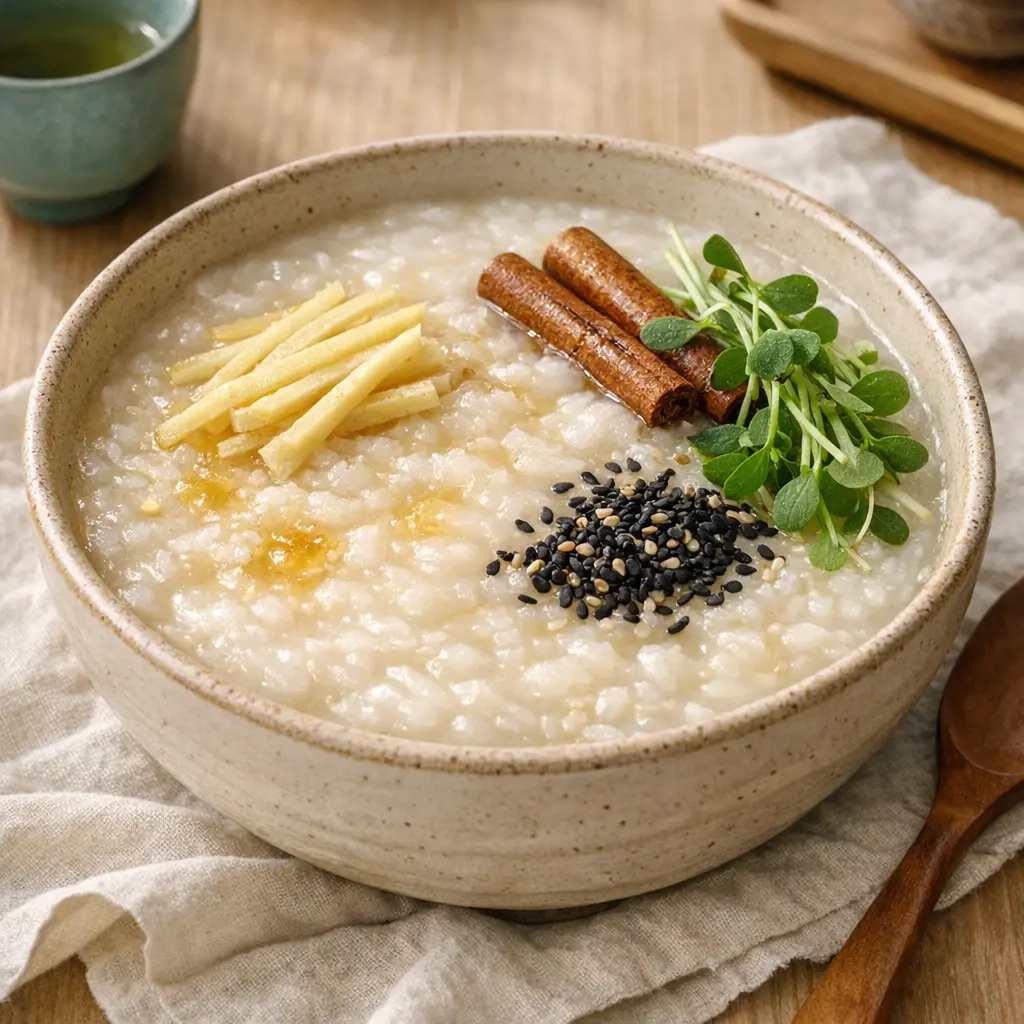
The View of Modern Nutrition: Glycaemic Index and Insulin Resistance
In modern nutrition, the impact of a food is not only measured in calories, but in its capacity to raise blood sugar and solicit insulin.
The Mechanism of Insulin Resistance
Insulin is the hormone that allows glucose to enter cells to be used as energy. When we regularly consume foods with a high Glycaemic Index (GI), the pancreas must secrete large quantities of insulin.
Through excessive demands, cells become “deaf” to insulin: this is insulin resistance (胰岛素抵抗 yídǎosù dǐkàng).
- Consequences: Sugar remains in the blood, the pancreas exhausts itself, and excess insulin promotes the storage of visceral fat and chronic inflammation
- Risk: Consuming high-GI foods such as very well-cooked white rice gruel can aggravate the metabolic situation
Comparison of Rice Types

The TCM View: Spleen (脾 Pí), Dampness (湿 Shī) and Metabolism
Traditional Chinese Medicine does not speak of insulin, but it describes energetic mechanisms that correspond astonishingly to modern metabolic disorders.
The Spleen (脾 Pí) governs transformation and transport. It detests Dampness (湿 Shī) which weighs down and clogs.
White Rice in TCM: Tonifies Qi but Creates Dampness
Nature: Neutral to slightly warm (温 wēn). Sweet flavour (甘 gān).
Main action: White rice tonifies the Qi of the Spleen (脾气 pí qì) and generates Jin Ye (津液 jīnyè), the organic liquids. This is why it is prescribed in convalescence.
The link with insulin: In TCM, the “Sweet Flavour” in excess creates Dampness (湿 shī) and Phlegm (痰 tán). This Dampness manifests as a sensation of heaviness, mental fog and bodily thickening - symptoms corresponding to modern metabolic syndrome.
Whole Rice in TCM: Nourishes Blood and Circulates
Denser and more “earthly”, whole rice nourishes Blood (血 xuè) and Kidney (肾 shèn). Its envelope helps circulate Qi without blocking it, thus avoiding Dampness stagnation.
Complete Comparison Table
| Aliment | Nature | Saveur | Méridiens | Actions | Précautions |
|---|---|---|---|---|---|
| White Rice | Neutral-Warm | Sweet | Spleen, Stomach | Tonifies Qi, generates Jin Ye | Creates Dampness/Shi - contraindicated if insulin resistant |
| Semi-Whole Rice | Neutral | Sweet | Spleen, Stomach, Kidney | Balances Qi/Dampness | No major contraindications |
| Whole Rice | Neutral-Slightly Cool | Sweet | Spleen, Kidney, Heart | Nourishes Blood, circulates Qi | May block if digestion very weak |
Multidisciplinary comparison: modern nutrition and Chinese dietetics
Practical Recommendations: Optimise Your Congee
If you suffer from insulin resistance, pre-diabetes, PCOS or wish to lose weight, the way you eat gruel is as important as the choice of rice.
Nutritional Strategy
-
Choose the right grain: Avoid white rice at breakfast if you are sedentary. Favour whole or semi-whole rice.
-
Do not overcook: A “soup” gruel will have a higher GI than a gruel where the grains remain distinct.
-
The cooling technique: Allow the gruel to cool before consuming it. This favours the formation of resistant starch, which acts like a fibre and reduces the glycaemic impact.
TCM Strategy: Break Dampness
Add warming spices: Ginger (生姜 shēngjiāng), cinnamon (肉桂 ròuguì), cardamom or pepper. In TCM, these spices “dry Dampness” (燥湿 zào shī) and help the Spleen transform carbohydrates.
Add vinegar: A drizzle of cider vinegar acidifies the food bolus, slowing gastric emptying and reducing the glycaemic peak.
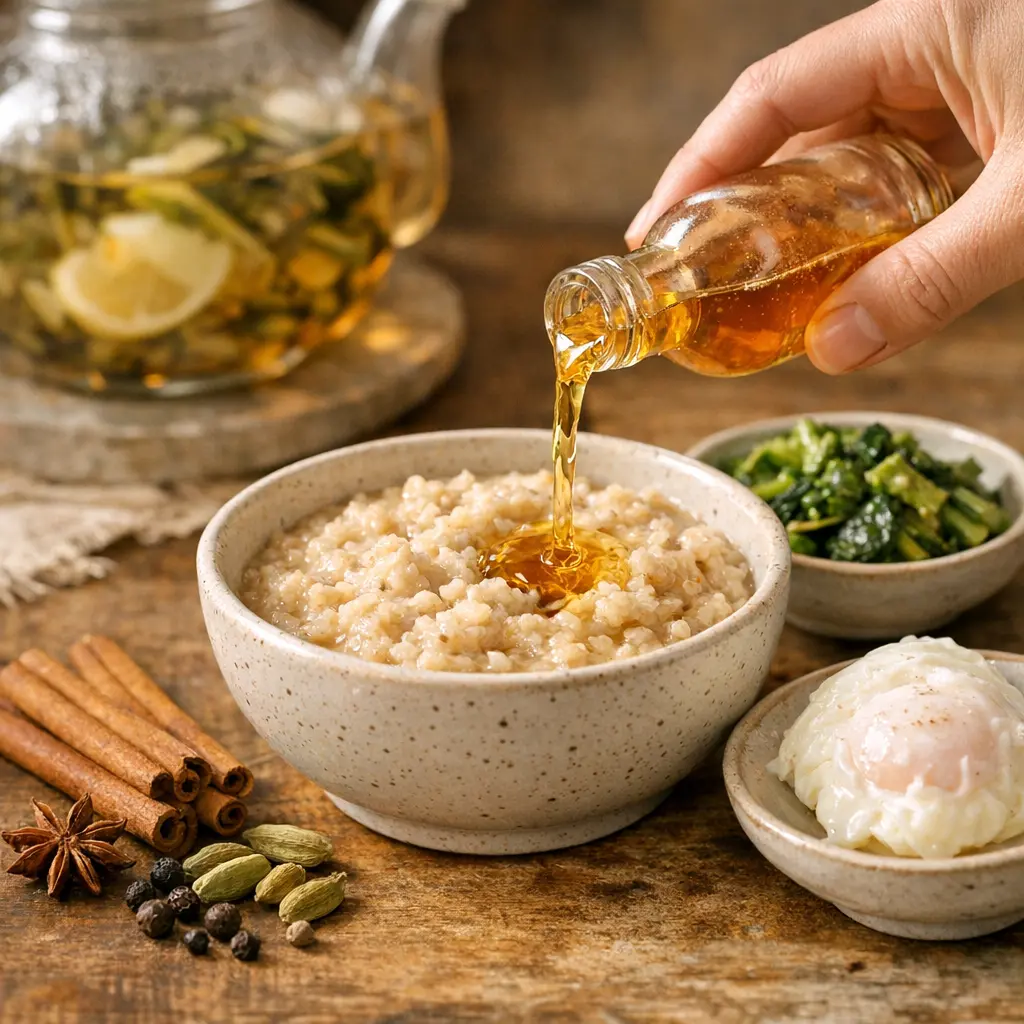
Food Sequencing
Never eat gruel alone. The optimal sequence:
- Start with fibre: Green vegetables or salad
- Then proteins and lipids: Eggs, tofu, chicken, seeds (chia, flax)
- Finish with the gruel: Fats and proteins slow carbohydrate absorption
FAQ: Frequently Asked Questions
Is gruel compatible with a low-carbohydrate diet?
No, gruel remains a carbohydrate food. However, by choosing whole rice, cooling the gruel (resistant starch) and accompanying it with proteins, you minimise its glycaemic impact.
Can one eat gruel in the evening?
In TCM, it is recommended to eat lightly in the evening so as not to overload the Spleen during the night. A small bowl of semi-whole rice gruel, without sugar, may be suitable if you dine early (before 19h).
What quantity is recommended?
For a sedentary adult: 30-40g of dry rice (about 1 small bowl of finished gruel). For an athlete or very active person: up to 60-80g. Always accompanied by proteins and vegetables.
Complementary Resources
To deepen your understanding of metabolism and Chinese dietetics:
-
Book: Metabolism & Slimming: Personalised TCM & Science Diagnosis - Volume 2 of the collection, dedicated to insulin resistance, glycaemic index and digestive Qi. Complete protocols for lasting weight loss without yo-yo effect.
-
Headaches in TCM: 16 Syndromes and Chinese Dietetics - Pillar article on energetic syndromes linked to headaches and their nutritional approaches.
-
Ginger in TCM: Properties and Therapeutic Uses - Discover the properties of ginger (生姜 Shēng Jiāng), the ideal warming spice to accompany your gruel.
-
Turmeric in TCM: Actions on Blood - The powerful anti-inflammatory that perfectly complements a balanced diet.
Conclusion: Listen to Your Metabolism
There is no forbidden food, but there are dangerous contexts.
Modern nutrition alerts us: for an insulin-resistant person, a bowl of white rice gruel on an empty stomach is almost equivalent to ingesting pure sugar. Chinese dietetics completes this: this same gruel creates internal Dampness (湿 shī), weighing down body and mind.
The Yin Shi expert advice:
If your metabolism is healthy and your physical activity high, occasional white rice gruel is an excellent Qi (气 qì) rebuilder. If you struggle with your weight, have a round belly or post-prandial fatigue, turn to whole or semi-whole rice, cooled before consumption, and always “dressed” with proteins, good fats and spices such as ginger (生姜 shēngjiāng) or cinnamon (肉桂 ròuguì).
Transform your gruel: may it no longer be a simple carbohydrate, but a complete meal that respects both your digestive energy and your hormonal balance.
Article written according to the principles of Traditional Chinese Medicine and modern scientific nutrition data. For advanced personalisation of your meals according to your energetic constitution, discover the Yin Shi application.
To go further
Yin Shi ecosystem resources directly related to this article.
See the rice in the app
White rice and glutinous rice: the two grains the recipe compares, with full sheets.
Full sheets available after the 30-day free trial or with a subscription.
Congee, the founding porridge
The lesson covers therapeutic congees and soups, of which rice porridge is the everyday version.
Take the lesson →