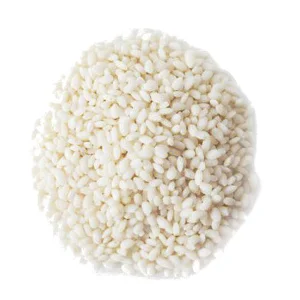
Khao Niao Mamuang (Mango Sticky Rice)(Thailand)
Difficulty : 1
Khao Niao Mamuang is Thailand's most iconic dessert, born in the markets of Bangkok in the 19th century. Glutinous rice, a staple of the north and north-east (Isan), is here paired with Alphonso or Nam Dok Mai mango, a fruit of the hot season (March-May). Sweetened coconut milk adds richness. This dessert is so popular that it has its own tourist season.
- 250g glutinous rice (soaked 8h, drained)
- 200ml coconut milk
- 50g palm sugar
- 1/2 tsp salt
- 1 fresh ripe mango (Nam Dok Mai or Alphonso variety)
- 1 tbsp toasted sesame seeds (for garnish)
- A few mint leaves (for garnish)
1. Steam the glutinous rice for 25-30 minutes until tender and translucent. 2. Meanwhile, in a saucepan, heat the coconut milk with the palm sugar and salt over low heat, stirring until the sugar dissolves. Do not boil. 3. Once the rice is cooked, transfer it to a bowl. Pour about 150ml of the warm coconut milk mixture over the rice. Mix well, cover and let rest for 15-20 minutes for the rice to absorb the liquid. 4. Peel and slice the mango. 5. Serve the warm glutinous rice with the mango slices. Drizzle with the remaining coconut milk sauce and garnish with toasted sesame seeds and mint.
Arrange the rice in a dome or rectangle shape, surrounded by mango slices. Generously drizzle with sauce.
TCM actions : Nature: Glutinous rice is warm, sweet. Coconut milk is sweet, warm. Mango is sweet, cooling. Actions: Nourishes Qi and Blood, tonifies the Spleen and Stomach. Mango hydrates and generates fluids. Interest: A nourishing and comforting dish, good for digestion and energy.
Nutritional benefits : Rich in complex carbohydrates (energy). Coconut milk provides healthy fats (medium-chain triglycerides). Mango is rich in vitamins A and C, and fibre.
Mochi (Glutinous Rice Cakes)(Japan)
Difficulty : 2
Mochi is a traditional Japanese rice cake, consumed particularly at New Year (Oshōgatsu) and the Girls' Festival (Hinamatsuri). Its ritual preparation, mochitsuki, consists of pounding cooked glutinous rice in a wooden mortar (usu) with a heavy mallet (kine). This communal tradition dates back to the Heian period (794-1185). Mochi is also offered to the kami (spirits) in Shinto shrines.
- 200g glutinous rice flour (mochiko)
- 200ml water
- 50g sugar
- Cornflour or potato starch (for dusting)
- Filling of choice (red bean paste anko, strawberries, ice cream)
1. In a microwave-safe bowl, mix the glutinous rice flour, sugar and water until smooth. 2. Cover the bowl with cling film and microwave on full power for 2 minutes. 3. Remove and stir vigorously with a damp spatula. 4. Cover again and microwave for 1 minute. Stir. 5. Repeat for 1 more minute. The mochi should be translucent and very sticky. 6. Generously dust a work surface with cornflour. Tip the hot, very sticky mochi dough onto it. 7. Dust the top with cornflour and, using a spatula or cornflour-dusted hands, spread the dough to about 0.5 cm thickness. 8. Cut into squares or circles. Place the filling in the centre and gently seal to form the mochis.
Serve fresh, dusted with a little cornflour or matcha tea powder.
TCM actions : Nature: Glutinous rice is warm, sweet. Actions: Tonifies the Spleen and Stomach, nourishes Qi. May be heavy to digest for some. Interest: Provides quick energy.
Nutritional benefits : Quick energy source (carbohydrates). Low in fat if the filling is light.
Zongzi (Stuffed Glutinous Rice Dumplings)(China)
Difficulty : 1
Zongzi are eaten during the Dragon Boat Festival (Duanwu), celebrating the poet Qu Yuan (340-278 BCE). According to legend, villagers threw zongzi into the Miluo River to prevent fish from devouring the poet's body. Bamboo leaves impart a vegetal aroma to the rice. The recipe varies by region: sweet in the north, savoury in the south.
- Base
- 500g glutinous rice (soaked 8h)
- Dried bamboo leaves (soaked 2h, then boiled 30 min to soften)
- Filling (pork-free example)
- 200g chicken breast, diced
- 100g dried shiitake mushrooms (rehydrated and sliced)
- 50g raw peanuts (soaked 2h)
- 2 tbsp soy sauce
- 1 tbsp sesame oil
- 1 tsp sugar
- Salt, pepper
- Optional: 2 salted egg yolks (halved)
1. Season the soaked glutinous rice with 1 tbsp soy sauce and 1 tbsp sesame oil. 2. Mix the filling ingredients with the remaining soy sauce, sesame oil, sugar, salt and pepper. 3. Take 2 bamboo leaves, overlap them and fold into a cone. 4. Place a spoonful of rice at the bottom, then a portion of filling (chicken, mushrooms, peanuts, half egg yolk if using), then cover with more rice. 5. Fold the leaves to form a pyramid and tie firmly with kitchen string. 6. Steam or boil the zongzi in a large pot of water for 2-3 hours, or until the rice is very tender.
Serve hot, unwrapped from the bamboo leaves.
TCM actions : Nature: Glutinous rice is warm, sweet. Chicken is sweet, warm. Shiitake are sweet, neutral. Actions: Tonifies Qi and Blood, fortifies the Spleen and Stomach. Interest: A very nourishing dish, ideal for cold periods.
Nutritional benefits : Complete meal: carbohydrates, protein (chicken), fibre (mushrooms, peanuts). Can be high in sodium depending on the amount of soy sauce.
Biko (Glutinous Rice Cake with Coconut Milk)(Philippines)
Difficulty : 1
Biko is a Filipino kakanin (rice cake) served at festivals and gatherings. It traces its origins to pre-colonial traditions of the terraced rice fields of the Cordilleras. The latik (caramelised coconut milk residue) is a typically Filipino touch. Each region has its variant, with palm sugar or muscovado.
- 250g glutinous rice (soaked 4h, drained)
- 400ml coconut milk (1 tin)
- 200g palm sugar (or brown sugar)
- 1/2 tsp salt
- For the Latik (caramelised coconut milk topping):
- 200ml coconut milk
1. Steam the glutinous rice for 20-25 minutes. 2. Meanwhile, in a large heavy-bottomed saucepan, combine 400ml coconut milk, palm sugar and salt. Bring to a gentle boil, stirring constantly until the sugar dissolves and the mixture thickens slightly (about 5-7 minutes). 3. Add the cooked glutinous rice to the saucepan. Mix well and cook over low heat, stirring constantly, for 15-20 minutes, until the rice has absorbed all the liquid and becomes very sticky and thick. 4. Press the mixture into a greased square or rectangular dish. Smooth the surface. 5. For the Latik: In a small saucepan, boil 200ml coconut milk over medium-high heat, stirring frequently. The coconut milk will separate and the oil will rise. Continue cooking until the coconut solids become golden and crispy (about 15-20 minutes). Drain the oil and reserve the crispy pieces (Latik). 6. Top the Biko with the Latik. Allow to cool completely before cutting into squares.
Cut into squares and serve with the crispy Latik on top.
TCM actions : Nature: Glutinous rice is warm, sweet. Coconut milk is sweet, warm. Actions: Tonifies the Spleen and Stomach, nourishes Qi. Interest: A very nourishing and comforting dish.
Nutritional benefits : Rich in carbohydrates (energy) and healthy fats (coconut milk). Can be calorific due to the sugar and coconut milk.
Lemang (Bamboo Glutinous Rice) - Malaysia / Indonesia(Malaysia)
Difficulty : 1
Lemang is a traditional dish of the Minangkabau communities of Sumatra and the Orang Asli of Malaysia. It is served at Eid al-Fitr (Hari Raya) and community celebrations. Slow cooking in bamboo stalks over an open wood fire is an ancestral technique that infuses the rice with smoky aromas. Lemang traditionally accompanies rendang.
- 500g glutinous rice (soaked 4h, drained)
- 400ml thick coconut milk
- 1 tsp salt
- A few banana leaves (to line the inside of the bamboo)
- Fresh bamboo stalks (about 30-40 cm long, 5-7 cm diameter)
1. Mix the soaked glutinous rice with the coconut milk and salt. 2. Carefully clean the inside of the bamboo stalks. Line the inside of each stalk with banana leaves, ensuring they cover the walls well. 3. Fill each bamboo stalk with the glutinous rice mixture, leaving a 2-3 cm gap at the top. 4. Seal the opening with a piece of banana leaf. 5. Cook the bamboo over an open wood fire, turning regularly, for 3-4 hours, until the rice is cooked and the bamboo is slightly charred on the outside. The cooking is slow and allows the rice to absorb the aromas of the bamboo and wood fire.
Split the bamboo with a machete or sturdy knife, then slice the lemang. Serve hot, often with beef or chicken rendang.
TCM actions : Nature: Glutinous rice is warm, sweet. Coconut milk is sweet, warm. Actions: Tonifies the Spleen and Stomach, nourishes Qi. Interest: A very nourishing dish, good for energy.
Nutritional benefits : Rich in carbohydrates and healthy fats. Traditional cooking method that may add aromatic compounds.
Khao Lam (Sweet Bamboo Glutinous Rice)(Thailand)
Difficulty : 1
Khao Lam is a street food speciality of continental South-East Asia, particularly in Laos and north-eastern Thailand (Isan). Sold in night markets, it is cooked in bamboo over embers. Slow cooking caramelises the sugar and infuses the rice with the aroma of fresh bamboo. It is a convivial snack shared in groups.
- 250g glutinous rice (soaked 4h, drained)
- 200ml coconut milk
- 50g sugar
- 1/2 tsp salt
- Some black beans or peanuts (optional)
- Fresh bamboo stalks (about 30-40 cm long)
- Banana or pandan leaves (to plug the opening)
1. Mix the soaked glutinous rice with the coconut milk, sugar and salt. Add the black beans or peanuts if desired. 2. Clean the bamboo stalks. 3. Fill each stalk with the glutinous rice mixture, leaving a 2-3 cm gap at the top. 4. Plug the opening with banana or pandan leaves. 5. Cook the bamboo over an open wood fire, turning regularly, for 1 to 1.5 hours, or until the rice is cooked and the bamboo is slightly charred on the outside.
Split the bamboo and serve the khao lam in slices.
TCM actions : Nature: Glutinous rice is warm, sweet. Coconut milk is sweet, warm. Actions: Nourishes Qi and Blood, tonifies the Spleen and Stomach. Interest: An energising and comforting dish.
Nutritional benefits : Rich in carbohydrates and healthy fats. Black beans add fibre and protein.
Glutinous Rice with Black Beans and Sesame - Vietnam(Vietnam)
Difficulty : 1
Chè Trôi Nước is a Vietnamese dessert served at Tết (Lunar New Year) and the Mid-Autumn Festival. Glutinous rice balls stuffed with mung beans float in a ginger syrup, symbolising the full moon. Toasted sesame and coconut milk complete this comforting dessert, traditionally offered to ancestors.
- Base
- 200g glutinous rice flour
- 50g regular rice flour
- 150ml warm water
- Filling
- 100g peeled mung beans (soaked 2h, steamed and mashed into a paste)
- 50g sugar
- 1 tbsp vegetable oil
- Syrup
- 500ml water
- 150g sugar
- A few slices of fresh ginger
- 1 tbsp toasted sesame seeds (for garnish)
- Coconut milk (to serve)
1. Filling: Mix the mung bean paste with the sugar and oil. Form small marble-sized balls. 2. Dough: Mix the rice flours. Gradually add the warm water and knead until a smooth, pliable dough forms. 3. Take a small piece of dough, flatten it, place a filling ball in the centre and seal to form a ball. Repeat. 4. Cooking: Bring a large pot of water to the boil. Drop in the glutinous rice balls. They are cooked when they float to the surface (about 5-7 minutes). Remove and plunge into a bowl of cold water to prevent sticking. 5. Syrup: In another saucepan, boil the water with the sugar and ginger until the sugar dissolves. 6. Transfer the drained glutinous rice balls to the hot syrup. Simmer for 5 minutes.
Serve hot in a bowl, with a few toasted sesame seeds and a drizzle of coconut milk.
TCM actions : Nature: Glutinous rice is warm, sweet. Mung beans are cooling, sweet. Ginger is hot, pungent. Actions: Tonifies the Spleen, nourishes Qi. Ginger warms the Stomach and disperses cold. Interest: A sweet and warming dessert, good for digestion.
Nutritional benefits : Complex and simple carbohydrates (energy). Mung beans provide protein and fibre. Ginger has anti-inflammatory properties.
Glutinous Rice with Chicken and Mushrooms (Lo Mai Gai) - China(China)
Difficulty : 1
Lo Mai Gai is a classic Cantonese dim sum, served in tea houses (yum cha) in Guangzhou and Hong Kong. Cooked in lotus leaves, it acquires a subtle vegetal flavour. Dim sum are traditionally consumed in the morning, accompanied by pu'er tea. This recipe dates from the Qing era (1644-1912).
- 250g glutinous rice (soaked 8h, drained)
- 200g boneless chicken thighs, diced
- 50g dried shiitake mushrooms (rehydrated and sliced)
- 1 tbsp light soy sauce
- 1 tbsp oyster sauce (or vegetarian mushroom sauce)
- 1 tsp sesame oil
- 1 tsp cornflour
- 1/2 tsp sugar
- A few dried lotus leaves (soaked 1h, then boiled 15 min to soften)
1. Marinate the chicken with the soy sauce, oyster sauce, sesame oil, cornflour and sugar for at least 30 minutes. 2. Mix the soaked glutinous rice with a teaspoon of soy sauce and a teaspoon of sesame oil. 3. On each lotus leaf (or two small ones overlapped), place a portion of glutinous rice. 4. Add a portion of marinated chicken and a few mushrooms. 5. Cover with another portion of glutinous rice. 6. Fold the lotus leaf to form a parcel and tie with string if necessary. 7. Steam for 45-60 minutes, until the rice and chicken are thoroughly cooked.
Serve hot, unwrapped from the lotus leaves.
TCM actions : Nature: Glutinous rice is warm, sweet. Chicken is sweet, warm. Shiitake are sweet, neutral. Actions: Tonifies Qi and Blood, fortifies the Spleen and Stomach. Interest: A nourishing and comforting dish, good for vitality.
Nutritional benefits : Balanced meal: carbohydrates, protein, fibre. Can be high in sodium.
Glutinous Rice with Taro and Coconut Milk (Pulut Hitam) - Malaysia / Singapore(Malaysia)
Difficulty : 1
Pulut Hitam is a dessert of the Baba-Nyonya (Peranakan) community of Malaysia and Singapore, a fusion of Malay and Chinese cultures. Black glutinous rice (pulut hitam) is slowly cooked with taro until a creamy texture is achieved. Served with salted coconut milk, it balances sweet and savoury. It is a festive dessert, particularly for Hari Raya.
- 200g black glutinous rice (soaked 8h, drained)
- 100g fresh taro, peeled and diced
- 800ml water
- 150g palm sugar (or brown sugar)
- 1/2 tsp salt
- 200ml thick coconut milk (to serve)
- A few pandan leaves (optional)
1. In a large saucepan, combine the soaked black glutinous rice, taro, water and pandan leaves. 2. Bring to the boil, then reduce the heat and simmer covered for 45-60 minutes, stirring occasionally, until the rice and taro are tender and most of the water is absorbed. 3. Add the palm sugar and salt. Continue cooking and stirring for 10-15 minutes, until the mixture thickens and becomes syrupy. 4. Remove the pandan leaves.
Serve hot or warm in bowls, with a generous drizzle of thick coconut milk on top.
TCM actions : Nature: Black glutinous rice is sweet, neutral. Taro is sweet, neutral. Palm sugar is sweet, warm. Actions: Tonifies the Spleen and Stomach, nourishes Blood (black rice is often associated with nourishing Blood and the Kidneys). Interest: A nourishing and restorative dessert.
Nutritional benefits : Rich in complex carbohydrates and fibre (black rice, taro). Black glutinous rice contains anthocyanins (antioxidants). Taro is a good source of potassium.
Glutinous Rice with Dried Prawns (Nasi Pulut Udang Kering) - Indonesia(Indonesia)
Difficulty : 1
Nasi Pulut Udang Kering is a Javanese speciality from Indonesia, often served at selamatan (community ceremonies). Dried prawns (ebi) and shrimp paste (belacan) bring the umami typical of Indonesian cuisine. Wrapped in banana leaves, it is a popular street snack in Jakarta and Surabaya.
- Base
- 250g glutinous rice (soaked 4h, drained)
- 200ml coconut milk
- 1/2 tsp salt
- Dried prawn filling
- 50g dried prawns (soaked 30 min, chopped)
- 2 shallots, chopped
- 2 garlic cloves, chopped
- 1 fresh red chilli, chopped (optional)
- 1 tsp shrimp paste (belacan, optional)
- 1 tbsp vegetable oil
- 1 tsp sugar
- Juice of 1/2 lime
1. Steam the glutinous rice for 20 minutes. 2. Meanwhile, in a saucepan, heat the coconut milk with the salt. Add the pre-cooked glutinous rice and mix. Cover and let rest for 10 minutes for the rice to absorb the coconut milk. 3. Filling: In a frying pan, heat the oil. Sauté the shallots, garlic and chilli until fragrant. 4. Add the chopped dried prawns and shrimp paste (if using). Cook for 5 minutes. 5. Add the sugar and lime juice. Cook until the mixture is dry and aromatic. 6. Take a portion of glutinous rice, flatten it. Place a spoonful of filling in the centre and seal to form a ball or cylinder.
Serve hot or warm. Can be wrapped in banana leaves for an authentic presentation.
TCM actions : Nature: Glutinous rice is warm, sweet. Prawns are hot, salty. Chilli is hot, pungent. Actions: Tonifies the Spleen and Kidneys, warms the Stomach. Interest: An energising dish, good for vitality and circulation.
Nutritional benefits : Carbohydrates, protein (prawns). Dried prawns are rich in calcium and iodine. Chilli provides capsaicin.
Glutinous Rice with Coconut Milk and Dried Fruits (Kheer) - India(India)
Difficulty : 1
Kheer (or Payasam) is an ancient Indian dessert, mentioned in Ayurveda and Sanskrit texts. Served at festivals (Diwali, Pongal) and weddings, it symbolises prosperity and abundance. This coconut milk version adapts the traditional kheer for the coastal regions of southern India (Kerala, Tamil Nadu) where coconut is ubiquitous. Saffron and cardamom are sacred ingredients.
- 100g glutinous rice (soaked 2h, drained)
- 500ml coconut milk
- 100g sugar
- 1/2 tsp ground cardamom
- 2 tbsp flaked almonds
- 2 tbsp chopped pistachios
- 1 tbsp raisins
- A few strands of saffron (steeped in a little warm coconut milk)
1. In a heavy-bottomed saucepan, bring the coconut milk to the boil. 2. Add the drained glutinous rice. Reduce the heat and simmer gently, stirring frequently, for 30-40 minutes, until the rice is very tender and the kheer thickens. 3. Add the sugar, cardamom and infused saffron. Continue cooking for 5-10 minutes, stirring, until the sugar dissolves and the desired consistency is reached. 4. Fold in half the almonds, pistachios and raisins.
Serve hot or cold in individual coupes. Garnish with the remaining dried fruits.
TCM actions : Nature: Glutinous rice is sweet, heavy. Coconut milk is sweet, refreshing. Cardamom is pungent, sweet. Actions: Nourishes the tissues, increases Ojas (vitality). Cardamom aids digestion. Interest: A nourishing, soothing dessert, good for strength and immunity.
Nutritional benefits : Carbohydrates, healthy fats, protein (dried fruits). Fibre (dried fruits). Cardamom has digestive properties.
Glutinous Rice with Chicken and Vegetables (Arroz Pegao con Pollo) - Cuba(Cuba)
Difficulty : 2
Arroz Pegao is a Cuban adaptation of chicken rice, where glutinous rice replaces long-grain rice to create the 'pegao' : the crispy crust at the bottom of the pot, considered the best part by Cubans. This dish reflects the fusion of Spanish traditions (chicken rice) and Caribbean influences (spices, sweetcorn, peas).
- 250g glutinous rice (not soaked for this recipe)
- 400g boneless chicken thighs, diced
- 1 onion, chopped
- 1 green pepper, chopped
- 2 garlic cloves, chopped
- 100g peas (frozen)
- 100g sweetcorn (canned or frozen)
- 400ml chicken stock
- 100ml tomato sauce
- 2 tbsp olive oil
- 1 tsp cumin
- 1/2 tsp oregano
- Salt, pepper
1. In a large frying pan or heavy-bottomed pot, heat the olive oil over medium heat. Brown the chicken on all sides. Remove and set aside. 2. In the same pan, sauté the onion, pepper and garlic until tender (about 5-7 minutes). 3. Add the glutinous rice (unsoaked). Stir for 2-3 minutes to coat the grains in oil. 4. Stir in the chicken stock, tomato sauce, cumin, oregano, salt and pepper. Bring to the boil. 5. Return the chicken to the pan. Reduce the heat to low, cover and simmer for 25-30 minutes, or until the rice has absorbed all the liquid and is cooked. 6. Fold in the peas and sweetcorn. Cover and let rest for 5 minutes off the heat. The bottom layer of rice should be slightly crispy ("pegao").
Serve directly from the pan, making sure to scrape the "pegao" from the bottom.
TCM actions : Nature: Glutinous rice is warm, sweet. Chicken is sweet, warm. Vegetables are neutral. Actions: Tonifies the Spleen and Stomach, nourishes Qi. Interest: A nourishing and warming dish.
Nutritional benefits : Complete meal: carbohydrates, protein, vitamins and minerals (vegetables). Energy source.
Glutinous Rice with Vegetables and Peanuts (Mafe de Riz Glutin) - West Africa(Senegal)
Difficulty : 1
Mafe (or Maafe) is a West African peanut stew, originating from Senegal and Mali. This glutinous rice version adapts the traditional stew (served with regular rice) by incorporating glutinous rice for a smoother texture. Peanut paste is a legacy of the groundnut agriculture introduced by the Portuguese in the 16th century, which became a pillar of Senegalese cuisine.
- 250g glutinous rice (soaked 4h, drained)
- 200g mixed vegetables (carrots, potatoes, sweet potatoes, courgettes), diced
- 1 onion, chopped
- 2 garlic cloves, chopped
- 1 fresh chilli (optional), chopped
- 400ml vegetable stock
- 200g natural peanut paste
- 1 tbsp tomato purée
- 2 tbsp vegetable oil
- Salt, pepper
1. In a large pot, heat the oil and sauté the onion, garlic and chilli until tender. 2. Add the diced vegetables and sauté for 5 minutes. 3. Stir in the peanut paste and tomato purée. Mix well and cook for 2-3 minutes. 4. Add the vegetable stock. Bring to the boil, then reduce the heat and simmer for 15 minutes. 5. Add the drained glutinous rice. Mix and simmer over low heat, covered, for 25-30 minutes, or until the rice is cooked and the sauce has thickened. Stir occasionally to prevent the rice from sticking to the bottom.
Serve hot in bowls.
TCM actions : Nature: Glutinous rice is warm, sweet. Peanut paste is sweet, neutral. Vegetables are neutral. Actions: Tonifies the Spleen and Stomach, nourishes Qi and Blood. Interest: A very nourishing and comforting dish, good for energy and vitality.
Nutritional benefits : Complete meal: carbohydrates, protein (peanuts), healthy fats, fibre, vitamins and minerals (vegetables). Peanut paste is rich in plant protein and monounsaturated fats.
Glutinous Rice with Coconut Milk and Fresh Fruits (Pulut Panggang Manis) - Oceania(Indonesia)
Difficulty : 1
Pulut Panggang is a grilled snack from South-East Asia, popular in Indonesia and Malaysia. This sweet version with fresh fruits is a modern adaptation of the traditional pulut panggang (usually savoury, stuffed with sambal). Charred banana leaves bring a characteristic smoky aroma. It is a convivial street food, shared in families.
- Base
- 250g glutinous rice (soaked 4h, drained)
- 200ml thick coconut milk
- 50g palm sugar (or brown sugar)
- 1/2 tsp salt
- Banana leaves (for wrapping)
- Fresh fruit filling
- 1/2 mango, diced
- 1/2 papaya, diced
- 1/4 pineapple, diced
- Juice of 1/2 lime
- A few chopped mint leaves
1. Steam the glutinous rice for 20-25 minutes. 2. Meanwhile, in a saucepan, heat the coconut milk with the palm sugar and salt until the sugar dissolves. 3. Add the cooked glutinous rice to the coconut milk mixture. Mix well, cover and let rest for 15 minutes for the rice to absorb the liquid. 4. Filling: Mix the diced mango, papaya and pineapple with the lime juice and mint. 5. Take a portion of glutinous rice, flatten it on a banana leaf. Place a spoonful of fruit filling in the centre. 6. Roll the glutinous rice to form a cylinder, then wrap tightly in the banana leaf. 7. Grill the glutinous rice parcels on a barbecue or grill pan for 5-7 minutes on each side, until the banana leaves are slightly charred and the rice is hot.
Serve the grilled parcels hot. Diners unwrap the rice themselves.
TCM actions : Nature: Glutinous rice is warm, sweet. Coconut milk is sweet, warm. Fruits are cooling, sweet. Actions: Nourishes Qi, tonifies the Spleen and Stomach. Fruits hydrate and generate fluids. Interest: A refreshing and energising dessert.
Nutritional benefits : Carbohydrates, healthy fats. Fresh fruits provide vitamins, minerals and fibre. Antioxidants from the fruits.
Glutinous Rice with Chicken and Peanuts (Chicken Yassa with Glutinous Rice) - Senegal(Senegal)
Difficulty : 1
Yassa is a Senegalese dish from Casamance (southern Senegal), traditionally prepared with chicken or fish. The acidity of lime and the sweetness of caramelised onions characterise this dish. This glutinous rice version adapts the regular rice for a stickier texture that absorbs the sauce better. Yassa is served at large family celebrations.
- 250g glutinous rice (soaked 4h, drained)
- 400g boneless chicken thighs, cut into pieces
- 3 onions, finely sliced
- 2 garlic cloves, chopped
- 1 fresh chilli (optional), chopped
- 100g toasted unsalted peanuts, crushed
- Juice of 2 limes
- 2 tbsp Dijon mustard
- 2 tbsp vegetable oil
- 400ml chicken stock
- Salt, pepper
1. Marinade: In a large bowl, mix the chicken with the sliced onions, garlic, chilli, lime juice and mustard. Marinate in the refrigerator for at least 2 hours, ideally overnight. 2. In a large pot or casserole, heat the vegetable oil. Remove the chicken and onions from the marinade (reserve the marinade). Brown the chicken on all sides. Remove and set aside. 3. Add the marinated onions to the pot and sauté over low heat until very tender and caramelised (about 15-20 minutes). 4. Return the chicken to the pot. Add the chicken stock and the drained glutinous rice. 5. Bring to the boil, then reduce the heat to low, cover and simmer for 25-30 minutes, or until the rice is cooked and the liquid is absorbed. 6. Fold in the crushed peanuts. Gently mix.
Serve hot, directly from the pot.
TCM actions : Nature: Glutinous rice is warm, sweet. Chicken is sweet, warm. Onions are pungent, warm. Peanuts are sweet, neutral. Actions: Tonifies the Spleen, Stomach and Qi. Lime aids digestion and circulation. Interest: A very nourishing and energising dish, good for vitality and digestion.
Nutritional benefits : Complete meal: carbohydrates, protein (chicken, peanuts), healthy fats (peanuts), vitamins and minerals (onions, lime). Peanuts are rich in antioxidants.