Alcohol is the food Chinese dietetics judges most severely: it is concentrated Heat and Dampness, and it rises to the Liver, the organ that manages the circulation of Qi and the stability of emotions. That is not a moral condemnation: it is a terrain reading. Alcohol has its uses (it circulates, it opens), but it demands a terrain that can transform it.
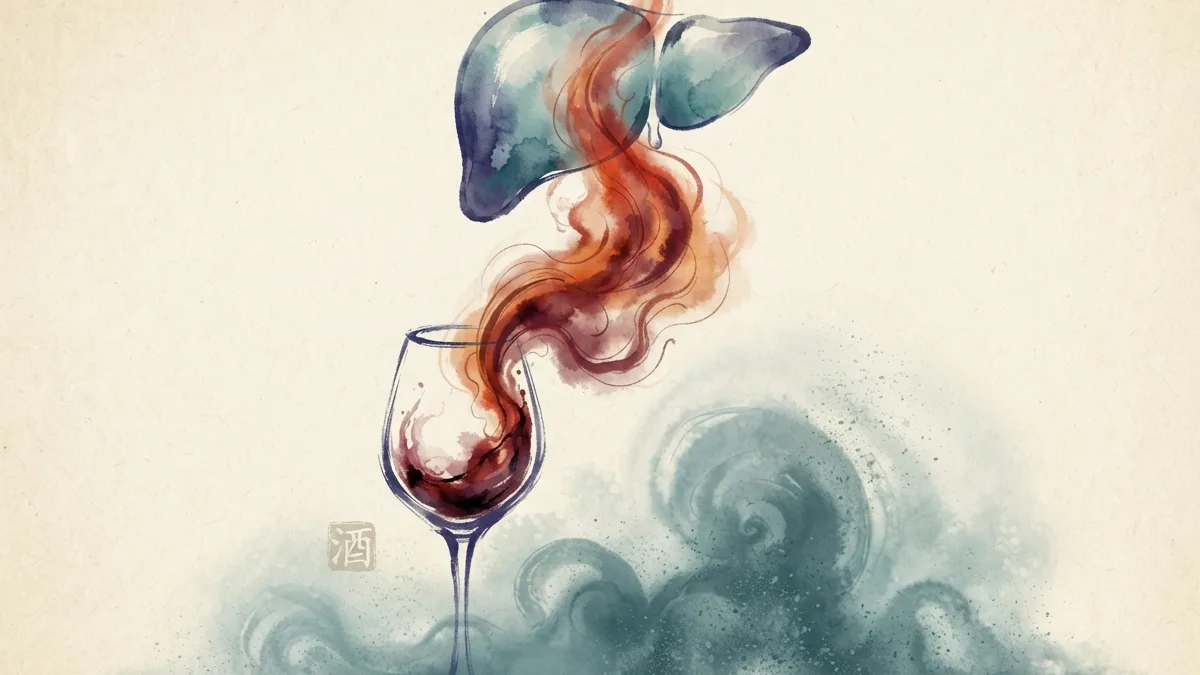
Alcohol in TCM: Damp-Heat that rises
The nature of alcohol is double: it engenders Heat (it makes things rise, it flushes, it agitates) and it engenders Dampness (it clogs, it swells, it weighs down). That is the most encumbering combination: Damp-Heat. And its direction is upwards: it rises to the Liver, then the head: flushing, sweating, agitation, then the hangover.
The classical reading adds: alcohol “circulates”, it moves Qi and Blood. That is its only virtue, and it explains why Chinese dietetics kept it as a therapeutic vehicle (medicinal wines). But circulation bought with Damp-Heat has a price: it clogs what it claims to free.
The degrees of Heat: wine, beer, spirits, rice wine
Alcohol is not a single block: the strength and the fermentation decide the nature.
- Red wine: warm, moves Blood, engenders moderate Damp-Heat. The most “circulating” alcohol.
- White wine: cooler than red, same Damp-Heat.
- Beer: cool but very Damp: it engenders Phlegm more than Heat. The beer belly is the reading of settling Dampness.
- Spirits: hot, engender Fire more than Dampness. The “hottest” alcohols.
- Rice wine (huang jiu, sake): warm, circulates, used in decoction; the Chinese therapeutic alcohol.
- Mulled wine, hot toddy: warm with spices: the least encumbering form in small doses.
The hierarchy is clear: spirits ignite (Fire), beer clogs (Phlegm), wine circulates but heats, rice wine circulates in measured use.
What alcohol does to the terrain: the Liver that heats and the Spleen that clogs
Alcohol works two organs:
- The Liver: it rises and raises Liver Yang (flushing, anger, throbbing head), then it empties Liver Yin, which burns away. The chronic drinker is the reading of Yin exhausted and Fire remaining.
- The Spleen: it burdens the Spleen with Dampness and Phlegm (swollen belly, loose stools, heaviness), then it exhausts the Qi of a Spleen that no longer transforms.
The hangover is the complete reading: the Damp-Heat that rose the night before leaves empty Yin (thirst, headache, dizziness) and installed Dampness (nausea, heaviness). The body paid for circulation in essence and fluids.
The terrains that can no longer transform alcohol
Three terrains bear Damp-Heat poorly:
- Yin deficiency: alcohol consumes the Yin already lacking; the person who drinks “to sleep” on a Yin-deficient terrain ignites and exhausts (night sweats, 3 am waking, agitation). See Yin deficiency.
- Established Damp-Heat: alcohol adds Damp-Heat to a system that already has too much: flaming skin, gout, haemorrhoids, a greasy yellow tongue. Gout is the reading of alcohol crystallising Damp-Heat.
- Weak Spleen: alcohol burdens a Spleen already failing to transform: the evening beer worsens the swelling belly and loose stools.
For these terrains, alcohol is not a pleasure: it is a levy on already short reserves.
Sobriety as dietetics: what rests the Liver
The TCM reading of stopping or reducing is not abstinence: it is the organ’s rest. What rests the Liver and Spleen:
- The Damp-Heat gap: every alcohol-free day lets Heat descend and Dampness transform.
- Liver teas: chrysanthemum, mint, dandelion help clear what remains.
- Broth and congee: repair the Spleen and Yin exhausted by the drinking period.
- Mild vinegar, lemon: the sour flavour brings down rising Yang.
Dry January is the modern reading of what TCM calls “letting the Liver descend”: the alcohol-free month lets Liver Yang come down and the Spleen draw breath.
Table: alcohol, nature, direction
| Alcohol | Nature | Action | Tolerating terrain | Terrain that ignites |
|---|---|---|---|---|
| Red wine | Warm | Liver, Heart | Moves Blood, Damp-Heat | Cold stasis. Ignites: Heat, empty Yin |
| White wine | Warm-cool | Liver, Heart | Circulates, Damp-Heat | Same reading, cooler |
| Beer | Cool, very damp | Spleen, Stomach | Engenders Phlegm and Dampness | Burdens: Spleen, belly, gout |
| Spirits | Hot | Liver, Heart | Engenders Fire, makes rise | Ignites: Yin, head, Liver |
| Rice wine | Warm | Liver, meridians | Circulates, carries herbs | Cold stasis (small dose) |
| Mulled wine/toddy | Warm, spiced | Liver, surface | Circulates, opens | External cold, small dose |
| Cider | Cool, damp | Spleen | Engenders Dampness, sweet | Burdens: Spleen, Dampness |
Nature, action, and the terrain that ignites
Frequently asked questions about alcohol in TCM
Why does alcohol cause hangovers?
Because it consumes Yin (fluids and essence) to pay for its circulation: the next day’s thirst, headache and dizziness are the emptied Yin. And it leaves Dampness: the nausea and heaviness are the remaining Phlegm. The hangover is the complete reading: risen Heat, consumed Yin, installed Dampness.
Is wine better than beer?
In the TCM reading, yes and no: wine circulates (it moves Blood) but engenders Damp-Heat; beer engenders more Phlegm (it burdens the Spleen more than it heats). Wine inflames, beer clogs: the heating terrain prefers to avoid wine, the clogging terrain prefers to avoid beer. Neither is neutral.
Does alcohol “to sleep” help?
It induces sleep by raising Yang then emptying it: alcohol sleep is heavy but not restorative, and it wakes you at 3 am (the Liver hour) when emptied Yin can no longer hold Yang. For insomnia, alcohol is the false remedy that worsens the Yin deficiency it claims to calm.
Is rice wine a “healthy” alcohol?
In a small warm dose, rice wine (huang jiu, sake) is the least encumbering: it circulates without the Fire of spirits or the Dampness of beer. But it remains alcohol: in large doses it ignites like the others. It is a measured therapeutic vehicle, not a permission.
The Damp-Heat paid for in Yin
Alcohol is the most expensive food in TCM: it circulates, but it pays in Yin and leaves Dampness behind. Wine that circulates and inflames, beer that clogs, spirits that set Fire, rice wine that carries: the family has its degrees, but all rise to the Liver and burden the Spleen. For empty Yin, Damp-Heat and a weak Spleen, alcohol is a levy on already short reserves.
In the Yin Shi app, the alcohol card shows its nature by degree: wine answers cold stasis (small dose), beer burdens the Spleen, and the card always flags the terrain that ignites.
Further reading: Heat, Dampness, the Liver in TCM, Yin deficiency, and gout.
To go further
Yin Shi ecosystem resources directly related to this article.
Has alcohol heated up your terrain?
The Eight Principles test locates the heat and dampness alcohol leaves behind.
Take the test →Alcohol, the Damp-Heat that wears you down
The lesson reads alcohol as Damp-Heat-Phlegm that exhausts the Spleen and the Liver.
Take the lesson →