The herbal tea is the only daily dietary gesture that is “doseable”: one plant, one cup, one directed action. Its effectiveness depends not on habit but on terrain: chamomile for Wind-Heat is not the tea for Wind-Cold, valerian for Heart Yin is not the drainer for Dampness. Chinese dietetics chooses the herb as it chooses the food: by nature, flavour and terrain.
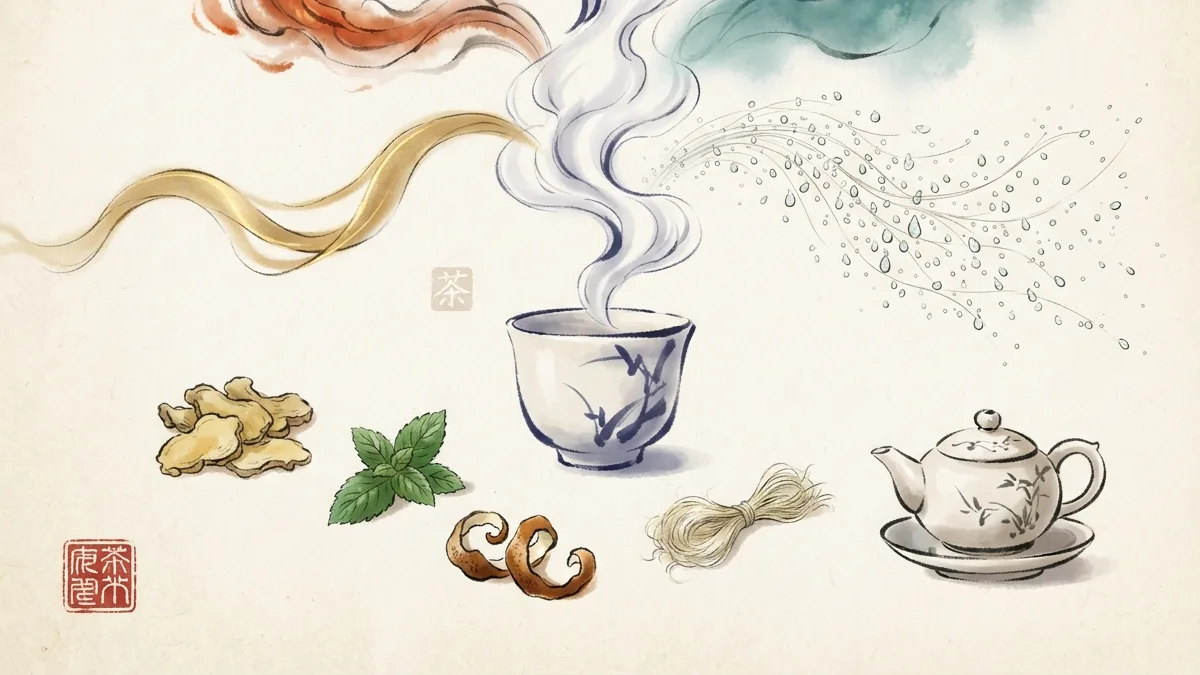
The herbal tea in TCM: a gentle decoction, not an evening placebo
The herbal tea is not “flavoured water”: it is a short decoction, the gentlest extraction of plants. Chinese dietetics distinguishes two gestures: the infusion (fragile plants, flowers and leaves, short hot water) and the decoction (roots, barks, prolonged boiling). Mint is infused; valerian root is decocted. Confusing the two loses the essence of the plant.
The “tea” gesture also carries terrain value: the heat of the cup itself warms the centre, the ritual settles the mind, and the liquid engenders fluids. The evening tea is not a placebo: it is a warmth and an action.
Colds: distinguishing Wind-Cold from Wind-Heat
The first use of the herbal tea is the cold, and the first error is failing to distinguish the two winds:
- Wind-Cold (chills, clear runny nose, no strong fever): teas that release the surface and warm. Fresh ginger (decoction with honey added at the end), oregano, thyme, cinnamon and star anise. They “expel” the cold through a gentle sweat.
- Wind-Heat (burning throat, fever, thirst, yellow mucus): cool teas that clear the surface. Peppermint, chamomile, elderflower, fresh lime blossom. They cool the surface without attacking the centre.
The ginger of Wind-Cold aggravates Wind-Heat; the mint of Wind-Heat cools a Wind-Cold that needed to come out. The cold in TCM details the distinction.
Stress and stagnation: orange blossom, basil, mint
For Qi that stagnates (stress, sighing, distension, irritability), the aromatic teas move Qi without forcing:
- Orange blossom: moves Qi, calms the Shen, the classic of gentle nervousness.
- Basil: moves Qi, harmonises Liver and Stomach, for digestion blocked by stress.
- Peppermint: moves Liver Qi, cools the head that “rises”.
- Verbena: circulates, calms, aids evening digestion.
- Chamomile: circulates, soothes the Liver that rises (the classic “it’s my liver”).
These teas “aerate” the stagnation: they do not calm by extinguishing but by moving what freezes.
Sleep and Heart: valerian, lily, verbena
For a Shen that cannot rest (insomnia, night waking, restless mind), the teas of Heart Yin:
- Valerian (root, decoction): calms the Shen, brings down rising Yang, the remedy of fleeing rest.
- Lily (flowers, bulb): nourishes Heart Yin, engenders fluids; the tea of dry agitation.
- Verbena: calms, circulates, aids stress-related sleep.
- Lime blossom: calms, circulates, gentler.
- Chamomile: calms rising Liver Yang, for irritability insomnia.
The terrain decides: valerian for rising Yang, lily for dry Yin, verbena for stagnation. The TCM reading of insomnia details the terrains.
Drainage: corn silk, hops, lovage
For Dampness and oedema, the “bland” teas that bring water down:
- Corn silk: drains gently, opens the water gates. The grandmother’s drainage.
- Hops: drains, descends Qi, also calms (the hops of the nervous evening).
- Lovage: drains, descends.
- Cherry stems, orthosiphon: classical drainers, more “urinary”.
- Dandelion (root, decoction): drains, helps the Liver and Gallbladder, the spring “cleanser”.
Tea drainage is gentle and progressive: it accompanies the transport of water, it does not force it.
Caution: herbal tea is not harmless
The gentleness of the gesture should not obscure the margin: rue is abortifacient, prolonged liquorice raises blood pressure, strong-dose valerian excites rather than calms in some people, prolonged sage cuts lactation. Pregnancy, breastfeeding, hypertension and anticoagulants change the prescription: the “natural” tea has its pharmacology.
The rule: the daily background tea (lime blossom, verbena, mild mint, chamomile) has a wide margin; the medicinal tea (valerian, liquorice, sage) has a dose and a duration.
Table: tea, nature, terrain
| Tea | Nature | Action | Suited terrain | Caution |
|---|---|---|---|---|
| Fresh ginger | Warm | Lung, Spleen | Releases surface, warms | Wind-Cold. Caution: Heat |
| Oregano / thyme | Warm | Lung | Releases surface, transforms Phlegm | Wind-Cold with mucus |
| Peppermint | Cool | Liver, Lung | Clears surface, circulates | Wind-Heat, stagnation. Caution: reflux |
| Chamomile | Cool | Liver, Stomach | Soothes Liver, calms | Wind-Heat, irritability |
| Orange blossom | Neutral-cool | Liver, Heart | Moves Qi, calms Shen | Gentle nervousness, stress |
| Basil | Warm | Liver, Stomach | Moves Qi, harmonises | Stressed digestion |
| Verbena | Cool | Liver, Heart | Circulates, calms | Stagnation, stress-related sleep |
| Valerian | Warm | Heart, Liver | Calms Shen, descends Yang | Yang insomnia. Caution: paradox, dose |
| Lily (flowers) | Cool | Heart, Lung | Nourishes Heart Yin | Dry agitation, Yin deficiency |
| Corn silk | Neutral | Bladder, Kidney | Drains, opens water gates | Mild oedema, Dampness |
| Hops | Cool | Liver, Bladder | Drains, descends Qi, calms | Dampness, nervousness |
| Dandelion root | Cold | Liver, Gallbladder, Kidney | Drains, clears, aids Liver | Spring cleanse. Caution: stones |
| Liquorice | Neutral | Spleen, Lung | Tonifies Spleen, transforms Phlegm | Cough. Caution: hypertension, duration |
| Lime blossom | Cool | Liver, Heart | Calms, circulates | Stress, gentle sleep |
Nature, action, and the terrain that benefits
Frequently asked questions about herbal teas in TCM
Which tea for an incoming cold?
According to the wind: chills and clear nose (Wind-Cold), fresh ginger, oregano, cinnamon; burning throat and fever (Wind-Heat), mint, chamomile, elderflower. The ginger of the chill worsens the burning throat: the distinction is the prescription.
Does valerian work for sleep?
For the insomnia of rising Yang (agitation, a mind that spins), yes: it calms the Shen and brings things down. As a root decoction, not a quick infusion. In some people it excites rather than calms: the three-evening test reveals it. For the insomnia of dry Yin deficiency, lily or lime blossom suit better.
Do “detox” teas work?
Draining teas (corn silk, dandelion, orthosiphon) bring water down and help the Liver and Gallbladder: they drain, they do not “detoxify”. The spring use of dandelion root is real; the “7-day detox” promise is marketing. Gentle daily drainage beats the shock cure.
Can herbal teas be drunk every day?
The gentle background teas (lime blossom, verbena, mint, chamomile) have a wide margin in daily use. The medicinal teas (valerian, liquorice, sage, rue) have a dose and a duration: they are taken for a reason, not as a habit. Pregnancy and medication change the prescription.
The right herb for the terrain
The herbal tea is a gentle decoction: its strength is the choice of terrain. Ginger for Wind-Cold, mint for Wind-Heat, orange blossom for stagnation, valerian for rising Yang, corn silk for water that descends poorly. The ritual of the cup adds warmth and calm; the plant adds the action. The herbal tea is not an evening placebo: it is the most everyday form of the food pharmacopoeia.
In the Yin Shi app, the infused-herb cards show their nature and terrain: mint answers Wind-Heat, valerian answers rising Yang, and the card always flags the margin.
Further reading: the cold: Wind-Cold versus Wind-Heat, Qi stagnation, insomnia in TCM, oedema and water retention, and Wind.
To go further
Yin Shi ecosystem resources directly related to this article.