Phở Bò (Vietnamese Beef Noodle Soup)(Vietnam)
Difficulty : 2
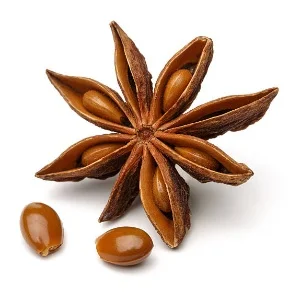
Phở is the national dish of Vietnam, born at the beginning of the 20th century in the north of the country. It results from the fusion between Chinese culinary tradition (long-simmered broths) and French influence (consumption of beef). Star anise is indispensable there, bringing its characteristic aniseed note to the broth.
- 1 kg of beef marrow bones
- 500g of beef meat (shin or brisket)
- 2 onions
- 1 piece of ginger (10 cm)
- 5 star anise stars
- 3 cinnamon sticks
- 1 tablespoon coriander seeds
- 5 cloves
- 2 tablespoons fish sauce
- 1 tablespoon rock sugar (or white sugar)
- Salt, pepper
- Flat rice noodles (banh pho)
- Garnishes: spring onion, fresh coriander, Thai basil, bean sprouts, lime, chillies
1. Blanch the bones and meat for 10 min, rinse. 2. Grill the onions and ginger whole over a flame or under the grill until lightly charred. Peel and rinse. 3. In a large pot, place the bones, meat, onions and ginger. Cover with 4 litres of cold water. Bring to the boil, skim. 4. In a dry pan, toast the star anise, cinnamon, coriander seeds and cloves for 2 min. Add to the broth. 5. Leave to simmer over a low heat for 3-4 hours. Remove the beef meat after 1h30-2h (when it is tender), cut it into thin slices. 6. Strain the broth, season with fish sauce, sugar, salt and pepper. 7. Cook the rice noodles according to the instructions.
In a bowl, arrange the noodles, the beef slices, pour over the hot broth. Garnish generously with fresh herbs, bean sprouts, lime and chillies.
TCM actions : Star anise warms the Kidney and the Spleen, disperses cold, regulates Qi, relieves pain. Ginger warms the stomach, beef tonifies Qi and Blood. This dish is very warming and nourishing, ideal to tonify energy and digestion.
Nutritional benefits : Rich in proteins (beef), complex carbohydrates (noodles), vitamins and minerals (herbs, bone broth). Star anise contains anethole, with antioxidant and anti-inflammatory properties. Bone broth is a source of collagen.
Peking Roast Duck(China)
Difficulty : 2
Peking roast duck (Beijing Kaoya) is one of the most famous dishes of Chinese imperial cuisine, documented as early as the Yuan dynasty (13th century). Its method of preparation was perfected under the Ming and the Qing. Star anise enters into the traditional marinade, contributing to the aromatic balance of the five-spice blend.
- 1 whole duck (about 2 kg)
- Marinade
- 5 star anise stars
- 2 cinnamon sticks
- 1 tablespoon Sichuan pepper
- 1 tablespoon cloves
- 2 tablespoons salt
- 2 tablespoons sugar
- 100 ml light soya sauce
- 50 ml rice vinegar
- Glaze
- 100 ml honey
- 50 ml rice vinegar
- 50 ml water
1. Clean the duck. Boil water and pour it over the duck skin to tighten it. Dry very carefully. 2. Finely grind the marinade spices. Rub the inside and the outside of the duck with the mixture. Leave to marinate in the refrigerator for 24h, suspended if possible so that the air circulates. 3. Prepare the glaze by mixing honey, vinegar and water. Brush the duck every hour for 3-4 hours before cooking. 4. Preheat the oven to 180°C. Place the duck on a rack over a roasting tin with a little water. Cook for 1h30 to 2h, basting every 30 min with the remaining glaze. The skin should be crispy and golden.
Carve the duck into thin slices, crispy skin included. Serve with Chinese pancakes, hoisin sauce, cucumber and spring onion batons.
TCM actions : Star anise and cinnamon are warming, disperse cold and harmonise digestion. Duck tonifies Yin and Qi, but can be a little heavy. The spices help to balance this aspect.
Nutritional benefits : Duck is a rich source of proteins and monounsaturated fats. The spices bring antioxidants. The crispy skin is rich in fats, to be consumed in moderation.
Massaman Chicken Curry(Thailand)
Difficulty : 1
Massaman curry is a dish of cross-influence, born of the encounter between Thai cuisine and the Muslim traditions of the south of the country, with Persian and Malay contributions. Star anise finds its place there among the sweet spices, bearing witness to the trade routes that spread it from China.
- 500g boneless chicken thighs, cut into pieces
- 1 tin of coconut milk (400ml)
- 100g Massaman curry paste (homemade or bought)
- 2 medium potatoes, cut into dice
- 1 onion, sliced
- 50g unsalted roasted peanuts
- 2 star anise stars
- 2 cinnamon sticks
- 2 tablespoons fish sauce
- 1 tablespoon palm sugar (or brown sugar)
- Vegetable oil
- Jasmine rice to serve
1. In a casserole, heat a little oil. Add the curry paste and fry 2-3 min until fragrant. 2. Add the chicken and brown on all sides. 3. Incorporate the coconut milk, potatoes, onion, star anise and cinnamon. Bring to the boil, then reduce the heat and leave to simmer 20-25 min, until the chicken is cooked and the potatoes tender. 4. Add the peanuts, fish sauce and palm sugar. Taste and adjust the seasoning.
Serve hot with jasmine rice.
TCM actions : Star anise and cinnamon warm and disperse cold. Chicken tonifies Qi. Coconut milk can be moistening, but the spices balance this aspect. Warming and nourishing dish.
Nutritional benefits : Source of proteins (chicken), carbohydrates (potatoes, rice), healthy fats (coconut milk, peanuts). The curry paste contains numerous spices with antioxidant and anti-inflammatory properties.
Five-Spice Braised Beef(China)
Difficulty : 2
Five-spice braised beef is a great classic of Chinese family cuisine, particularly in the north of the country. The five-spice blend (wu xiang fen), of which star anise is one of the pillars, embodies the philosophy of flavour balance in Chinese gastronomy.
- 1 kg braising beef (chuck, cheek), cut into large cubes
- 2 tablespoons vegetable oil
- 2 onions, chopped
- 4 garlic cloves, chopped
- 1 piece of ginger (5 cm), sliced
- 5 star anise stars
- 2 cinnamon sticks
- 1 tablespoon fennel seeds
- 1 tablespoon Sichuan pepper
- 1 tablespoon cloves
- 200 ml soya sauce
- 100 ml Shaoxing rice wine (or dry sherry)
- 50 ml rice vinegar
- 2 tablespoons brown sugar
- 500 ml beef stock
- Garnish: spring onion, fresh coriander
1. In a casserole, heat the oil and brown the beef on all sides. Remove the beef. 2. Add the onions, garlic and ginger to the casserole and fry 5 min. 3. Add the star anise, cinnamon, fennel seeds, Sichuan pepper and cloves. Fry 1 min until the spices are fragrant. 4. Return the beef to the casserole. Add the soya sauce, rice wine, rice vinegar, brown sugar and beef stock. Bring to the boil. 5. Reduce the heat, cover and leave to simmer 2h30 to 3h, until the beef is very tender.
Serve hot with white rice, garnished with spring onion and fresh coriander.
TCM actions : The five-spice blend is balanced, star anise and cinnamon warm, fennel and Sichuan pepper regulate Qi and digestion. Beef tonifies Qi and Blood. Very nourishing and harmonising dish.
Nutritional benefits : Rich in proteins (beef), the spices bring antioxidants and bioactive compounds. Slow cooking makes the meat very tender and digestible.
Lamb Tagine with Prunes and Almonds(Morocco)
Difficulty : 2
Lamb tagine with prunes is a speciality of festive Moroccan cuisine, often served at weddings and great occasions. Star anise, integrated into the spice blends of the Maghreb (ras el hanout), bears witness to the trade exchanges between North Africa and Asia via the spice routes.
- 1 kg boneless lamb shoulder, cut into pieces
- 2 onions, sliced
- 2 garlic cloves, chopped
- 1 piece of ginger (3 cm), grated
- 1 teaspoon turmeric
- 1 teaspoon ground cumin
- 1 teaspoon ground cinnamon
- 3 star anise stars
- 1 pinch of saffron (optional)
- 200g stoned prunes
- 50g flaked almonds, toasted
- 2 tablespoons honey
- Olive oil
- Salt, pepper
- Water or poultry stock
- Fresh coriander for the garnish
1. In a tagine or a casserole, heat the olive oil. Brown the lamb on all sides. Remove the lamb. 2. Add the onions and fry until translucent. Add the garlic and ginger, fry 1 min. 3. Incorporate the turmeric, cumin, cinnamon and star anise. Fry 1 min until the spices are fragrant. 4. Return the lamb to the tagine. Add the prunes, honey, saffron, salt and pepper. Cover with water or stock to the level. 5. Bring to the boil, then reduce the heat, cover and leave to simmer 2h to 2h30, until the lamb is very tender and the sauce thickened.
Serve hot, garnished with toasted almonds and fresh coriander. Accompany with couscous or bread.
TCM actions : Star anise and cinnamon warm and disperse cold. Lamb tonifies Yang and Qi. Prunes and honey nourish Yin and Blood. Very nourishing, warming and balanced dish.
Nutritional benefits : Lamb is an excellent source of proteins and iron. Prunes bring fibre and antioxidants. Almonds are rich in healthy fats and vitamin E.
Spiced Mulled Wine(Germany)
Difficulty : 1
Spiced mulled wine is a winter tradition deeply rooted in central Europe, particularly in Germany (Glühwein) and Alsace. It is inseparable from the Christmas markets that spring up from Advent. Star anise, introduced to Europe in the 17th century, has naturally found its way into this comforting beverage.
- 1 bottle of red wine (Merlot or Grenache type)
- 3 star anise stars
- 2 cinnamon sticks
- 5 cloves
- 1 orange, cut into rounds
- 2-3 tablespoons sugar (or more, to taste)
- Optional: a little brandy or rum
1. In a saucepan, pour the red wine. 2. Add the star anise, cinnamon, cloves and orange rounds. 3. Add the sugar. 4. Heat over a low heat, without boiling (leave to simmer gently) for 15-20 minutes so that the aromas develop. 5. Taste and adjust the sugar. If desired, add a dash of brandy or rum.
Serve hot in cups or heat-resistant glasses, with a slice of fresh orange and a cinnamon stick.
TCM actions : Star anise, cinnamon and cloves are very warming, disperse cold and activate the circulation of Qi and Blood. Red wine also activates Blood. Ideal drink to warm the body in winter.
Nutritional benefits : Red wine contains antioxidants (resveratrol). The spices bring bioactive compounds. To be consumed in moderation.
Gingerbread(Europe (France, Belgium, Germany...))
Difficulty : 1
Gingerbread is a European speciality whose origins go back to the Middle Ages, influenced by recipes brought back from the Orient by the crusaders. The city of Dijon in France and the German tradition of Lebkuchen are its figureheads. Star anise brings a characteristic aniseed depth.
- 250g wheat flour
- 100g rye flour (or all wheat)
- 1 sachet baking powder (11g)
- 1 teaspoon four-spice blend (or cinnamon, ginger, nutmeg, cloves)
- 1 teaspoon ground star anise
- 1/2 teaspoon bicarbonate of soda
- 200g honey
- 150g brown sugar
- 200 ml milk
- 1 egg
- Optional: candied orange zests, dried fruits
1. Preheat the oven to 160°C. Butter and flour a loaf tin. 2. In a large bowl, mix the flours, baking powder, spices, ground star anise and bicarbonate. 3. In a saucepan, heat the honey, sugar and milk until the sugar is dissolved. Leave to cool slightly. 4. Incorporate the liquid mixture into the dry ingredients, then add the beaten egg. Mix until a homogeneous dough is obtained. 5. Pour the dough into the tin. 6. Bake 50-60 minutes, or until a skewer inserted in the centre comes out clean.
Leave to cool before turning out and slicing. Can be enjoyed as is or with butter, jam.
TCM actions : Star anise and the spices are warming and aid digestion. Honey nourishes Qi and Yin. Comforting dish, but rich, to be consumed in moderation.
Nutritional benefits : Source of complex carbohydrates (flours), honey brings natural sugars and antioxidants. The spices have anti-inflammatory properties.
Tangyuan with Sesame Seeds in a Star Anise Broth(China)
Difficulty : 2
Tangyuan (汤圆) is a traditional Chinese dessert consisting of glutinous rice balls filled with a sweet paste, served in a sweet broth. It is emblematic of the Lantern Festival (Yuanxiao) which marks the end of the Chinese New Year celebrations, as well as of the Winter Solstice Festival (Dongzhi). The round balls symbolise family reunion and unity. The star anise broth brings an aniseed aromatic note that sublimates the sweetness of the sesame.
- 200g glutinous rice flour
- 120 ml warm water
- Sesame filling
- 80g black sesame paste (or toasted and blended black sesame)
- 40g brown sugar
- 30g melted butter (or coconut oil)
- Broth
- 1 litre water
- 4 star anise stars
- 2 cinnamon sticks
- 50g rock sugar (or brown sugar)
- 3 thin slices of fresh ginger
1. Prepare the filling: mix the black sesame paste, sugar and melted butter. Form small balls of 1 cm in diameter. Reserve in the freezer for 30 min to facilitate shaping. 2. Prepare the dough: pour the glutinous rice flour into a bowl, add the warm water gradually and knead until a smooth and supple dough is obtained. Cover with a damp cloth for 15 min. 3. Shaping: take a small piece of dough, form a ball, flatten it into a disc, place a filling ball in the centre, close and roll between the palms to form a smooth ball. 4. Prepare the broth: in a large pot, bring the water to the boil with the star anise, cinnamon, ginger and rock sugar. Leave to simmer 15 min over a low heat. 5. Cook the tangyuan: bring a large pot of water to the boil. Drop the tangyuan in delicately. When they rise to the surface (about 3-5 min), leave to cook for a further 2 min. 6. Serve: place 4-6 tangyuan in a bowl, pour over the hot strained broth.
Serve hot in individual bowls, with the star anise stars removed from the broth.
TCM actions : Star anise warms the Yang and disperses Cold, regulates Qi. Glutinous rice tonifies the Spleen and warms the Stomach. Black sesame nourishes Kidney Yin. Ginger warms. Comforting and balanced dish, ideal in winter and during traditional festivals.
Nutritional benefits : Glutinous rice brings complex carbohydrates. Black sesame is rich in calcium, iron and essential fatty acids. Star anise adds digestive aromatic compounds. Energetic and nourishing dish.
Vegetable Curry with Star Anise(India)
Difficulty : 1
Vegetable curry is a pillar of Indian vegetarian cuisine, a country where vegetarianism is widely practised for religious and cultural reasons. Star anise, although less common than in Chinese cuisine, integrates harmoniously into the complex spice blends characteristic of India.
- 1 tablespoon coconut oil or ghee
- 1 onion, chopped
- 2 garlic cloves, chopped
- 1 piece of ginger (3 cm), grated
- 1 teaspoon cumin seeds
- 1 teaspoon black mustard seeds
- 3 star anise stars
- 1 cinnamon stick
- 1 teaspoon ground turmeric
- 1 teaspoon ground coriander
- 1/2 teaspoon chilli powder (to taste)
- 400g mixed vegetables cut into dice (potatoes, carrots, peas, cauliflower)
- 1 tin chopped tomatoes (400g)
- 200 ml coconut milk
- Salt, fresh coriander leaves for the garnish
1. In a large pan or casserole, heat the oil or ghee. Add the onion and fry until golden. 2. Add the garlic, ginger, cumin seeds, mustard seeds, star anise and cinnamon. Fry 1 min until the spices are fragrant. 3. Incorporate the turmeric, ground coriander and chilli powder. Fry 30 seconds. 4. Add the cut vegetables and chopped tomatoes. Mix. 5. Pour in the coconut milk and a little water if necessary to cover the vegetables. Salt. 6. Bring to the boil, then reduce the heat, cover and leave to simmer 20-30 min, or until the vegetables are tender.
Serve hot with basmati rice or naan, garnished with fresh coriander.
TCM actions : Star anise, cinnamon and the other spices are warming, disperse cold and aid digestion. The vegetables nourish Qi. Nourishing and balanced vegetarian dish.
Nutritional benefits : Rich in fibre, vitamins and minerals thanks to the variety of vegetables. The spices bring powerful antioxidants and anti-inflammatory compounds.
Spiced Masala Chai(India)
Difficulty : 1
Masala chai is an emblematic drink of India, consumed daily throughout the country. Born of the Ayurvedic tradition of spice decoctions, it was popularised in its current form (with black tea and milk) in the era of the British East India Company. Star anise enriches the aromatic bouquet of this comforting drink.
- 2 cups water
- 2 cups milk (plant or cow's)
- 2 tablespoons loose black tea (Assam or Darjeeling)
- 3 star anise stars
- 2 cinnamon sticks
- 6-8 green cardamom pods, lightly crushed
- 5-6 cloves
- 1 piece of ginger (3 cm), peeled and cut into thin slices
- Sugar or honey, to taste
1. In a saucepan, mix the water, milk, black tea and all the spices (star anise, cinnamon, cardamom, cloves, ginger). 2. Bring to the boil, then reduce the heat and leave to simmer gently for 5-10 minutes, so that the aromas develop. 3. Strain the tea to remove the spices and tea leaves. 4. Sweeten to your taste with sugar or honey.
Serve hot in cups.
TCM actions : Star anise, cinnamon, ginger, cardamom and cloves are all warming spices, disperse cold, regulate Qi and aid digestion. Very warming, stimulating and digestive drink.
Nutritional benefits : The spices are rich in antioxidants and have anti-inflammatory properties. Black tea contains polyphenols.
Fruit Punch with Star Anise(Caribbean, Latin America)
Difficulty : 1
Fruit punch is a festive drink originating in the Caribbean, heir to the blend of European colonial traditions and local tropical fruits. Star anise, introduced by Asian traders, brings an original spicy touch that complements the sweetness of exotic fruits.
- 1 litre pineapple juice
- 500 ml orange juice
- 250 ml fresh lime juice
- 250 ml simple syrup (sugar and water in equal parts)
- 4 star anise stars
- 1 cinnamon stick
- 1 piece of ginger (5 cm), sliced
- Fresh cut fruit (orange rounds, pineapple, cherries, mint leaves) for the garnish
- Sparkling water or lemonade to top up (optional)
1. In a saucepan, combine the simple syrup, star anise, cinnamon and ginger. Bring to the boil, then reduce the heat and leave to simmer 5-7 minutes. Leave to cool completely, then strain to remove the spices. 2. In a large jug or punch bowl, mix the pineapple juice, orange juice, lime juice and the cooled spiced syrup. 3. Refrigerate for at least 1 hour for the flavours to blend.
Serve fresh in glasses, garnished with fresh fruit and mint leaves. Can be topped up with sparkling water or lemonade.
TCM actions : Star anise and cinnamon warm slightly. The fruit juices are refreshing and nourish Yin. Ginger aids digestion. Balanced drink, refreshing but with a warming touch.
Nutritional benefits : Rich in vitamin C (citrus fruits), in antioxidants (fruits, spices). The sugar is to be consumed in moderation.
Exotic Fruit Salad with Star Anise Syrup(Oceania)
Difficulty : 1
This exotic fruit salad is inspired by the culinary traditions of Oceania, where tropical fruits abound. The star anise syrup brings an Asian touch that underlines the freshness of the fruits, illustrating the culinary fusion typical of this region of the world.
- 1 ripe mango, cut into dice
- 1 ripe papaya, cut into dice
- 1 fresh pineapple, cut into dice
- 2 kiwis, cut into rounds
- 1 passion fruit, pulp
- Syrup
- 100 ml water
- 100g sugar
- 2 star anise stars
- 1 lemongrass stalk (optional)
- Fresh mint for the garnish
1. Prepare the syrup: In a small saucepan, mix the water, sugar, star anise and lemongrass. Bring to the boil, then reduce the heat and leave to simmer 5 minutes. Leave to cool completely, then strain to remove the spices. 2. In a large salad bowl, gently mix all the cut fruit. 3. Pour the cooled star anise syrup over the fruit. Mix gently. 4. Refrigerate for at least 30 minutes for the flavours to blend.
Serve fresh in individual coupes, garnished with fresh mint.
TCM actions : Star anise warms slightly and aids the digestion of fruits which are often refreshing. The fruits nourish Yin and fluids. Refreshing and digestible dish.
Nutritional benefits : Very rich in vitamins (C, A), fibre and antioxidants. The syrup adds sugar, to be consumed in moderation.
Duck Consommé with Star Anise and Reduced Stock (Cantonese Michelin Style)(China)
Difficulty : 3
This refined consommé is inspired by the Cantonese tradition of clear broths (qing tang) sublimated by haute cuisine chinoise. Star anise, paired with duck and a long reduction, expresses all its aromatic complexity in a dish of minimalist elegance worthy of Michelin-starred tables.
- 1 roast duck carcass (with leftover meat)
- 2 litres cold water
- 3 star anise stars
- 1 cinnamon stick
- 1 piece of fresh ginger (3 cm), sliced
- 1 onion, cut in half
- 1 egg white + 1 crushed eggshell (for clarification)
- 10 ml Shaoxing rice wine
- Fine salt, white pepper
- Garnish: 2 thin slices of raw duck breast, 1 toasted star anise star, chives
1. Prepare the broth: in a large pot, place the carcass, cold water, star anise, cinnamon, ginger and onion. Bring gently to the boil, skim. Leave to simmer 3 hours over a very low heat. Strain. 2. Reduce the strained broth by half (to ~500 ml) over a medium heat. 3. Clarification: let the broth cool slightly, add the beaten egg white and the crushed shell. Return to a low heat stirring constantly until the raft forms. Leave to simmer 20 min without stirring. Strain through a fine chinois lined with muslin. 4. Season with the rice wine, salt and white pepper. 5. Plating: in a deep plate, arrange the thin slices of raw duck breast. Pour the boiling consommé over them (the slices cook instantly). Decorate with the toasted star anise star and chives.
Serve in a preheated deep plate, the star anise star visible on the surface.
TCM actions : Star anise warms the Yang and disperses Cold, regulates Qi. Duck tonifies Yin and Qi. Ginger warms the Stomach. Elegant and balanced dish, tonifying without being heavy.
Nutritional benefits : Broth rich in collagen (carcass), low in calories after clarification. Star anise brings antioxidant aromatic compounds. Light and digestive dish, ideal as a gastronomic starter.
Star Anise Caviar by Reverse Spherification(China)
Difficulty : 3
This recipe applies the reverse spherification technique (popularised by Ferran Adrià at elBulli) to a concentrated star anise infusion. It transforms the traditional aniseed aroma into explosive pearls, creating an unprecedented sensory experience that marries Chinese pharmacopoeia with modern molecular gastronomy.
- 10 star anise stars
- 200 ml water
- 2g calcium lactate
- 500 ml water (for the bath)
- 2g sodium alginate
- Light sugar syrup (for service)
- Black sesame tuile (for garnish)
1. Prepare the concentrated infusion: bring 200 ml of water to the boil with the 10 star anise stars. Leave to infuse 30 min covered. Strain and reduce to 150 ml. 2. Incorporate 2g of calcium lactate into the warm concentrated infusion. Blend finely. 3. Prepare the alginate bath: dissolve 2g of sodium alginate in 500 ml of water (blend to dissolve well, rest 1h to eliminate bubbles). 4. Using a syringe or pipette, drop drops of the star anise/calcium mixture into the alginate bath. Leave to gel 1-2 min. 5. Recover the spheres with a skimmer, rinse in a clear water bath. 6. Serve the pearls on a bed of light syrup, with a black sesame tuile.
Serve in amuse-bouche spoons or on a bed of syrup, garnished with black sesame tuile.
TCM actions : Star anise warms the Yang, disperses Cold, regulates Qi. The molecular presentation does not modify the TCM properties but concentrates the aroma (reduced infusion).
Nutritional benefits : Concentrate of anethole and aromatic compounds of star anise in a gastronomic format without caloric additives (alginate and calcium not assimilated).
Lebanese Coffee with Star Anise and Cardamom(Lebanon)
Difficulty : 1
Cardamom coffee is a tradition deeply rooted in Lebanon and throughout the Levant. The addition of star anise, introduced via Asian trade routes, enriches the aromatic bouquet of this coffee served at receptions and moments of conviviality. It is prepared in a rakwe (a small long-handled saucepan) and served in Turkish coffee cups.
- 2 cups water
- 2 teaspoons finely ground Lebanese coffee (or Turkish coffee)
- 1 star anise star, lightly crushed
- 3 green cardamom pods, lightly crushed
- Sugar to taste (traditionally 1 teaspoon per cup)
1. In a rakwe (or small saucepan), pour the cold water, add the sugar, the crushed star anise and the cardamom pods. 2. Bring to a medium heat. As soon as the water begins to simmer, add the finely ground coffee and stir gently. 3. Remove from the heat as soon as the coffee begins to rise (do not let it boil). 4. Return to the heat twice in succession, letting the foam rise each time without overflowing. 5. Remove from the heat, leave to rest 1 minute for the grounds to settle. Pour gently into the cups leaving the foam on the surface.
Serve immediately in Turkish coffee cups, with a glass of water alongside. Do not stir after serving (the grounds remain at the bottom).
TCM actions : Star anise warms and regulates Qi, cardamom warms the Spleen and the Stomach, dissipates dampness. Coffee stimulates Qi. Warming, digestive and stimulating drink, ideal after a meal.
Nutritional benefits : Coffee brings caffeine (stimulant) and antioxidants (chlorogenic acid). Cardamom and star anise add bioactive compounds with digestive and carminative properties.