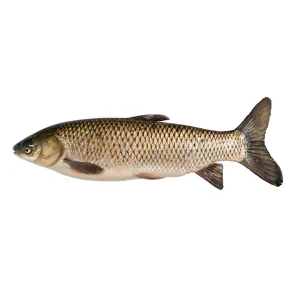
Hong Kong-Style Steamed Grass Carp(China)
Difficulty :
Steaming whole fish with ginger and spring onion is an iconic technique of Cantonese cuisine. In Hong Kong as in Guangzhou, this dish symbolises the purity of flavours and the freshness of the ingredient. Grass carp (草鱼), one of the "Four Great Domestic Fish" (四大家鱼), is particularly appreciated there for its tender flesh and few bones.
- 1 whole Grass carp (about 1 kg), scaled and gutted
- 50g fresh ginger, cut into julienne
- 3-4 spring onions, cut into julienne (white and green parts separated)
- 2 tbsp light soy sauce
- 1 tbsp sesame oil
- 1 tsp sugar
- A few sprigs of fresh coriander
- 2 tbsp neutral vegetable oil (peanut or rapeseed)
Make 2-3 deep cuts on each side of the fish to facilitate cooking and flavour absorption.Rub the fish with a little salt. Place half the ginger and the white part of the spring onions in the abdominal cavity and on the fish.Place the fish on a heatproof plate, itself in a steamer basket.Boil water in a wok or large pot. Once boiling, place the steamer basket and cover.Steam for 10-15 minutes (about 10 min per 500g, adjust according to size), until the flesh is opaque and flakes easily.Meanwhile, mix the soy sauce, sesame oil, and sugar.Remove the fish from the steamer. Discard the cooked ginger and spring onions as well as the cooking water accumulated on the plate.Arrange the remaining ginger and the green part of the spring onions on the fish.Heat the vegetable oil in a small saucepan until smoking. Pour the hot oil over the ginger and spring onions (this will "fry" them and release their aromas).Drizzle the prepared soy sauce over the fish. Garnish with fresh coriander.
Serve immediately, directly on the cooking plate, accompanied by white rice.
TCM actions : Steaming is gentle and preserves Yin. Ginger is warming and aids digestion. The fish nourishes Qi and Blood, strengthens the Spleen and Kidneys.
Nutritional benefits : Cooking without excessive added fat, rich in protein, omega-3 (moderate), B-group vitamins. Ginger is anti-inflammatory and digestive.
Polish-Style Stuffed Grass Carp(Poland)
Difficulty :
Stuffed carp is a traditional festive dish in Poland, particularly associated with Christmas Eve (Wigilia) where fish replaces meat. The technique of stuffing carp with a filling of breadcrumbs, mushrooms, and egg, then poaching it in a flavoured broth, reflects the Jewish-Polish culinary heritage of the region. Carp has been the most consumed freshwater fish in Poland since the Middle Ages.
- Base
- 1 whole Grass carp (1.5-2 kg), scaled, gutted, head and tail cut off (keep for the broth)
- Filling
- 100g stale breadcrumbs, soaked in milk
- 1 onion, finely chopped
- 1 egg
- 50g button mushrooms, chopped
- 2 tbsp fresh parsley, chopped
- Salt, pepper, nutmeg
- Broth
- Carp head and tail
- 1 carrot, 1 leek, 1 celery stalk, roughly chopped
- 1 onion, studded with 2 cloves
- A few black peppercorns
- 1 bay leaf
- 1 glass dry white wine (optional)
- Water
- Garnish
- Lemon slices, fresh parsley.
Prepare the filling: Squeeze the breadcrumbs. Sauté the chopped onion in a little butter until translucent. Add the mushrooms and cook until the water evaporates. Mix the breadcrumbs, onion-mushrooms, egg, and parsley. Season generously.Stuff the fish: Salt and pepper the inside of the carp. Stuff the abdominal cavity with the preparation. Sew the opening or close it with cocktail sticks.Prepare the broth: In a large casserole, place the head, tail, broth vegetables, spices, and white wine (if used). Cover with water. Bring to the boil, skim, then simmer 30 minutes. Strain the broth.Cooking the carp: Place the stuffed carp in an ovenproof dish. Pour the strained broth around the fish (it should reach halfway). Cover the dish with foil.Cook in a preheated oven at 180°C for 45-60 minutes, basting occasionally with the broth. The fish is cooked when the flesh is opaque and flakes easily.Remove the fish from the oven. Rest for a few minutes.
Serve the carp cut into thick slices, drizzled with a little reduced cooking broth, garnished with lemon slices and fresh parsley. Accompany with steamed potatoes.
TCM actions : Slow, moist cooking nourishes Yin and Qi. Parsley and spices warm and harmonise digestion. Carp is considered a tonic for Qi and Blood.
Nutritional benefits : Source of protein, fibre (vegetables), vitamins, and minerals. Oven cooking with broth limits added fats.
Grass Carp "Doro Wat"(Ethiopia)
Difficulty :
Doro wat is the Ethiopian national dish, traditionally served at major festivals and Orthodox religious celebrations. Originally prepared with chicken, the adaptation to fish reflects the traditions of lacustrine regions such as around Lake Tana. Berbere, a complex spice blend (chilli, fenugreek, cardamom), and niter kibbeh (spiced clarified butter) are the pillars of Ethiopian cuisine for centuries.
- 500g Grass carp fillets, cut into 3-4 cm cubes
- 2 large onions, finely chopped
- 4-5 garlic cloves, chopped
- 2 cm fresh ginger, grated
- 3-4 tbsp *berbere* (Ethiopian spice blend)
- 100g *niter kibbeh* (Ethiopian spiced clarified butter) or clarified butter + pinch of cardamom, fenugreek, cumin
- 200ml fish stock or water
- 1 tbsp tomato purée
- Juice of 1/2 lemon
- Salt
- Fresh coriander for garnish
Melt the *niter kibbeh* (or clarified butter) in a casserole over medium heat.Add the chopped onions and sauté slowly for 15-20 minutes until very tender and golden, almost caramelised. This is a key step for the flavour of *doro wat*.Add the garlic and ginger, sauté 2 minutes until fragrant.Stir in the *berbere* and tomato purée. Mix well and cook 5 minutes, stirring, adding a little broth if it catches.Pour in the rest of the broth and bring to a simmer. Simmer 10 minutes for the flavours to develop.Add the carp cubes. Cook gently for 5-7 minutes, until the fish is opaque and cooked. Do not stir too much to avoid breaking the pieces.Stir in the lemon juice and adjust the salt seasoning.
Serve hot with *injera* (Ethiopian flatbread) or rice. Garnish with fresh coriander.
TCM actions : *Berebere* and ginger are very warming, disperse Cold, and stimulate Spleen Qi. The fish nourishes Blood.
Nutritional benefits : Rich in protein, spices with antioxidant and anti-inflammatory properties. Onions are prebiotic.
Sous-Vide Grass Carp, Dill Beurre Monté(France)
Difficulty :
Precise sous-vide cooking is a haute cuisine technique popularised by French chefs such as Joël Robuchon and Anne-Sophie Pic. Grass carp fillet cooked at 54°C retains a pearly, juicy texture impossible to achieve with classical methods. The dill beurre monté, a brigade technique from starred kitchens, brings smoothness and freshness. This dish illustrates the elevation of a humble fish to gastronomic status.
- 4 Grass carp fillets (about 150g each), pin-boned and trimmed
- 1 sprig fresh dill, 1 sprig thyme, 1 bay leaf
- 2 tbsp melted butter (for the sous-vide bag)
- Salt, white pepper from the mill
- Dill beurre monté
- 150g cold butter, cut into dice
- 2 tbsp water
- 1 tbsp chopped fresh dill
- 1 tsp lemon juice
- Salt, white pepper
- Dill flowers and lemon zest for finishing
Season the carp fillets with salt and pepper. Place in vacuum bags with a sprig of dill, thyme, a bay leaf, and a drizzle of melted butter. Vacuum-seal.Preheat a thermostatic water bath to 54°C. Submerge the bags and cook 25-30 minutes depending on thickness.Remove the fillets from the bag, dry gently with paper towel.Prepare the beurre monté: in a small saucepan, bring the water to the boil. Reduce to very low heat. Incorporate the cold butter dice one by one, whisking vigorously off the heat, until a smooth emulsion is obtained. Add the chopped dill, lemon juice, salt, and pepper.Sear the fillets briefly skin-side down in a very hot pan (30 seconds) to crisp the skin.
Place the fillet skin-side down on a warm plate. Coat generously with dill beurre monté. Garnish with dill flowers and fine lemon zest.
TCM actions : Low-temperature cooking preserves the Yin and the essence of the fish. Dill is aromatic and aids digestion. Butter nourishes Yin.
Nutritional benefits : Sous-vide cooking that fully preserves nutrients and omega-3. Beurre monté brings fats but in controlled quantity. Rich in high-quality protein.
Grass Carp in Coconut and Lemongrass Curry(Thailand)
Difficulty :
Thai coconut milk and lemongrass curry is a pillar of Thai cuisine, heir to trade exchanges with India and Indonesia. The red curry paste (nam phrik daeng) combines chilli, galangal, lemongrass, and kaffir lime leaves. The adaptation to freshwater fish is common in inland regions of Thailand, far from the coast.
- 500g Grass carp fillets, cut into large dice
- 1 tbsp vegetable oil
- 2 tbsp red (or green) curry paste
- 400ml coconut milk
- 200ml fish stock or water
- 1 lemongrass stalk, bruised and cut into 3
- 3 kaffir lime leaves, torn
- 1 red pepper, cut into strips
- 100g mangetout
- 1 tbsp fish sauce
- 1 tsp palm sugar (or brown sugar)
- Juice of 1/2 lime
- Fresh coriander and fresh chilli for garnish
Heat the oil in a wok or large pan over medium heat. Add the curry paste and fry 1 minute until the aromas are released.Pour in the coconut milk and stock. Add the lemongrass and kaffir lime leaves. Bring to a simmer.Add the red pepper and mangetout. Simmer 5 minutes.Add the carp dice. Cook gently for 5-7 minutes, until the fish is opaque and cooked.Season with fish sauce, palm sugar, and lime juice. Taste and adjust if necessary.
Serve hot with jasmine rice. Garnish with fresh coriander and chilli slices.
TCM actions : The curry is warming and dispersing. Lemongrass and kaffir lime are aromatic and aid Qi circulation. The fish nourishes Qi and Blood.
Nutritional benefits : Rich in protein, fibre (vegetables), healthy fats (coconut milk). The spices have antioxidant and anti-inflammatory properties.
Grass Carp Roasted with Citrus and Fennel(Italy)
Difficulty :
Roasted fish with fennel and citrus is a typical preparation of Italian Mediterranean cuisine, particularly in Sicily and southern Italy where wild fennel (finocchio) grows abundantly. The pairing of fish with orange and lemon recalls Arab-Sicilian influences, while extra-virgin olive oil and herbs (thyme, rosemary) reflect the rustic Italian tradition.
- 1 whole Grass carp (1-1.2 kg), scaled, gutted
- 1 fennel bulb, cut into thin slices
- 1 orange, cut into rounds
- 1 lemon, cut into rounds
- 2 garlic cloves, crushed
- A few sprigs fresh thyme and fresh rosemary
- Extra-virgin olive oil
- Salt, pepper
Preheat the oven to 200°C.Make 2-3 deep cuts on each side of the fish. Salt and pepper inside and out.In the abdominal cavity, insert some orange and lemon slices, crushed garlic, and a few sprigs of thyme and rosemary.In a large ovenproof dish, spread the fennel slices. Place the fish on top.Arrange the rest of the orange and lemon rounds, as well as fresh herbs, on the fish. Drizzle generously with olive oil.Bake for 25-35 minutes, depending on the size of the fish, until the flesh is opaque and flakes easily.For crispier skin, finish cooking under the grill for a few minutes.
Serve the whole fish on a bed of roasted fennel, accompanied by a drizzle of fresh olive oil.
TCM actions : Oven cooking is warming. Citrus is refreshing and aids digestion. Fennel is warming and harmonises Liver and Spleen Qi.
Nutritional benefits : Rich in protein, vitamin C (citrus), fibre (fennel). Olive oil is a source of healthy monounsaturated fats.
Grass Carp Tagine with Vegetables and Spices(Morocco)
Difficulty :
Tagine is the emblematic dish of Moroccan cuisine, named after the conical earthenware vessel in which it slowly cooks. Originating from the Berber cuisines of the Maghreb, fish tagine is particularly widespread in coastal towns such as Essaouira and Tangier. The combination of cumin, paprika, turmeric, and purple olives reflects the heritage of trans-Saharan and Mediterranean trade.
- 500g Grass carp fillets, cut into large pieces
- 1 onion, sliced
- 2 tomatoes, cut into quarters
- 2 carrots, cut into thick rounds
- 2 potatoes, cut into quarters
- 1 green pepper, cut into strips
- 100g pitted purple olives
- 1/2 bunch fresh coriander, chopped
- 1/2 bunch fresh parsley, chopped
- Juice of 1 lemon
- 3 tbsp olive oil
- 1 tsp ground cumin
- 1 tsp paprika
- 1/2 tsp turmeric
- Pinch of cayenne pepper (optional)
- Salt, pepper
- 150ml water
In a large bowl, mix the carp pieces with half the coriander, half the parsley, lemon juice, 1 tbsp olive oil, and all the spices (cumin, paprika, turmeric, chilli, salt, pepper). Marinate 30 minutes.In the bottom of a tagine (or a heavy-bottomed casserole), heat the rest of the olive oil. Sauté the sliced onion until translucent.Add the carrots and potatoes. Pour in the water and bring to a simmer. Cover and cook 15 minutes, until the vegetables begin to soften.Add the tomatoes, pepper, and olives.Arrange the marinated carp pieces delicately on the vegetables. Sprinkle with the remaining coriander and parsley.Cover the tagine and simmer over very low heat for 20-25 minutes, until the fish is cooked and the vegetables tender.
Serve directly in the tagine dish, accompanied by Moroccan bread.
TCM actions : Slow cooking and spices warm and stimulate digestion. The vegetables nourish Qi. The fish nourishes Blood.
Nutritional benefits : A complete meal rich in protein, fibre, vitamins, and minerals. Moroccan spices are rich in antioxidants.
Grass Carp Ceviche with Mango and Chilli(Peru)
Difficulty :
Ceviche is the national dish of Peru, recognised by UNESCO as intangible cultural heritage in 2004. Originating from the Peruvian coast, it relies on the "cooking" of raw fish in lime juice (the famous leche de tigre). Aji amarillo, the emblematic chilli of Peruvian cuisine since pre-Columbian times, brings its characteristic colour and fruitiness. The addition of mango is a contemporary variation popular in Lima.
- 400g Grass carp fillets, pin-boned and cut into small dice (1-1.5 cm)
- 1 ripe but firm mango, cut into small dice
- 1 red onion, very finely sliced
- 1 *aji amarillo* chilli (or mild red chilli), deseeded and finely chopped
- Juice of 4-5 limes (about 120ml)
- A few sprigs fresh coriander, chopped
- Salt
- Optional: 1 tbsp olive oil, a few lettuce leaves for presentation.
In a non-reactive bowl (glass or ceramic), mix the carp dice with the red onion, chilli, and a pinch of salt.Pour the lime juice over the fish. Ensure the fish is well submerged.Marinate in the refrigerator for 15-20 minutes. The lime juice will "cook" the fish; the flesh should become opaque. Do not leave too long to avoid a rubbery texture.Lightly drain the fish (keep a little lime juice).Add the mango dice and chopped coriander. Mix gently.Taste and adjust the seasoning with salt and lime juice if necessary. Add a drizzle of olive oil if desired.
Serve immediately in individual bowls, on a bed of lettuce, or accompanied by cooked sweet potatoes and *choclo* corn.
TCM actions : The raw and acidic nature is refreshing, dispersing Heat. Mango nourishes Yin. The fish nourishes Blood.
Nutritional benefits : Very rich in protein, vitamin C (lime, mango), antioxidants. Low in fat.
Grass Carp, Soy Spheres and Yuzu Foam(Japan)
Difficulty :
This Japanese-French fusion creation illustrates contemporary molecular gastronomy, popularised by chefs such as Ferran Adrià and Sébastien Lepinoy. Reverse spherification of soy sauce creates pearls that burst in the mouth, while yuzu foam with soy lecithin brings an airy lightness. Yuzu, a Japanese citrus with notes of mandarin and grapefruit, is a prized ingredient of modern Asian haute cuisine.
- Fish
- 4 Grass carp fillets (about 120g each), pin-boned and trimmed
- 1 tbsp sesame oil
- Salt, white pepper
- Soy sauce spheres (reverse spherification)
- 100ml Japanese soy sauce (usukuchi)
- 2g calcium lactate (E327)
- 1.5g sodium alginate (E401)
- 500ml water for the calcium bath
- Yuzu foam
- 100ml fresh yuzu juice
- 50ml water
- 1 tsp soy lecithin
- Salt
- Garnish: toasted sesame seeds, shiso microgreens, fleur de sel
Soy spheres: Mix the soy sauce with calcium lactate until fully dissolved. In another container, dissolve the sodium alginate in water using a hand blender. Rest 15 min to eliminate bubbles. Using a spoon, delicately deposit portions of the soy-calcium mixture into the alginate bath. Let gel 1-2 min, then rinse the spheres in a clear water bath. Reserve.Yuzu foam: Mix the yuzu juice, water, and soy lecithin. Using a hand blender, incorporate air by tilting the container until a stable foam is obtained. Reserve.Fish cooking: Season the fillets. Sear skin-side down in a pan with sesame oil, 2 min over high heat. Turn and cook 1 min more. The flesh should remain pearly at the centre.
Place the carp fillet in the centre of a flat plate. Arrange 5-6 soy sauce spheres around the fish. Spoon the yuzu foam over. Garnish with sesame seeds, shiso microgreens, and fleur de sel.
TCM actions : Yuzu is refreshing and aids digestion. Soy sauce is salty and warming. The fish nourishes Qi and Blood. The light, airy presentation respects the Yin-Yang balance.
Nutritional benefits : Rich in lean protein. Yuzu provides vitamin C and antioxidants. The molecular technique preserves nutrients without added cooked fats.
Grass Carp en Papillote with Summer Vegetables(Greece)
Difficulty :
En papillote cooking is an ancient Mediterranean technique, practised in Greece since Antiquity. The pairing of fish, olive oil, Kalamata olives, and oregano is at the heart of the Cretan diet. Kalamata olives, native to the Peloponnese, and Greek wild oregano (rigani) are emblematic ingredients of Hellenic cuisine, recognised for their role in the Mediterranean diet.
- 4 Grass carp fillets (about 150-180g each), pin-boned
- 1 courgette, cut into thin rounds
- 1 tomato, cut into thin rounds
- 1/2 red onion, finely sliced
- 50g Kalamata olives, pitted and halved
- 2 tbsp capers
- A few sprigs fresh oregano (or 1 tsp dried oregano)
- 4 tbsp extra-virgin olive oil
- Juice of 1/2 lemon
- Salt, pepper
Preheat the oven to 180°C.Cut 4 large squares of baking paper (or foil).In the centre of each square, place a bed of courgette, tomato, and red onion.Place a carp fillet on the vegetables.Distribute the olives, capers, and oregano over the fish and vegetables.Drizzle each papillote with a tablespoon of olive oil and a squeeze of lemon juice. Salt and pepper.Seal the papillotes hermetically by folding the edges.Place the papillotes on a baking tray and bake for 15-20 minutes, until the fish is cooked and the vegetables tender.
Serve the papillotes directly at the table, opening them in front of the guests to release the aromas. Accompany with rice or bread.
TCM actions : En papillote cooking is gentle and preserves Yin. The vegetables and herbs are refreshing and aid digestion. The fish nourishes Qi.
Nutritional benefits : Healthy cooking without excessive added fats, rich in protein, fibre, vitamins, and antioxidants (vegetables, olive oil).
Grass Carp "Fish and Chips" Fritters(United Kingdom)
Difficulty :
Fish and chips is an iconic dish of British culture since the 19th century, born in the working-class neighbourhoods of London and northern England. The beer batter for frying fish is a technique dating back to Portuguese Jewish immigrants of the 16th century. Malt vinegar, an essential condiment, is a legacy of the British brewing tradition.
- Base
- 500g Grass carp fillets, cut into 4-5 equal pieces
- Batter
- 150g flour
- 1 tsp baking powder
- 1/2 tsp salt
- 200ml very cold lager (or cold sparkling water)
- Vegetable oil for frying (rapeseed, sunflower)
- Salt, malt vinegar (to serve)
- Homemade chips to accompany
Prepare the batter: In a large bowl, mix the flour, baking powder, and salt. Add the cold beer gradually, whisking until a smooth, lump-free batter is obtained. Rest 10 minutes in the refrigerator.Heat the frying oil in a deep fryer or heavy-bottomed pot to 170-180°C.Thoroughly dry the carp pieces with paper towel. Lightly salt.Dip each piece of fish in the batter, ensuring it is well coated.Carefully lower 2-3 pieces at a time into the hot oil. Fry for 5-7 minutes, turning halfway, until golden and crispy.Remove the fish from the oil and drain on paper towel. Keep warm while cooking the other pieces.
Serve immediately with homemade chips, a splash of malt vinegar, and a pinch of salt.
TCM actions : Frying is very warming and rich. The fish nourishes Qi and Blood.
Nutritional benefits : Rich in protein. Frying is rich in calories and fats, to be consumed in moderation.
Grass Carp Tandoori Skewers(India)
Difficulty :
Tandoori is an ancestral cooking technique from the Indian Punjab, using a clay oven (tandoor) heated with charcoal. Fish skewers marinated in yogurt and spices (garam masala, turmeric, cumin) reflect the Mughal tradition. Garam masala, a blend of toasted spices, is a pillar of North Indian cuisine since the 16th century.
- Base
- 500g Grass carp fillets, cut into 3-4 cm cubes
- Tandoori marinade
- 200g whole-milk plain yoghurt
- 2 tbsp ginger-garlic paste
- 2 tbsp lemon juice
- 1 tbsp *garam masala*
- 1 tsp ground cumin
- 1 tsp ground coriander
- 1/2 tsp turmeric
- Pinch of cayenne pepper (or *kashmiri chili powder* for colour)
- Salt
- Red food colouring (optional, for the classic tandoori colour)
- Peppers and onions, cut into pieces for the skewers
- Vegetable oil for cooking
- Fresh coriander and lemon wedges to serve
In a large bowl, mix all the tandoori marinade ingredients.Add the carp cubes to the marinade, mix to coat well. Cover and marinate in the refrigerator for at least 1 hour, ideally 2-3 hours.If using wooden skewers, soak them in water for 30 minutes to prevent burning.Thread the marinated carp cubes onto skewers, alternating with pieces of pepper and onion.Preheat the oven grill to high temperature, or a barbecue.Lightly brush the skewers with oil. Cook the skewers for 8-12 minutes, turning regularly, until the fish is cooked and lightly charred.
Serve the skewers hot, garnished with fresh coriander and accompanied by lemon wedges, basmati rice, and *naan*.
TCM actions : Tandoori spices are very warming and dispersing. Yoghurt balances the hot nature of the spices. The fish nourishes Qi and Blood.
Nutritional benefits : Rich in protein. Indian spices are very rich in antioxidants and have digestive and anti-inflammatory properties.
Grass Carp in Sweet and Sour Soup(Vietnam)
Difficulty :
Sweet and sour soup (canh chua) is a pillar of southern Vietnamese cuisine (Mekong Delta), where freshwater fish abound. The balance between the acidity of tamarind, the sweetness of pineapple, and the umami of fish sauce (nuoc mam) illustrates the Vietnamese gastronomic philosophy. The fresh herbs (Thai basil, ngo om) added at the end of cooking are characteristic of Vietnamese cuisine.
- 500g Grass carp fillets, cut into large pieces
- 1.5 litre fish stock or water
- 100g fresh pineapple, cut into dice
- 2 tomatoes, cut into quarters
- 100g taro shoots (or celery stalks), cut on the bias
- 50g bean sprouts
- 1 fresh red chilli, deseeded and sliced
- 2 tbsp fish sauce
- 2 tbsp sugar
- 3 tbsp tamarind juice (or lime juice)
- 2 garlic cloves, chopped
- 1 tbsp vegetable oil
- Fresh herbs for garnish: coriander, Thai basil, *ngo om* (rice herb)
- Crispy fried shallots for garnish
In a large pot, heat the vegetable oil. Sauté the chopped garlic until golden.Pour in the fish stock and bring to the boil.Add the pineapple, tomatoes, and taro shoots (or celery). Simmer 5-7 minutes.Add the fish sauce, sugar, and tamarind juice. Taste and adjust the sweet-sour balance.Gently add the carp pieces. Cook for 5-7 minutes, until the fish is opaque and cooked.Add the bean sprouts and sliced chilli. Cook 1 minute more.
Serve the soup hot in bowls, generously garnished with coriander, Thai basil, *ngo om*, and crispy fried shallots. Accompany with white rice.
TCM actions : The soup is hydrating and balanced. The sweet-sour stimulates digestion and harmonises the Spleen. The fish nourishes Qi and Blood.
Nutritional benefits : Rich in protein, fibre, vitamins. Tamarind is a source of vitamin C and antioxidants.
Grass Carp in Salt Crust(Spain)
Difficulty :
Salt crust cooking is an ancient Mediterranean technique, particularly associated with Spanish cuisine (dorada a la sal is a classic of Valencian and Madrid tables). The salt forms a hermetic crust that steams the fish in its own moisture, preserving all its flavour. This method, mentioned as early as Roman times, has become a staple of Spanish restaurants.
- 1 whole Grass carp (1-1.5 kg), scaled and gutted (do not rinse the inside)
- 2 kg coarse sea salt
- 3 egg whites
- A few sprigs fresh rosemary
- A few lemon slices
- Extra-virgin olive oil to serve
Preheat the oven to 200°C.In a large bowl, mix the coarse sea salt with the egg whites. The egg whites act as a binder to form a solid crust.On a baking tray lined with baking paper, spread a layer of salt about 1-2 cm thick, slightly larger than the fish.Place a few sprigs of rosemary and lemon slices in the abdominal cavity of the fish. Do not salt the fish directly.Place the fish on the bed of salt.Cover the fish entirely with the rest of the salt mixture, pressing firmly to form a hermetic crust.Bake for 30-40 minutes (about 15 min per 500g), until the salt crust is hard and golden.Remove from the oven and rest 5-10 minutes.
Break the salt crust with a kitchen hammer or the back of a knife. Gently remove the skin and bones (the flesh comes away easily). Serve the carp fillets with a drizzle of extra-virgin olive oil and grilled vegetables.
TCM actions : Salt crust cooking is a gentle, dry cooking that preserves essences. The fish nourishes Qi and Blood.
Nutritional benefits : Very healthy cooking that preserves the nutrients and flavour of the fish. Rich in protein.
Grass Carp in Thai Grilled Fish Salad(Thailand)
Difficulty :
Laap pla (ลาบปลา) is a minced fish salad originating from northern and north-eastern Thailand (Isan). This rustic dish, traditionally prepared with grilled fish then flaked, is seasoned with toasted and ground sticky rice (khao khua), which brings a characteristic texture and nutty flavour. Laap is one of the oldest dishes of rural Thai cuisine.
- Base
- 500g Grass carp fillets, pin-boned
- 1 tbsp vegetable oil
- Laap sauce
- Juice of 2 limes
- 2 tbsp fish sauce
- 1 tbsp toasted and ground sticky rice (khao khua)
- 1-2 red bird's eye chillies, finely chopped
- 1 shallot, finely sliced
- 2 tbsp fresh mint, chopped
- 2 tbsp fresh coriander, chopped
- 1 tbsp spring onion, chopped
- A few lettuce leaves, cucumber, and cabbage to accompany
Brush the carp fillets with a little vegetable oil. Lightly salt and pepper.Grill the fillets in a pan, in the oven, or on a barbecue for 3-5 minutes on each side, until cooked and lightly golden. Let cool slightly.Roughly flake the grilled fish with a fork.Prepare the laap sauce: In a large bowl, mix the lime juice, fish sauce, ground sticky rice, chillies, shallot, mint, coriander, and spring onion.Add the flaked fish to the sauce and mix gently. Taste and adjust the seasoning if necessary.
Serve the warm or at-room-temperature fish salad, accompanied by sticky rice and fresh crunchy vegetables (lettuce, cucumber, cabbage).
TCM actions : The salad is refreshing and pungent, dispersing Dampness and stimulating Qi. The fish nourishes Qi and Blood. The herbs are aromatic and aid digestion.
Nutritional benefits : Rich in protein, fibre (vegetables), vitamins, and minerals. The herbs and chillies are rich in antioxidants. Ground sticky rice brings an interesting texture and fibre.