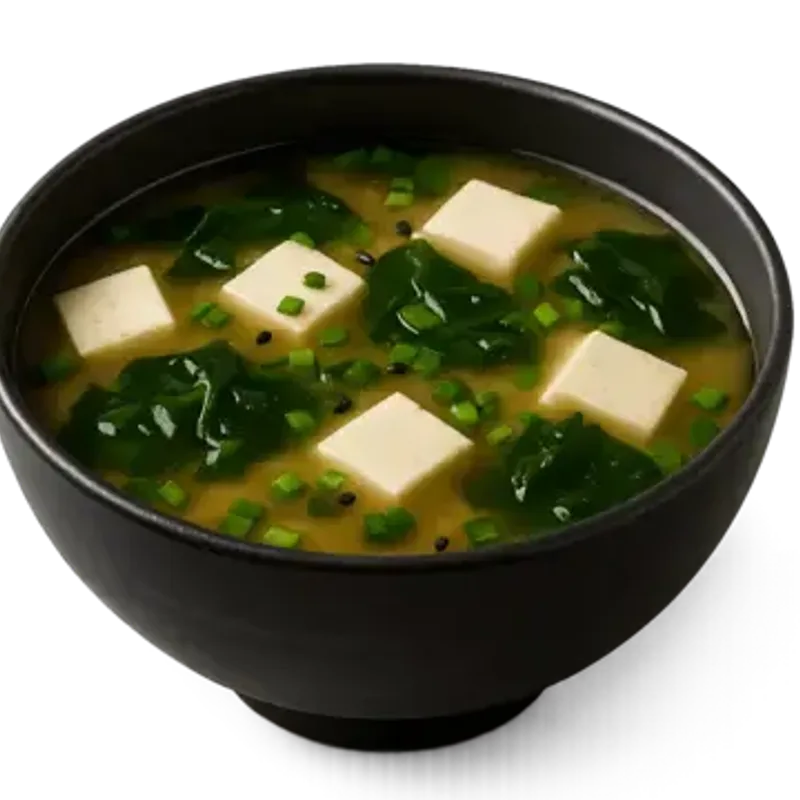
Miso Shiru (味噌汁)(Japan)
Difficulty : 1
This Miso Shiru (miso soup) recipe is a traditional and emblematic dish of Japan, consumed daily since the 12th century. The base of the structured Japanese meal (ichijū sansai), it remains appreciated in home cooking and as a therapeutic food in TCM.
- Dashi (konbu + katsuobushi): 500 ml
- Awase miso: 30 g (2 tablespoons)
- Silken tofu: 100 g, diced
- Dried wakame: 1 teaspoon
- Spring onion: 1 stalk, thinly sliced
1. Rehydrate the wakame in cold water for 10 minutes. 2. Bring the dashi to 70°C. 3. Add the tofu and wakame. 4. Turn off the heat. 5. Dissolve the miso in a ladle of dashi, incorporate off the heat. 6. Serve immediately, garnished with spring onion.
In a lacquered Japanese bowl, served piping hot at 65-70°C.
TCM actions : Miso tonifies the Qi of the Spleen and Stomach. Wakame softens nodules. Tofu nourishes Yin.
Nutritional benefits : Source of protein, probiotics (unpasteurised miso), iodine (wakame), calcium (tofu).
Miso-Glazed Salmon (Saikyo-yaki)(Japan)
Difficulty : 2
This Miso-Glazed Salmon (Saikyo-yaki) recipe is a traditional and emblematic dish of Japan, popularised by Nobu Matsuhisa. The sweet saikyo miso from Kyoto marinates the fish for 2-3 days. It remains appreciated in international gastronomic cuisine.
- Salmon fillet: 4 pieces of 150 g
- Saikyo miso (sweet white): 100 g
- Mirin: 50 ml
- Sake: 30 ml
- Neutral oil: for the baking tray
1. Mix the saikyo miso, mirin and sake. 2. Brush the salmon fillets and marinate 24-48 h in the refrigerator. 3. Preheat the oven to 200°C. 4. Wipe off excess marinade. 5. Bake 8-10 minutes until golden caramelisation. 6. Optional: caramelise with a blowtorch for 30 seconds.
On a white plate, with daikon pickles and Japanese rice.
TCM actions : Salmon nourishes Blood and Yin. The sweet miso tonifies the Spleen without excessive warming.
Nutritional benefits : Rich in omega-3 (EPA/DHA), protein, isoflavones, vitamin D.
Nasu Dengaku (miso-glazed aubergine)(Japan)
Difficulty : 1
This Nasu Dengaku recipe is a traditional and emblematic dish of Japan, originating from the Edo period. Grilled aubergines glazed with sweet miso sauce are a classic of Japanese vegetarian cuisine (shōjin ryōri).
- Aubergines: 2 medium, halved lengthwise
- White miso: 60 g
- Mirin: 30 ml
- Sake: 15 ml
- Sugar: 10 g
- Sesame seeds: for garnish
1. Score the aubergine flesh in a crosshatch pattern. 2. Grill flesh-side down for 5 minutes at 200°C. 3. Prepare the sauce: mix miso, mirin, sake, sugar, cook over low heat for 3 minutes. 4. Turn the aubergines, brush with miso sauce. 5. Grill 3-4 minutes until caramelised. 6. Sprinkle with sesame.
On a flat plate, sprinkled with toasted sesame.
TCM actions : Aubergine is cooling, clears Heat. The sweet miso balances the cool nature.
Nutritional benefits : Fibre, antioxidants (anthocyanins from aubergine skin), isoflavones.
Miso Ramen(Japan)
Difficulty : 2
This Miso Ramen recipe is a traditional and emblematic dish of Japan, originating from Sapporo (Hokkaido). Developed in the 1960s, it became a pillar of Japanese ramen culture. It remains appreciated in ramen-yas around the world.
- Fresh ramen noodles: 200 g
- Chicken broth: 400 ml
- Red miso (aka miso): 40 g
- White miso: 20 g
- Sesame oil: 1 tablespoon
- Garlic: 2 cloves, chopped
- Fresh ginger: 1 cm, grated
- Chilli paste (optional): 1 teaspoon
- Chashu (braised pork): 4 slices
- Marinated egg (ajitsuke tamago): 2
- Sweetcorn: 50 g
- Spring onion: for garnish
1. Fry the garlic and ginger in sesame oil. 2. Add the misos, mix. 3. Pour in the broth, bring to 70°C. 4. Cook the noodles separately, distribute into bowls. 5. Pour the miso broth over the noodles. 6. Garnish with chashu, egg, sweetcorn, spring onion.
In a large bowl, garnishes arranged harmoniously.
TCM actions : Red miso warms the Centre. Ginger disperses Cold. Pork nourishes Qi and Blood.
Nutritional benefits : Protein, carbohydrates, fats, isoflavones, partial probiotics.
Miso Glazed Eggplant (Western fusion)(United States / Fusion)
Difficulty : 1
This Miso Glazed Eggplant recipe is a Western fusion adaptation of Japanese nasu dengaku, popularised by Californian restaurants. It simplifies the technique whilst retaining the umami of miso.
- Aubergine: 1 large, cut into 1.5 cm slices
- White miso: 50 g
- Maple syrup: 20 ml
- Rice vinegar: 10 ml
- Olive oil: 1 tablespoon
1. Brush the slices with olive oil. 2. Grill 4 minutes per side at 200°C. 3. Mix miso, maple syrup, vinegar. 4. Brush the slices. 5. Grill 2 minutes until caramelised.
On a wooden board, with fresh coriander.
TCM actions : Aubergine clears Heat. Miso tonifies the Spleen.
Nutritional benefits : Fibre, antioxidants, isoflavones, natural sugar (maple syrup).
Miso Caramel(United States / Fusion)
Difficulty : 2
This Miso Caramel recipe is a creation of contemporary American pastry, popularised by Christina Tosi (Milk Bar). Miso brings a salty-umami depth to salted butter caramel. It remains appreciated in gastronomic pastry.
- Sugar: 200 g
- 35% cream: 150 ml
- Salted butter: 50 g
- White miso: 30 g
- Vanilla: 1 teaspoon
1. Caramelise the sugar dry at 170°C until amber. 2. Off the heat, add the hot cream (beware of splashing). 3. Incorporate the butter. 4. Allow to cool to 60°C, incorporate the dissolved miso. 5. Add the vanilla. 6. Cool in an airtight jar.
In a jar, served over ice cream, pancakes, or cakes.
TCM actions : Butter nourishes Yin. Miso brings the salty flavour that tonifies the Kidney.
Nutritional benefits : Energy-dense, source of calcium, trace isoflavones.
Miso Marinade for Chicken (Yakitori-style)(Japan / Korea)
Difficulty : 1
This miso marinade recipe for chicken is a traditional and emblematic dish of Japan and Korea. Chicken misozuke is grilled on skewers (yakitori) or in cubes. It remains appreciated in home and street food cooking.
- Chicken thighs: 4, boneless
- Red miso: 80 g
- Mirin: 40 ml
- Sake: 20 ml
- Sesame oil: 1 tablespoon
- Garlic: 2 cloves, crushed
- Ginger: 1 cm, grated
1. Mix miso, mirin, sake, oil, garlic, ginger. 2. Marinate the chicken 12-24 h in the refrigerator. 3. Wipe off excess marinade. 4. Grill on barbecue or oven 200°C, 20-25 minutes, turning.
In cubes on skewers, with rice and pickles.
TCM actions : Chicken tonifies Qi. Red miso warms the Centre. Ginger disperses Cold.
Nutritional benefits : Protein, isoflavones, minerals (zinc, iron).
Miso Soup with Clams (Asari no miso shiru)(Japan)
Difficulty : 1
This miso soup with clams (Asari no miso shiru) recipe is a traditional and emblematic dish of Japan, particularly appreciated in spring. The clams bring an iodised flavour that pairs with the umami of miso.
- Clams: 300 g, soaked in salted water 1 h
- Dashi: 500 ml
- White miso: 30 g
- Spring onion: for garnish
1. Soak the clams 1 h in salted water. 2. Bring the dashi to the boil, add the clams. 3. Cook 3-4 minutes until they open. 4. Turn off the heat. 5. Dissolve the miso, incorporate. 6. Serve with spring onion.
In a bowl, with the shells visible.
TCM actions : Clams nourish Yin and clear Heat. Miso tonifies the Spleen.
Nutritional benefits : Protein, iron, zinc, B12, iodine.
Miso Dressing (Wafu dressing)(Japan)
Difficulty : 1
This miso dressing (Wafu dressing) recipe is a traditional Japanese condiment. Simple and versatile, it dresses salads, steamed vegetables and crudités. It remains appreciated in everyday cooking.
- White miso: 30 g
- Rice vinegar: 30 ml
- Sesame oil: 15 ml
- Neutral oil: 30 ml
- Mirin: 10 ml
- Fresh ginger: 1 cm, grated
1. Dissolve the miso with the vinegar and mirin. 2. Add the ginger. 3. Incorporate the oils whilst whisking to emulsify. 4. Refrigerate 30 minutes before use.
In a jar, served with green salad or steamed vegetables.
TCM actions : Vinegar astringes and regulates the Liver. Miso tonifies the Spleen.
Nutritional benefits : Low calorie, isoflavones, unsaturated fatty acids (sesame).
Miso Chocolate Chip Cookies(United States / Fusion)
Difficulty : 2
This Miso Chocolate Chip Cookies recipe is a creation of contemporary American pastry. White miso brings a salty depth that sublimates the chocolate. Popularised by Christina Tosi and New York bakeries.
- Flour: 250 g
- Butter: 180 g, softened
- Brown sugar: 150 g
- White sugar: 80 g
- White miso: 30 g
- Egg: 1
- Dark chocolate: 200 g, in chips
- Vanilla: 1 teaspoon
- Bicarbonate of soda: 1/2 teaspoon
- Salt: 1 pinch
1. Cream the butter and sugars. 2. Incorporate the miso and egg. 3. Add the vanilla. 4. Sift flour, bicarbonate, salt. 5. Incorporate the chocolate chips. 6. Form balls, refrigerate 30 min. 7. Bake 12 minutes at 180°C.
On a wire rack, warm, with a glass of milk.
TCM actions : Butter nourishes Yin. Chocolate warms the Heart. Miso balances with the salty flavour.
Nutritional benefits : Source of energy, trace isoflavones, magnesium (chocolate).
Miso Spheres (Inverse spherification)(France / Molecular)
Difficulty : 3
This Miso Spheres recipe is a molecular cuisine creation. Inverse spherification of miso broth creates pearls that burst in the mouth. Inspired by the techniques of Ferran Adrià (elBulli).
- Filtered white miso broth: 200 ml
- Calcium chloride: 2 g
- Sodium alginate: 2 g (in 500 ml water for the bath)
- White miso: 15 g
1. Prepare a light miso broth (15 g miso in 200 ml dashi), filter. 2. Dissolve the calcium chloride in the cold broth. 3. Prepare the alginate bath (2 g in 500 ml water). 4. Deposit drops of calcium broth into the alginate bath. 5. Let set 90 seconds. 6. Rinse in clear water.
On tasting spoons, as garnish for sashimi or tartare.
TCM actions : Miso tonifies the Spleen. The surprising texture stimulates digestive Qi.
Nutritional benefits : Low calorie, isoflavones, concentrated umami.
Miso Risotto(Italy / Fusion)
Difficulty : 2
This Miso Risotto recipe is an Italian-Japanese fusion. Miso replaces parmesan to bring umami, creating an innovative vegetarian risotto. Appreciated in contemporary fusion restaurants.
- Arborio rice: 200 g
- Hot vegetable stock: 700 ml
- White miso: 30 g
- Shallot: 1, chopped
- Butter: 30 g
- Olive oil: 1 tablespoon
- Shiitake mushrooms: 100 g, sliced
- Chives: for garnish
1. Fry the shallot in the oil. 2. Add the rice, toast 2 minutes. 3. Add the shiitake. 4. Moisten with the stock ladle by ladle, stirring. 5. After 18 minutes, off the heat, incorporate the butter and dissolved miso. 6. Rest 2 minutes, serve.
In a shallow bowl, garnished with chives.
TCM actions : Rice tonifies Qi. Miso brings umami and tonifies the Spleen. Shiitake nourishes Yin.
Nutritional benefits : Complex carbohydrates, protein, fibre, isoflavones.
Misozuke (miso-pickled vegetables)(Japan)
Difficulty : 1
This Misozuke (miso-pickled vegetables) recipe is a traditional Japanese preservation technique. Daikon, carrot, cucumber marinated 1-3 days in miso. It remains appreciated as tsukemono (pickle) accompanying the meal.
- Daikon: 200 g, in 5 mm slices
- Carrot: 100 g, in slices
- Cucumber: 100 g, in slices
- Red miso: 150 g
- Mirin: 30 ml
- Sake: 15 ml
1. Mix the miso, mirin and sake. 2. Spread half the miso at the bottom of a container. 3. Arrange the vegetables in a layer. 4. Cover with the remaining miso. 5. Refrigerate 24-72 h. 6. Gently rinse before serving.
As tsukemono (pickles), accompanying rice and soup.
TCM actions : Pickled vegetables facilitate digestion. Miso tonifies the Spleen.
Nutritional benefits : Fibre, probiotics (live miso), vitamins, isoflavones.
Miso Cod (Gindara no Saikyo-yaki)(Japan / Starred)
Difficulty : 3
This Gindara no Saikyo-yaki (black cod with saikyo miso) recipe is an emblematic gastronomic dish of Japan, popularised globally by Nobu Matsuhisa. The black cod marinates 2-3 days in saikyo miso. Signature dish of Nobu restaurants.
- Black cod fillet (gindara): 4 pieces of 180 g
- Saikyo miso: 150 g
- Mirin: 80 ml
- Sake: 40 ml
- Sugar: 20 g
- Yuzu: 1, grated zest (optional)
1. Mix saikyo miso, mirin, sake, sugar, yuzu zest. 2. Marinate the fillets 48-72 h in the refrigerator. 3. Preheat oven to 220°C. 4. Wipe off excess marinade. 5. Bake on tray 10-12 minutes until golden caramelisation. 6. Finish under the grill 1-2 minutes.
On a white plate, with daikon pickles and rice.
TCM actions : Cod nourishes Yin and Blood. The sweet saikyo miso tonifies the Spleen without warming.
Nutritional benefits : Omega-3, protein, vitamin D, isoflavones, selenium.
Miso Glazed Pork Chops(China / Japan)
Difficulty : 2
This miso-glazed pork chops recipe is a Sino-Japanese fusion dish. Pork marinated in red miso and oven-baked is appreciated in modern home cooking in both countries.
- Pork chops: 4
- Red miso: 60 g
- Mirin: 30 ml
- Soy sauce: 15 ml
- Fresh ginger: 1 cm, grated
- Garlic: 2 cloves, chopped
- Sesame oil: 1 teaspoon
1. Mix miso, mirin, soy sauce, ginger, garlic, oil. 2. Marinate the chops 4-8 h. 3. Preheat oven to 200°C. 4. Wipe off excess marinade. 5. Bake 20-25 minutes, turn halfway. 6. Rest 5 minutes before serving.
On a board, with rice and steamed vegetables.
TCM actions : Pork nourishes Qi and Yin. Red miso warms the Centre. Ginger disperses Cold.
Nutritional benefits : Protein, B vitamins (thiamine), zinc, iron, isoflavones.