The legume is the most ambiguous family in Chinese dietetics: it tonifies Qi and engenders Phlegm, often on the same plate. Soaking, cooking time and fermentation decide which side prevails. And soya is its most complex branch: fresh clarifying tofu, warm fermented miso, isoflavones that speak to Yin. This guide does for legumes what the cereals guide does for grains.
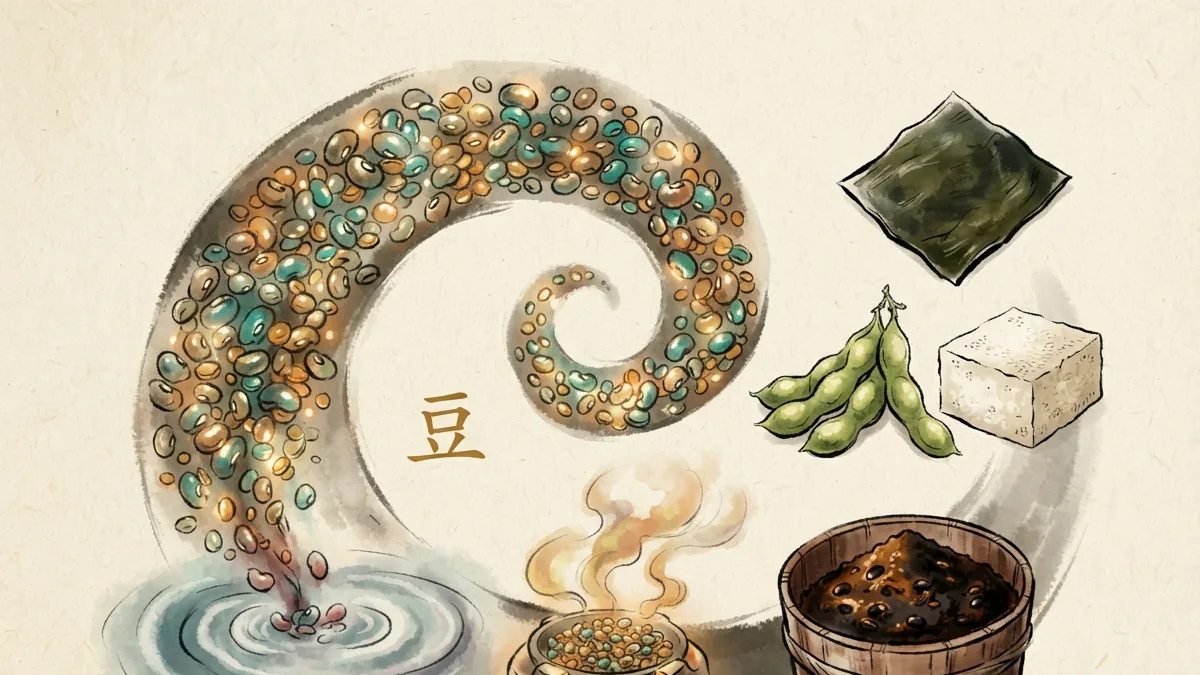
The legume in TCM: the “Qi of beans”
The legume is neither cereal nor vegetable: it is denser than a vegetable, more tonifying than a cereal, moister than meat. Chinese dietetics recognises a double action: tonifying Qi (it nourishes the centre) and engendering Phlegm (it clogs if poorly prepared). The Qi of beans is real, but it must be earned: soaking, long cooking and digestive spices decide whether the dish tonifies or burdens.
That is the difference between the lentil soup that repairs and the chilli that bloats: same family, two preparations, two outcome terrains.
Tonifying the Spleen: broad bean, chickpea, garden pea
The “central” legumes tonify the Spleen:
- Broad bean: neutral-warm, tonifies the Spleen, aids digestion. The fresh broad bean of spring is the seasonal tonifier.
- Chickpea: neutral-warm, tonifies the Qi of the Spleen, nourishes moderately. Hummus with garlic and lemon helps it transform.
- Garden pea: neutral, tonifies the Spleen, easy. The cooked pea is the gentlest vegetable-legume.
- Lentil: neutral, tonifies Qi and Blood, the most “Blood” legume (especially the red/orange one that cooks quickly).
- White/red haricot bean (dried): tonifies Qi, denser, requires soaking and long cooking.
For the Spleen-deficient terrain wanting plant proteins, these legumes as soup or stew are the prescription. Their limit: they demand the digestive fire they claim to nourish.
Draining Dampness and Heat: adzuki, mung
The “bland” legumes have the other action: they drain Dampness and Heat.
- Adzuki (red bean): bland, drains Dampness, gently tonifies the Spleen. The bean of oedema and retention.
- Mung (green gram): cool, drains Dampness, clears Heat. The bean of summer Heat and skin eruptions.
- Black bean: tonifies the Kidney, also drains.
These legumes “wash”: they bring down water and Heat without tiring the Qi that transports them. Adzuki in sweet-savoury soup is the classical dish of gentle Dampness.
Soya, the complete food: tonifying Qi and Blood
Soya is the most complete legume: it tonifies Qi and Blood, engenders fluids, and its density places it between legume and near-animal tonifier. But it has the same double face: poorly prepared, it engenders Phlegm more than the others.
The TCM reading distinguishes its forms:
- Soya bean: tonifies Qi and Blood, dense, requires thorough cooking.
- Fresh tofu: cool, clears, nourishes Yin, the “coldest” soya.
- Soya sprouts: cool, light, drain and clear, the least dense soya.
Fermentation changes everything: warm miso versus fresh tofu
Fermentation is the transformation that flips soya: it “breaks” the density, pre-digests the proteins, adds the bacteria that do the Spleen’s work, and warms the food.
- Miso: warm, fermented, tonifies the Spleen, gently clears. Miso soup is the most “Spleen” soya: fermented and warm.
- Tamari/shoyu: warm, fermented, circulates, the condiment that opens the meal.
- Tempeh: warm, fermented, tonifies, the most solid and most transformed soya.
- Natto: warm, fermented, moves Blood (the Japanese reading).
- Fresh tofu: the exception, unfermented: cool and clearing.
Fermentation is the remedy of the legume: what milk is to yoghurt, raw soya is to miso. See the fermented foods guide for the mechanics.
Soya and the menopause: the isoflavones of Yin deficiency
Soya isoflavones (genistein, daidzein) are phytoestrogens: plant molecules that bind weakly to oestrogen receptors. The TCM reading reads them as “engendering Yin”: for the Yin deficiency of the menopause (hot flushes, night sweats, dryness), daily fermented soya (miso, tempeh, measured tofu) is a gentle support.
The honest reading: isoflavones are weak oestrogens, not oestrogens; they help a declining Yin terrain, they do not replace the hormone. And their safety on hormone-dependent cancers has its documented controversy: the article on soya and phytoestrogens treats the debate.
Legumes and Phlegm: managing the double face
The legume that bloats is not “bad”: it is badly prepared. Three gestures change the verdict:
- Soaking: 8 to 24 hours (except lentils and split peas), water discarded. It lifts the oligosaccharides that ferment in the colon.
- Long cooking: the undercooked legume is the first cause of Phlegm. The bean must be tender, not merely warm.
- Digestive spices: cumin, caraway, garlic, kombu in the cooking water, asafoetida. World-cuisine marriages (cumin-chilli, kombu-beans, fennel-lentils) are the documented anti-bloating combinations.
The modern reading adds FODMAPs: legumes are rich in them, and the FODMAP protocol treats their progressive tolerance. Soaking, cooking, spices: the three gestures deliver the Qi without the Phlegm.
Table: legume, nature, terrain
| Legume | Nature | Action | Terrain that benefits | Terrain that is burdened |
|---|---|---|---|---|
| Lentil | Neutral | Spleen, Liver | Tonifies Qi and Blood | Qi/Blood deficiency. Burdens: if undercooked |
| Chickpea | Neutral-warm | Spleen, Stomach | Tonifies Qi of the Spleen | Spleen deficiency. Burdens: Dampness |
| Broad bean | Neutral-warm | Spleen, Stomach | Tonifies Spleen, aids digestion | Spring, weak Spleen |
| Garden pea | Neutral | Spleen, Stomach | Tonifies Spleen, easy | Convalescence, children |
| White/red haricot | Neutral | Spleen, Kidney | Tonifies Qi, dense | Qi deficiency. Burdens: undercooked |
| Adzuki | Bland | Spleen, Kidney, Bladder | Drains Dampness, tonifies Spleen | Oedema, retention |
| Mung | Cool | Spleen, Stomach | Drains Dampness, clears | Heat, summer, eruptions |
| Black bean | Neutral | Kidney, Spleen | Tonifies Kidney, drains | Weak Kidney + Dampness |
| Soya bean | Neutral | Spleen, Kidney | Tonifies Qi and Blood, dense | Qi deficiency. Burdens: poorly prepared |
| Fresh tofu | Cool | Spleen, Stomach | Clears, nourishes Yin | Heat, Yin. Caution: cold Spleen |
| Miso | Warm | Spleen, Stomach | Tonifies Spleen, gently clears | Weak Spleen, morning. Caution: salt |
| Tempeh | Warm | Spleen, Stomach | Tonifies, solid fermented | Qi deficiency, average Spleen |
| Soya sprouts | Cool | Spleen, Bladder | Drains, clears, light | Heat, Dampness |
Nature, action, and the terrain that benefits or is burdened
Frequently asked questions about legumes in TCM
Why do legumes cause bloating?
Because their oligosaccharides (FODMAPs) are not digested in the small intestine and ferment in the colon. Soaking (water discarded) removes most of them, thorough cooking breaks the fibres, digestive spices aid fermentation. The legume bloats when it reaches the colon still “raw”: preparation decides the verdict.
Is tofu good for a weak Spleen?
Fresh tofu is cool and clearing: it suits Heat better than a cold Spleen. For a weak Spleen, fermented soya (miso, tempeh) or tofu stewed for a long time with ginger and miso suits better: fermentation and cooking “warm” it. Cold tofu in salad is the least suitable form for the Cold-deficiency terrain.
Are soya isoflavones safe?
For most terrains, in food quantities (one or two servings of fermented soya a day), isoflavones gently support the Yin of the menopause. Hormone-dependent cancers have their documented controversy: the dedicated article treats the debate. Concentrated isoflavone supplements are another matter from morning miso.
Which legume for oedema?
Adzuki: it drains Dampness while gently tonifying the Spleen, as sweet-savoury soup or congee. Mung drains and clears for Damp-Heat. These “bland” legumes bring water down without exhausting the Qi that transports it.
The Qi of beans, earned through preparation
The legume is the ambiguous family: it tonifies Qi and engenders Phlegm, and preparation decides the side. Broad bean and chickpea tonify the Spleen, adzuki and mung drain Dampness, whole soya requires fermentation to become the warm morning miso. Soaking, cooking and spices are not details: they are the gestures that change the nature.
In the Yin Shi app, each legume card shows its nature, action and preparation: the broad bean answers Spleen deficiency, adzuki answers oedema, miso answers the cold morning, and the card always flags the terrain that will be burdened.
Further reading: Spleen deficiency, Dampness, the fermented foods guide, the gut microbiome and the Spleen, and soya and phytoestrogens.
To go further
Yin Shi ecosystem resources directly related to this article.
Does your terrain welcome soya?
The CCMQ questionnaire locates the constitution behind soya tolerance.
Take the test →See the miso in the app
The full miso sheet — the fermented soya derivative mentioned in the guide.
Full sheets available after the 30-day free trial or with a subscription.
Soya and its fermented derivatives
The lesson covers miso, shoyu and tamari — the fermented soya derivatives.
Take the lesson →